The Rolf Luft Research Center for Diabetes and Endocrinology, Karolinska Institutet, Karolinska University Hospital, Anna Steckséns gata 53, SE-171 76 Stockholm, Sweden.
Int J Mol Sci. 2021 Jan 19;22(2):932. doi: 10.3390/ijms22020932.
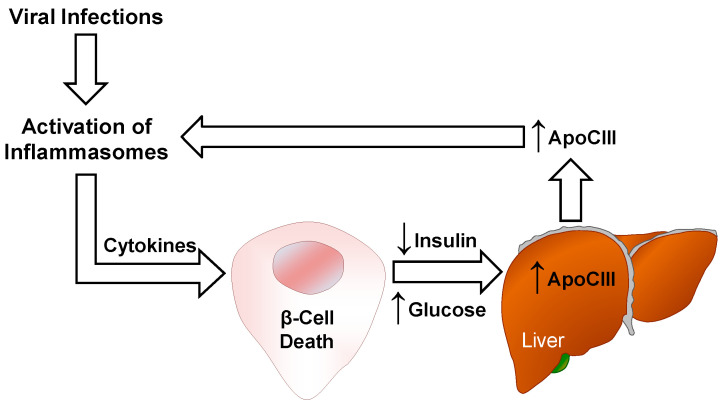
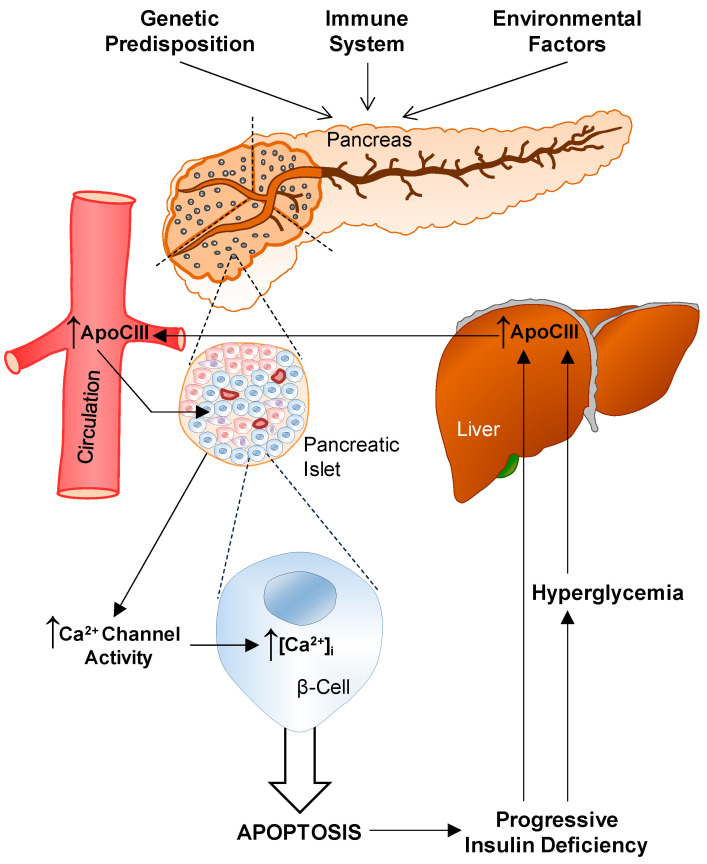
It is well known that type-2 diabetes mellitus (T2D) is increasing worldwide, but also the autoimmune form, type-1 diabetes (T1D), is affecting more people. The latest estimation from the International Diabetes Federation (IDF) is that 1.1 million children and adolescents below 20 years of age have T1D. At present, we have no primary, secondary or tertiary prevention or treatment available, although many efforts testing different strategies have been made. This review is based on the findings that apolipoprotein CIII (apoCIII) is increased in T1D and that in vitro studies revealed that healthy β-cells exposed to apoCIII became apoptotic, together with the observation that humans with higher levels of the apolipoprotein, due to mutations in the gene, are more susceptible to developing T1D. We have summarized what is known about apoCIII in relation to inflammation and autoimmunity in in vitro and in vivo studies of T1D. The aim is to highlight the need for exploring this field as we still are only seeing the top of the iceberg.
众所周知,2 型糖尿病(T2D)在全球范围内不断增加,但 1 型糖尿病(T1D)的自身免疫形式也在影响更多的人。国际糖尿病联合会(IDF)的最新估计显示,有 110 万 20 岁以下的儿童和青少年患有 T1D。目前,尽管已经进行了许多测试不同策略的努力,但我们没有一级、二级或三级预防或治疗措施。这篇综述基于以下发现:载脂蛋白 CIII(apoCIII)在 T1D 中增加,体外研究表明,暴露于 apoCIII 的健康β细胞会发生凋亡,并且还观察到由于基因突变导致载脂蛋白水平较高的人更容易患上 T1D。我们总结了关于 apoCIII 在 T1D 的体外和体内炎症和自身免疫研究中的已知信息。目的是强调需要探索这一领域,因为我们仍然只看到了冰山一角。