Department of Medicine (Oncology), Albert Einstein College of Medicine, Montefiore Medical Center, Bronx, New York, NY 10467, USA.
Department of Otorhinolaryngology-Head and Neck Surgery, Montefiore Medical Center, Bronx, New York, NY 10467, USA.
Curr Oncol. 2021 Jan 19;28(1):574-580. doi: 10.3390/curroncol28010057.
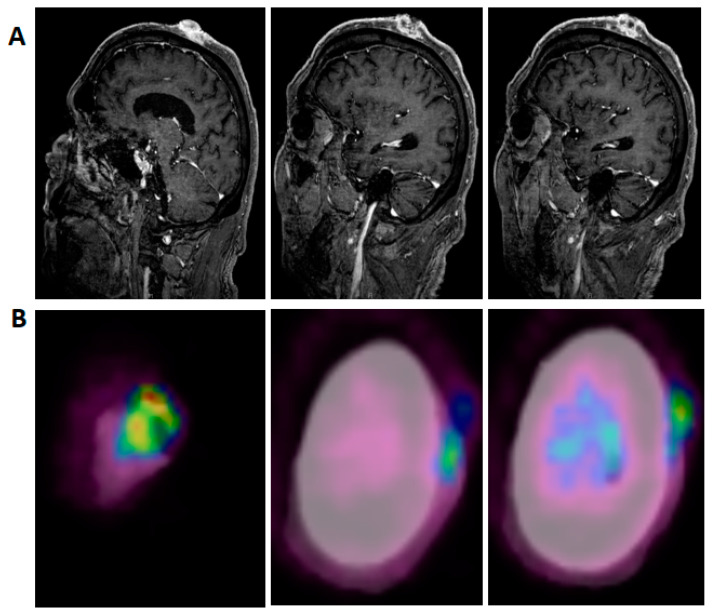
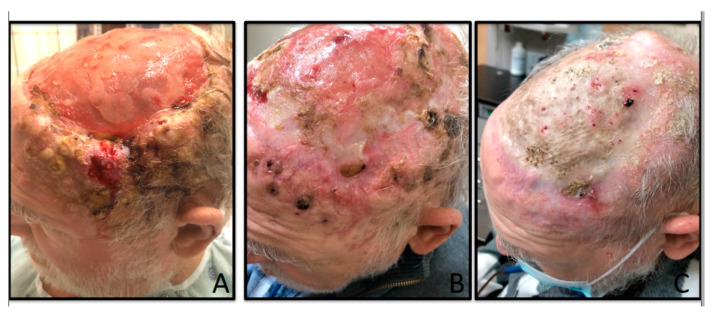
Immunotherapies directed at T-cell activation through antibodies targeting checkpoint proteins, such as programmed cell death 1 (PD1), are rapidly becoming the new standard of care in the treatment of several malignancies. Cemiplimab is a monoclonal antibody targeting PD1 that has recently emerged as a highly active treatment for locally advanced and metastatic cutaneous squamous cell carcinoma (CSCC). Patients who have received an organ transplant (OTRs) have been traditionally excluded from clinical trials with checkpoint inhibitors (CIs), given concerns for organ rejection. Renal transplant recipients (RTRs) are more likely to develop cancers than the general population, and skin cancers are among the most frequent malignancies. We report the case of a 72-year-old man with a history of a kidney transplant who presented with a rapidly growing, locally advanced squamous cell carcinoma (SCC) of the scalp that recurred within four weeks from surgical resection. The patient was able to safely receive ten cycles of cemiplimab so far with significant clinical benefit, and no issues with his kidney function, while continuing immunosuppression with low dose prednisone alone. An ongoing clinical trial (NCT04339062) is further exploring the safety of CIs in patients with metastatic CSCC who have previously received allogeneic hematopoietic stem cell transplant or a kidney transplant.
免疫疗法通过针对检查点蛋白(如程序性细胞死亡 1(PD1))的抗体靶向 T 细胞激活,正在迅速成为治疗多种恶性肿瘤的新标准。Cemiplimab 是一种针对 PD1 的单克隆抗体,最近已成为局部晚期和转移性皮肤鳞状细胞癌(CSCC)的高度有效治疗方法。由于担心器官排斥,传统上已经将接受过器官移植(OTR)的患者排除在检查点抑制剂(CI)临床试验之外。肾移植受者(RTR)比一般人群更容易患上癌症,皮肤癌是最常见的恶性肿瘤之一。我们报告了一例 72 岁男性的病例,该患者曾接受过肾移植,目前患有头皮局部晚期、快速生长的鳞状细胞癌(SCC),在手术切除后四周内复发。迄今为止,该患者已安全接受了十轮 cemiplimab 治疗,具有显著的临床获益,且肾功能无任何问题,同时继续单独使用低剂量泼尼松进行免疫抑制。一项正在进行的临床试验(NCT04339062)正在进一步探索先前接受过同种异体造血干细胞移植或肾移植的转移性 CSCC 患者使用 CI 的安全性。