Ammendola Rosario, Parisi Melania, Esposito Gabriella, Cattaneo Fabio
Department of Molecular Medicine and Medical Biotechnology, School of Medicine, University of Naples Federico II, 80131 Naples, Italy.
Antioxidants (Basel). 2021 Jan 19;10(1):134. doi: 10.3390/antiox10010134.
Formyl peptide receptor 2 (FPR2) is involved in the pathogenesis of chronic inflammatory diseases, being activated either by pro-resolving or proinflammatory ligands. FPR2-associated signal transduction pathways result in phosphorylation of several proteins and in NADPH oxidase activation. We, herein, investigated molecular mechanisms underlying phosphorylation of heat shock protein 27 (HSP27), oxidative stress responsive kinase 1 (OSR1), and myristolated alanine-rich C-kinase substrate (MARCKS) elicited by the pro-resolving FPR2 agonists WKYMVm and annexin A1 (ANXA1).
CaLu-6 cells or p22phox double nickase CaLu-6 cells were incubated for 5 min with WKYMVm or ANXA1, in the presence or absence of NADPH oxidase inhibitors. Phosphorylation at specific serine residues of HSP27, OSR1, and MARCKS, as well as the respective upstream kinases activated by FPR2 stimulation was analysed.
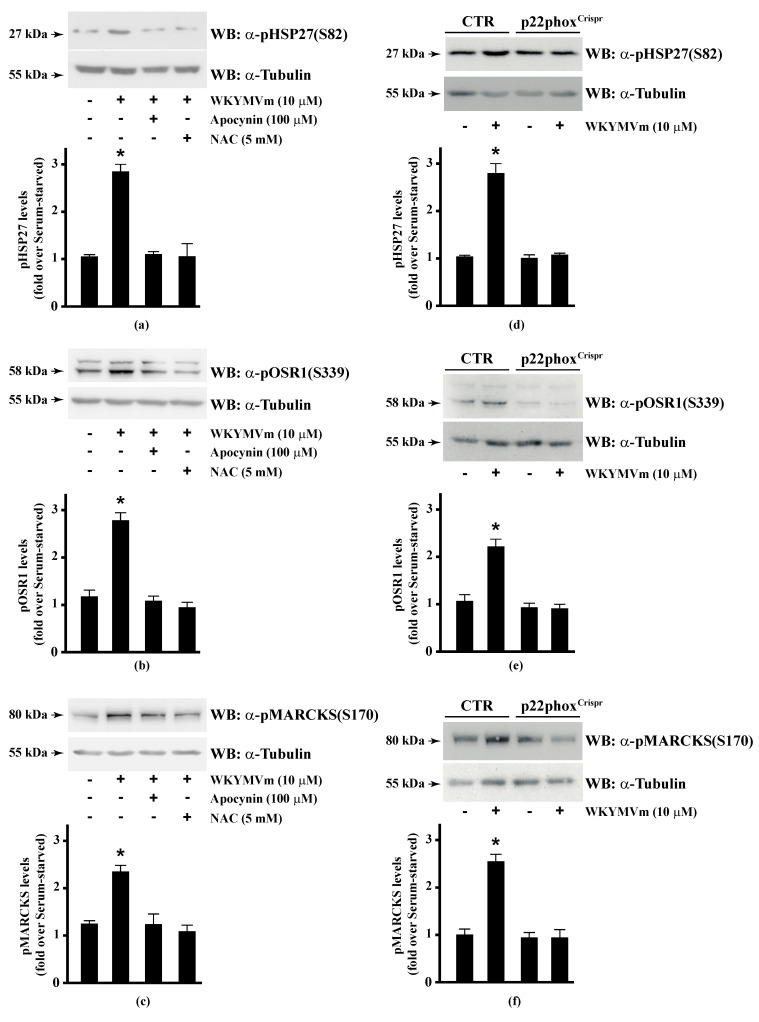
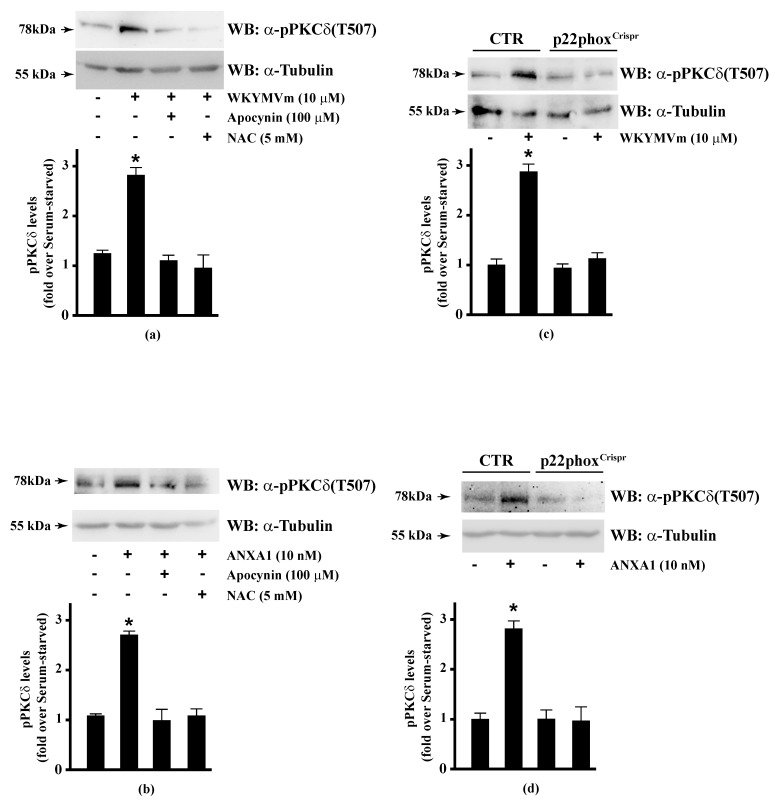
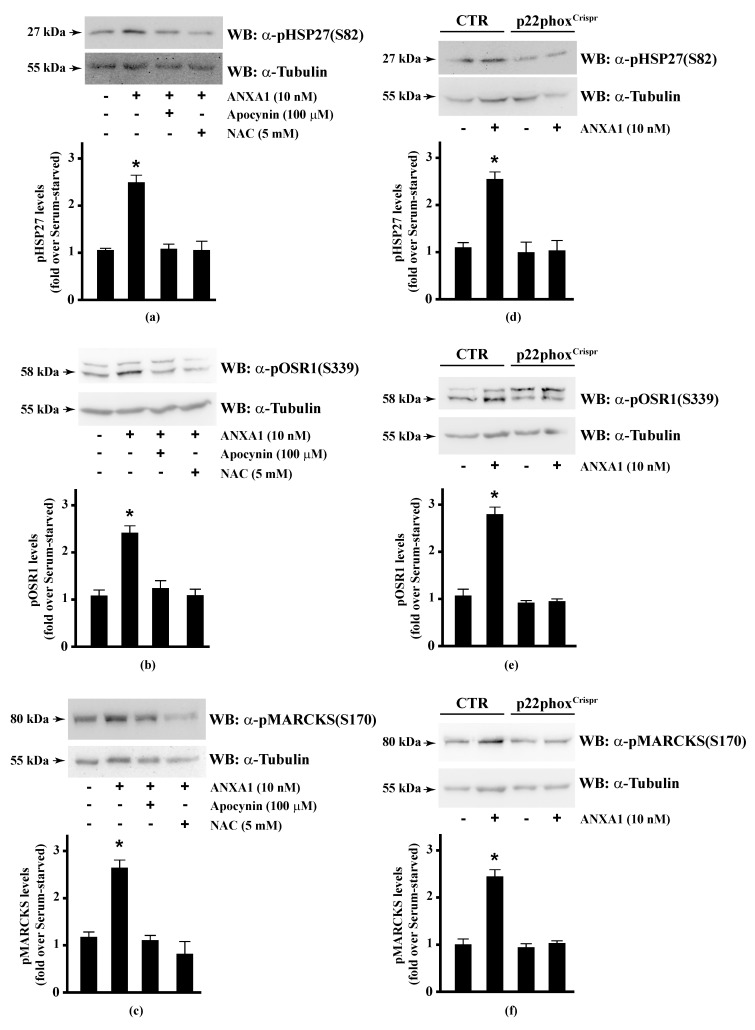
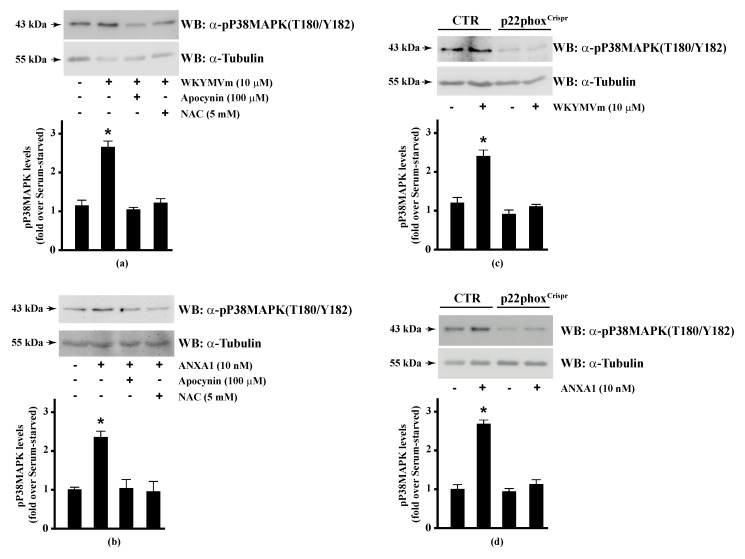
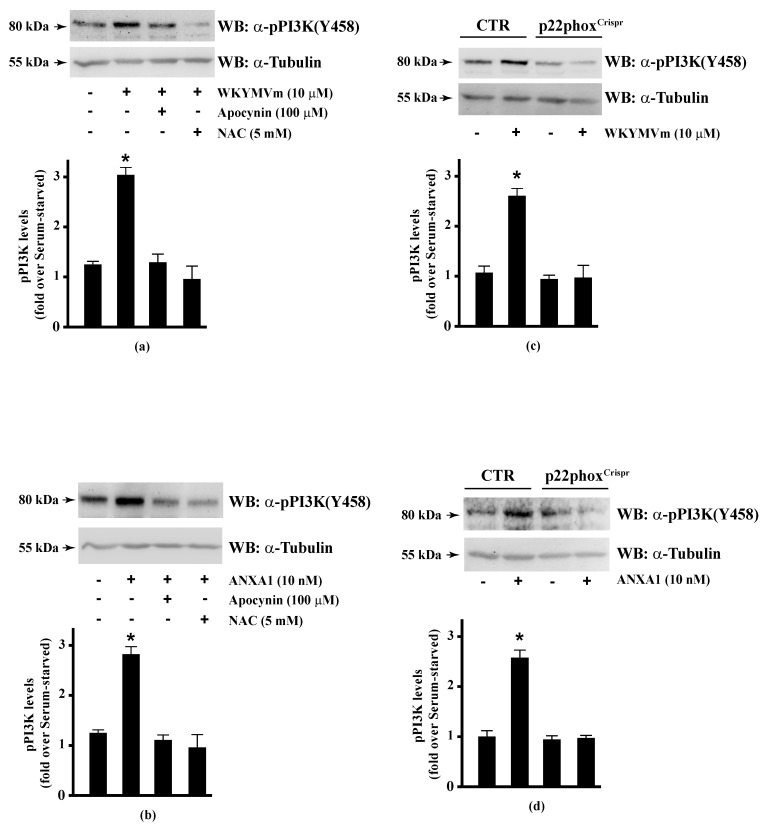
Blockade of NADPH oxidase functions prevents WKYMVm- and ANXA1-induced HSP-27(Ser82), OSR1(Ser339) and MARCKS(Ser170) phosphorylation. Moreover, NADPH oxidase inhibitors prevent WKYMVm- and ANXA1-dependent activation of p38MAPK, PI3K and PKCδ, the kinases upstream to HSP-27, OSR1 and MARCKS, respectively. The same results were obtained in p22phox cells.
FPR2 shows an immunomodulatory role by regulating proinflammatory and anti-inflammatory activities and NADPH oxidase is a key regulator of inflammatory pathways. The activation of NADPH oxidase-dependent pro-resolving downstream signals suggests that FPR2 signalling and NADPH oxidase could represent novel targets for inflammation therapeutic intervention.
甲酰肽受体2(FPR2)参与慢性炎症性疾病的发病机制,可被促消退或促炎配体激活。FPR2相关的信号转导途径导致多种蛋白质磷酸化并激活NADPH氧化酶。在此,我们研究了促消退FPR2激动剂WKYMVm和膜联蛋白A1(ANXA1)引发热休克蛋白27(HSP27)、氧化应激反应激酶1(OSR1)和肉豆蔻酰化富含丙氨酸的C激酶底物(MARCKS)磷酸化的分子机制。
在存在或不存在NADPH氧化酶抑制剂的情况下,将CaLu-6细胞或p22phox双切口酶CaLu-6细胞与WKYMVm或ANXA1孵育5分钟。分析HSP27、OSR1和MARCKS特定丝氨酸残基的磷酸化,以及FPR2刺激激活的各自上游激酶。
NADPH氧化酶功能的阻断可防止WKYMVm和ANXA1诱导的HSP-27(Ser82)、OSR1(Ser339)和MARCKS(Ser170)磷酸化。此外,NADPH氧化酶抑制剂可防止WKYMVm和ANXA1依赖的p38MAPK、PI3K和PKCδ的激活,它们分别是HSP-27、OSR1和MARCKS的上游激酶。在p22phox细胞中也得到了相同的结果。
FPR2通过调节促炎和抗炎活性发挥免疫调节作用,NADPH氧化酶是炎症途径的关键调节因子。NADPH氧化酶依赖性促消退下游信号的激活表明,FPR2信号传导和NADPH氧化酶可能代表炎症治疗干预的新靶点。