Lymphoma Research Group, Medical Oncology Department, Instituto de Investigación Sanitaria Puerta de Hierro-Segovia de Arana, Majadahonda, Madrid, Spain.
PhD Program in Molecular Biosciences, Doctoral School, Universidad Autónoma de Madrid, Madrid, Spain.
Sci Rep. 2021 Jan 21;11(1):1886. doi: 10.1038/s41598-020-80376-0.
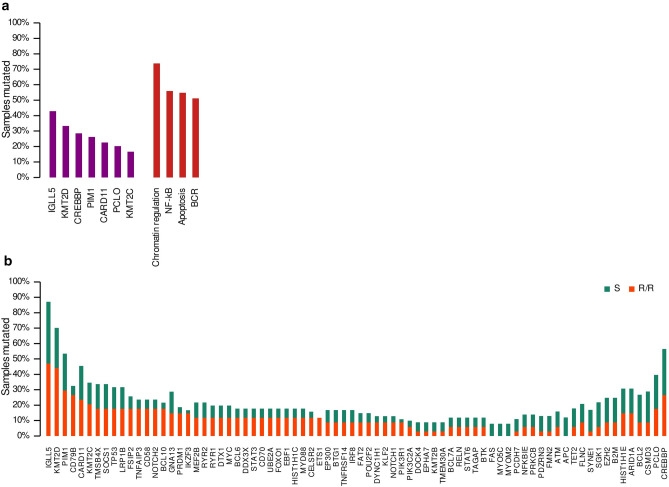
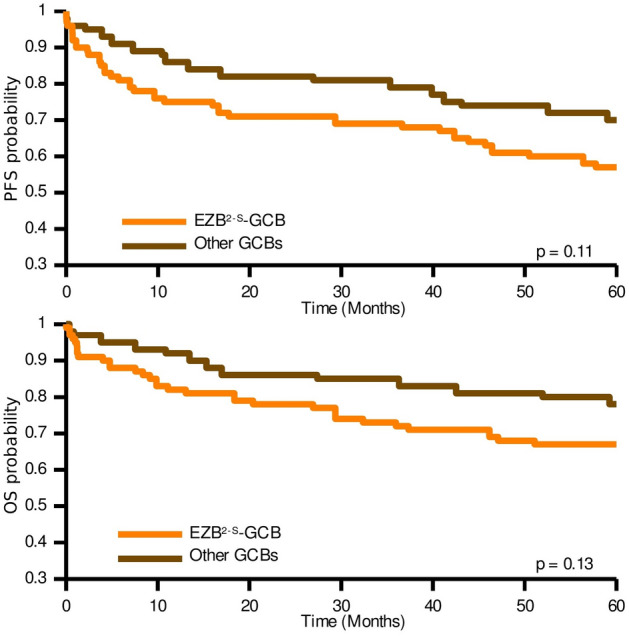
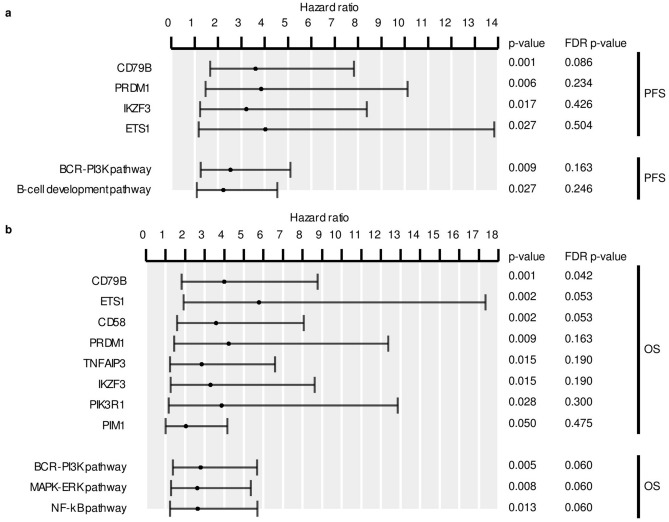
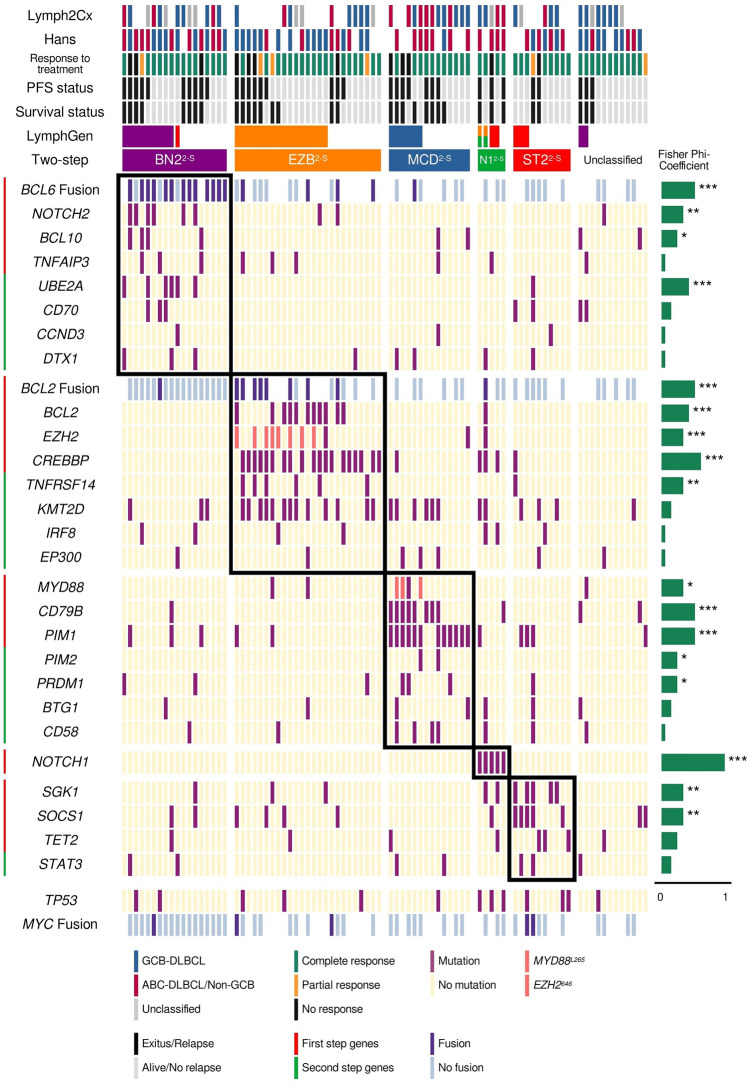
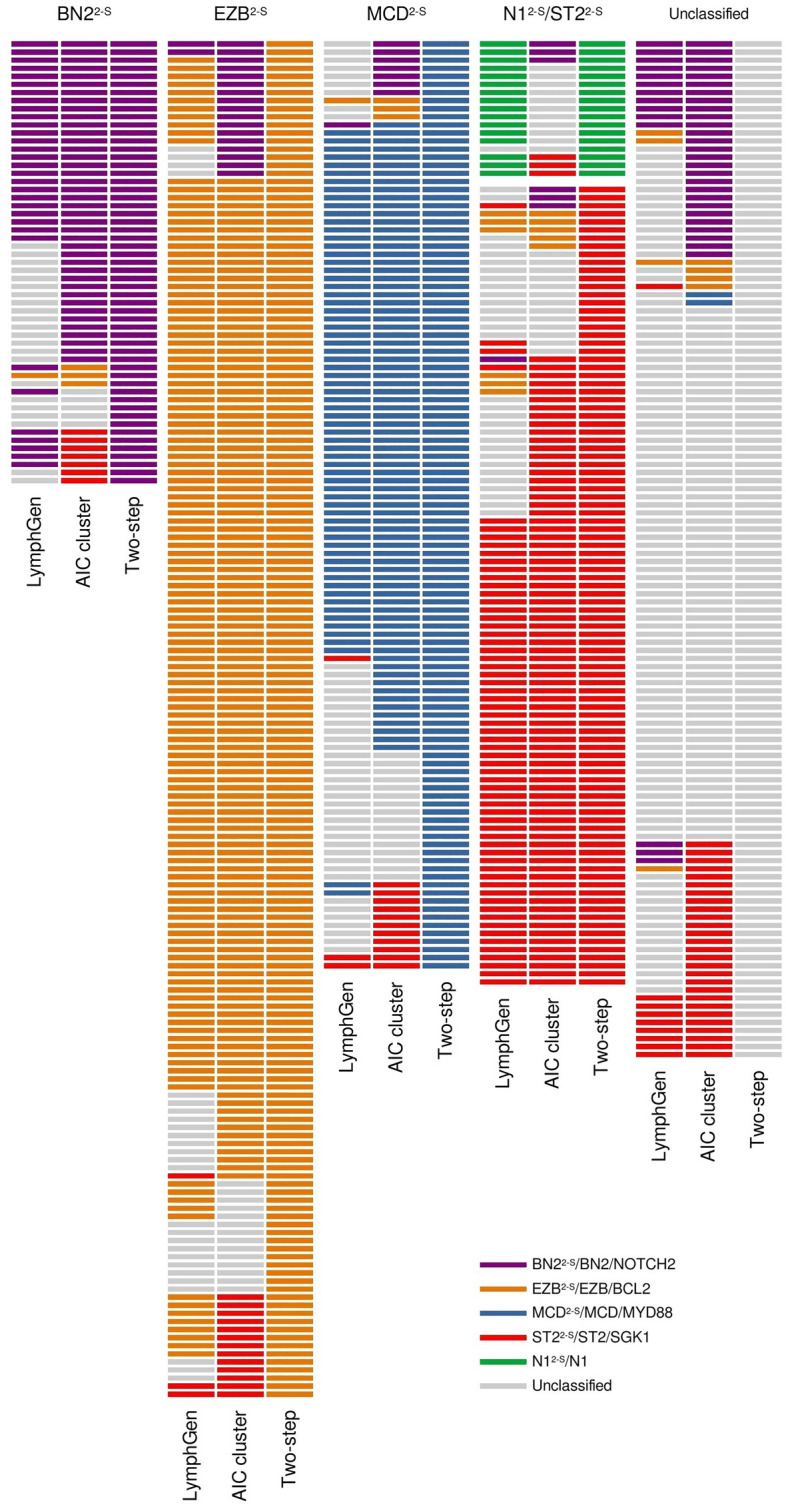
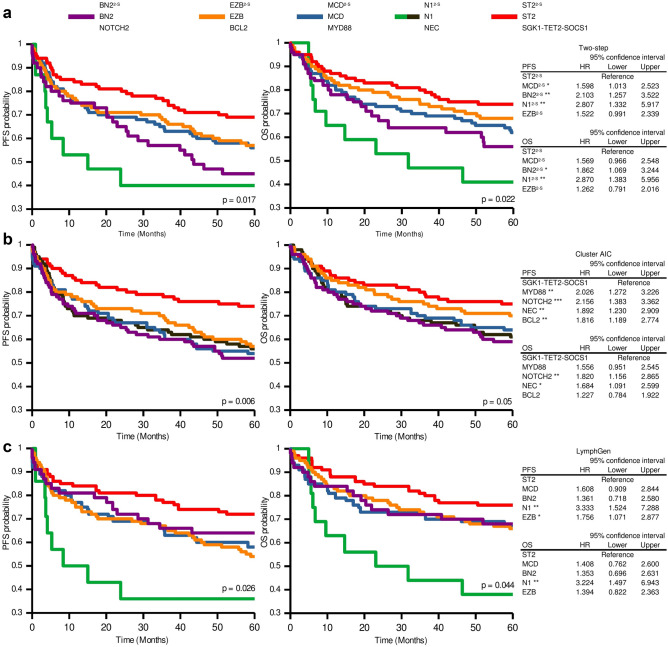
Diffuse large B-cell lymphoma (DLBCL) is a heterogeneous disease whose prognosis is associated with clinical features, cell-of-origin and genetic aberrations. Recent integrative, multi-omic analyses had led to identifying overlapping genetic DLBCL subtypes. We used targeted massive sequencing to analyze 84 diagnostic samples from a multicenter cohort of patients with DLBCL treated with rituximab-containing therapies and a median follow-up of 6 years. The most frequently mutated genes were IGLL5 (43%), KMT2D (33.3%), CREBBP (28.6%), PIM1 (26.2%), and CARD11 (22.6%). Mutations in CD79B were associated with a higher risk of relapse after treatment, whereas patients with mutations in CD79B, ETS1, and CD58 had a significantly shorter survival. Based on the new genetic DLBCL classifications, we tested and validated a simplified method to classify samples in five genetic subtypes analyzing the mutational status of 26 genes and BCL2 and BCL6 translocations. We propose a two-step genetic DLBCL classifier (2-S), integrating the most significant features from previous algorithms, to classify the samples as N1, EZB, MCD, BN2, and ST2 groups. We determined its sensitivity and specificity, compared with the other established algorithms, and evaluated its clinical impact. The results showed that ST2 is the group with the best clinical outcome and N1, the more aggressive one. EZB identified a subgroup with a worse prognosis among GCB-DLBLC cases.
弥漫性大 B 细胞淋巴瘤(DLBCL)是一种异质性疾病,其预后与临床特征、细胞起源和遗传异常有关。最近的综合多组学分析导致了重叠的遗传 DLBCL 亚型的鉴定。我们使用靶向大规模测序分析了 84 例来自接受含利妥昔单抗治疗的多中心 DLBCL 患者队列的诊断样本,中位随访时间为 6 年。最常突变的基因是 IGLL5(43%)、KMT2D(33.3%)、CREBBP(28.6%)、PIM1(26.2%)和 CARD11(22.6%)。CD79B 突变与治疗后复发风险增加相关,而 CD79B、ETS1 和 CD58 突变的患者生存时间明显缩短。基于新的遗传 DLBCL 分类,我们测试和验证了一种简化方法,通过分析 26 个基因和 BCL2 和 BCL6 易位的突变状态,将样本分类为 5 种遗传亚型。我们提出了一种两步遗传 DLBCL 分类器(2-S),整合了以前算法中最重要的特征,将样本分类为 N1、EZB、MCD、BN2 和 ST2 组。我们确定了其与其他已建立算法相比的敏感性和特异性,并评估了其临床影响。结果表明,ST2 是临床结局最好的组,N1 是侵袭性最强的组。EZB 在 GCB-DLBCL 病例中确定了预后较差的亚组。