Sengupta Shaon, Ince Louise, Sartor Francesca, Borrmann Helene, Zhuang Xiaodong, Naik Amruta, Curtis Annie, McKeating Jane A
Perelman School of Medicine, University of Pennsylvania, Philadelphia, Pennsylvania, USA.
Children's Hospital of Philadelphia, Philadelphia, Pennsylvania, USA.
J Biol Rhythms. 2021 Feb;36(1):23-34. doi: 10.1177/0748730420987669. Epub 2021 Jan 22.
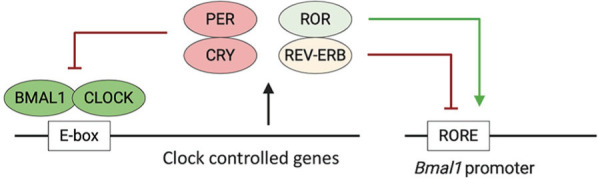
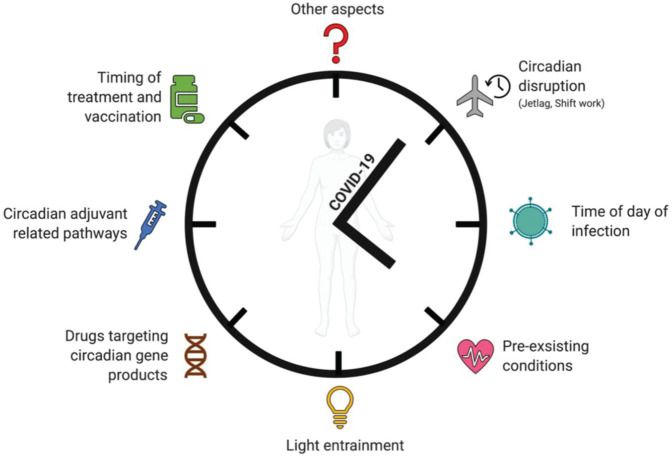
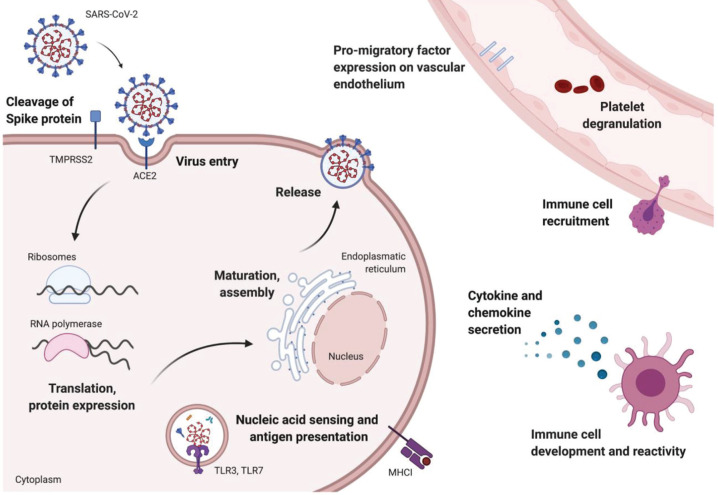
Circadian rhythms are evolutionarily conserved anticipatory systems that allow the host to prepare and respond to threats in its environment. This article summarizes a European Biological Rhythms Society (EBRS) workshop held in July 2020 to review current knowledge of the interplay between the circadian clock and viral infections to inform therapeutic strategies against SARS-CoV-2 and COVID-19. A large body of work supports the role of the circadian clock in regulating various aspects of viral replication, host responses, and associated pathogenesis. We review the evidence describing the multifaceted role of the circadian clock, spanning host susceptibility, antiviral mechanisms, and host resilience. Finally, we define the most pressing research questions and how our knowledge of chronobiology can inform key translational research priorities.
昼夜节律是进化上保守的预期系统,使宿主能够对其环境中的威胁做好准备并做出反应。本文总结了2020年7月举行的欧洲生物节律学会(EBRS)研讨会,以回顾目前关于生物钟与病毒感染之间相互作用的知识,为针对SARS-CoV-2和新冠肺炎的治疗策略提供信息。大量研究支持生物钟在调节病毒复制、宿主反应及相关发病机制的各个方面所起的作用。我们回顾了描述生物钟多方面作用的证据,包括宿主易感性、抗病毒机制和宿主恢复力。最后,我们确定了最紧迫的研究问题,以及我们的生物钟学知识如何为关键的转化研究重点提供信息。