Department of Nephrology, Transplantology and Internal Diseases, Poznan University of Medical Sciences, Przybyszewskiego 49, 60-355, Poznań, Poland.
Department of Biochemistry and Molecular Biology, Poznan University of Medical Sciences, Święcickiego 6, 60-781, Poznań, Poland.
BMC Infect Dis. 2021 Jan 22;21(1):102. doi: 10.1186/s12879-021-05777-6.
In non-uremic subjects, IFNL4 rs368234815 predicts HCV clearance. We investigated whether rs368234815 is associated with spontaneous HCV clearance in haemodialysis patients and whether it is a stronger predictor of HCV resolution than the IFNL polymorphisms already associated with HCV clearance in dialysis subjects. We also evaluated an association of rs368234815 with patients` survival and alterations in transcription factor binding sites (TFBS) caused by IFNL polymorphisms.
Among 161 haemodialysis patients with positive anti-HCV antibodies, 68 (42.2%) spontaneously resolved HCV infection, whereas 93 remained HCV RNA positive. Patients were tested for near IFNL3 rs12980275, IFNL3 rs4803217, IFNL4 rs12979860, IFNL4 rs368234815, and near IFNL4 rs8099917. IFNL4 rs368234815 polymorphism (TT/TT, ΔG/TT, ΔG/ΔG) was genotyped by restriction fragment length polymorphism analysis; other IFNL polymorphisms - by high resolution melting curve analysis. We used the Kaplan-Meier method with the log-rank test for survival analysis. In silico analysis included the use of ENCODE TFBS ChIP-seq data, HOCOMOCO, JASPAR CORE, and CIS-BP databases, and FIMO software.
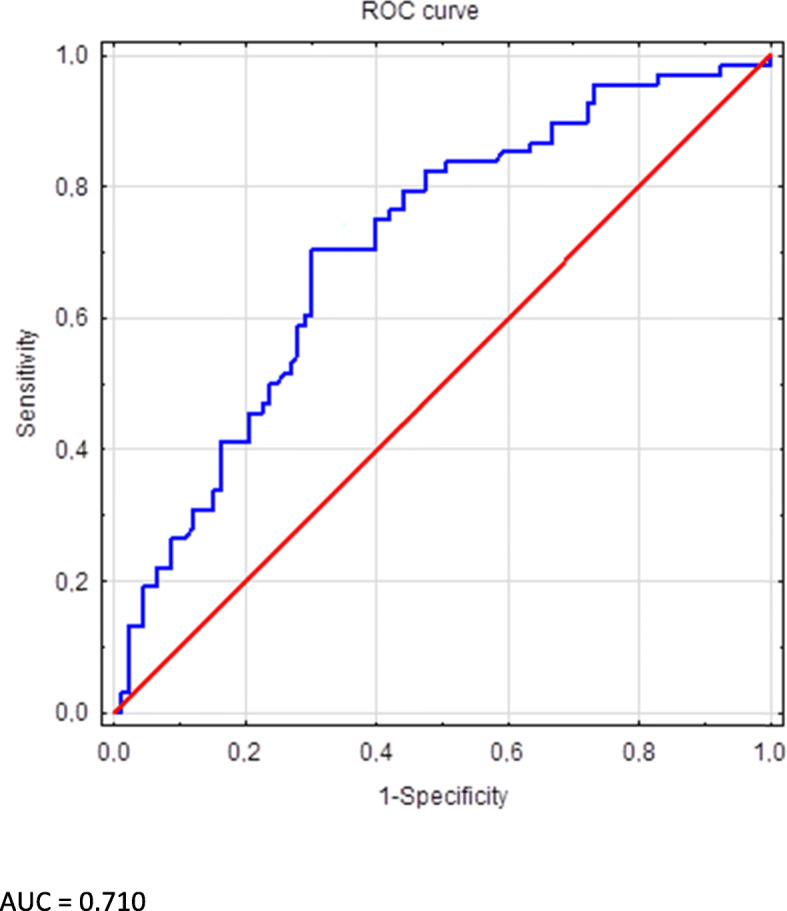
The probability (OR, 95%CI, P) of spontaneous HCV clearance for rs368234815 TT/TT patients was higher than for the ΔG allele carriers (2.63, 1.38-5.04, 0.003). This probability for other major homozygotes varied between 2.80, 1.45-5.43, 0.002 for rs12980275 and 2.44, 1.27-4.69, 0.007 for rs12979860. In the additive model, rs368234815 TT/TT was the strongest predictor of HCV clearance (6.38, 1.69-24.2, 0.003). Survival analysis suggested an association of the ΔG allele with mortality due to neoplasms (log-rank P = 0.005). The rs368234815 ∆G allele caused TFBS removal for PLAGL1.
In haemodialysis patients, the association of rs368234815 with the spontaneous HCV clearance is better than that documented for other IFNL3/IFNL4 polymorphisms only in the additive mode of inheritance. However, identifying the homozygosity in the variant ∆G allele of rs368234815 means a more potent prediction of persistent HCV infection in haemodialysis subjects that we observe in the case of the variant homozygosity of other tested IFNL3/IFNL4 polymorphisms. Removal of PLAGL1 TFBS in subjects harbouring the rs368234815 ∆G allele may contribute to cancer susceptibility. The association of rs368234815 with cancer-related mortality needs further studies in HCV-exposed subjects.
在非尿毒症患者中,IFNL4 rs368234815 可预测 HCV 清除。我们研究了 rs368234815 是否与血液透析患者的自发性 HCV 清除有关,以及与已经与透析患者中 HCV 清除相关的 IFNL 多态性相比,它是否是 HCV 消退的更强预测因子。我们还评估了 rs368234815 与患者生存的关联,以及 IFNL 多态性引起的转录因子结合位点(TFBS)的改变。
在 161 例抗 HCV 抗体阳性的血液透析患者中,68 例(42.2%)自发性清除了 HCV 感染,而 93 例 HCV RNA 仍为阳性。对患者进行了 IFNL3 rs12980275、IFNL3 rs4803217、IFNL4 rs12979860、IFNL4 rs368234815 和 IFNL4 rs8099917 的近侧检测。IFNL4 rs368234815 多态性(TT/TT、ΔG/TT、ΔG/ΔG)通过限制性片段长度多态性分析进行基因分型;其他 IFNL 多态性 - 通过高分辨率熔解曲线分析。我们使用 Kaplan-Meier 方法和对数秩检验进行生存分析。在计算机分析中,我们使用了 ENCODE TFBS ChIP-seq 数据、HOCOMOCO、JASPAR CORE 和 CIS-BP 数据库以及 FIMO 软件。
rs368234815 TT/TT 患者自发性 HCV 清除的概率(OR,95%CI,P)高于ΔG 等位基因携带者(2.63,1.38-5.04,0.003)。其他主要纯合子的这种概率在 rs12980275 之间为 2.80,1.45-5.43,0.002,在 rs12979860 之间为 2.44,1.27-4.69,0.007。在加性模型中,rs368234815 TT/TT 是 HCV 清除的最强预测因子(6.38,1.69-24.2,0.003)。生存分析表明,ΔG 等位基因与肿瘤导致的死亡率有关(对数秩 P=0.005)。rs368234815 ΔG 等位基因导致 PLAGL1 的 TFBS 缺失。
在血液透析患者中,与其他 IFNL3/IFNL4 多态性相比,rs368234815 与自发性 HCV 清除的关联在加性遗传模式下更好。然而,在血液透析患者中,识别变异等位基因 ΔG 等位基因的纯合性意味着对持续性 HCV 感染的预测更有力,我们在其他测试的 IFNL3/IFNL4 多态性的变异纯合性的情况下观察到这种情况。在携带 rs368234815 ΔG 等位基因的患者中,PLAGL1 TFBS 的缺失可能导致癌症易感性。rs368234815 与癌症相关死亡率的关联需要在 HCV 暴露的患者中进一步研究。