School of Dentistry, VCU Philips Institute and Massey Cancer Center, Richmond, Virginia.
Department of Pathology, Virginia Commonwealth University and Massey Cancer Center, Richmond, Virginia.
Cancer Res. 2021 Apr 1;81(7):1896-1908. doi: 10.1158/0008-5472.CAN-20-1641. Epub 2021 Jan 22.
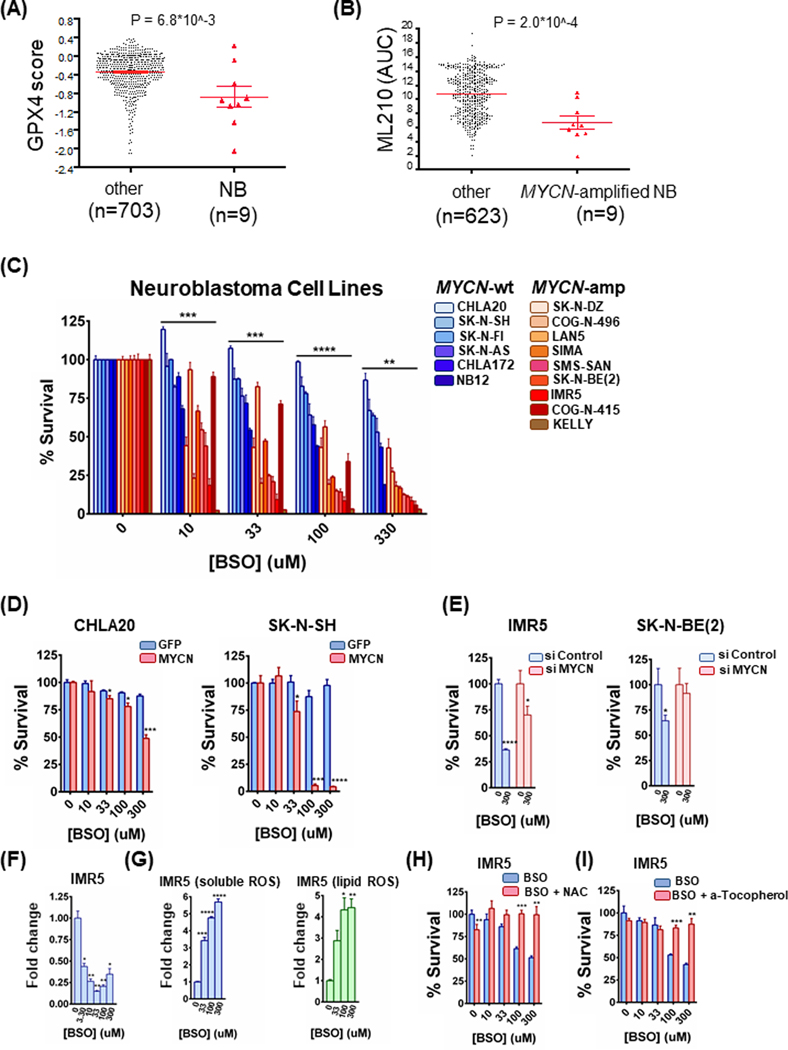
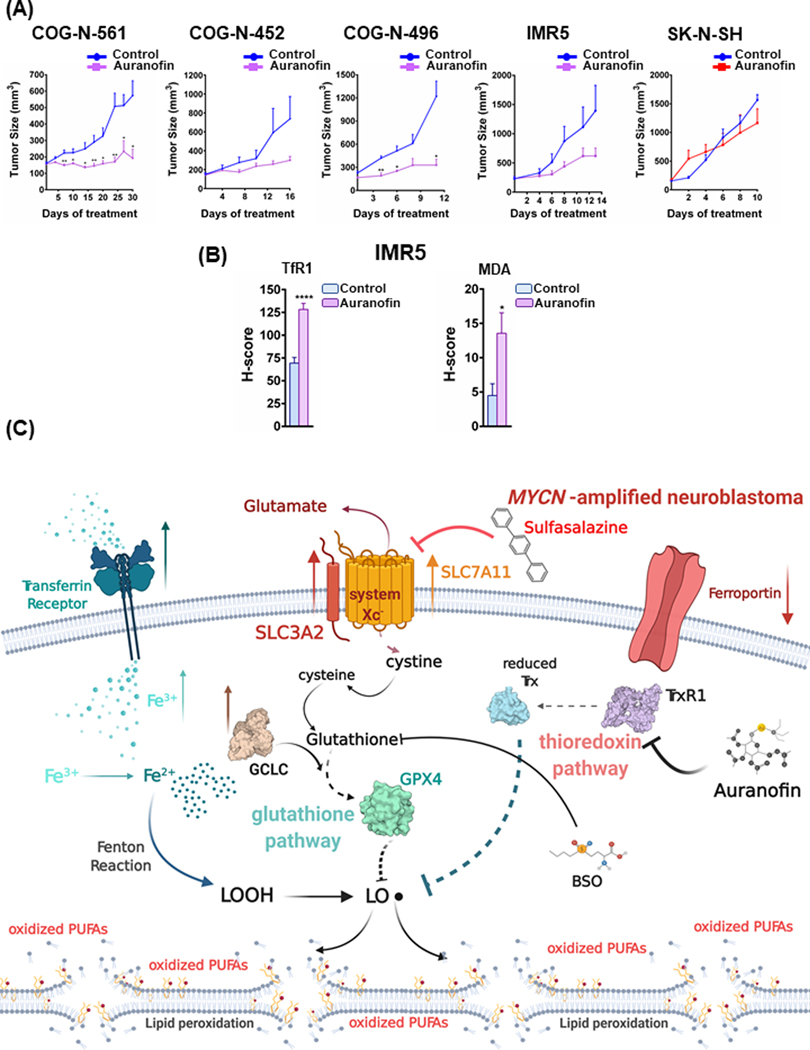
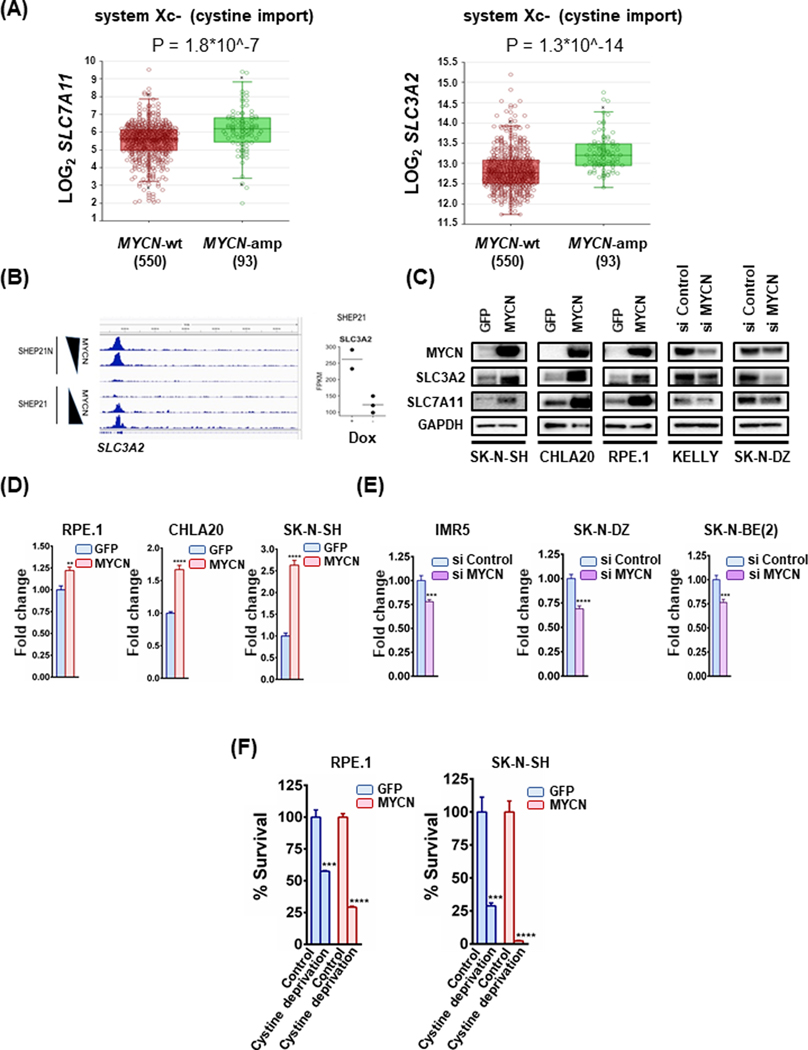
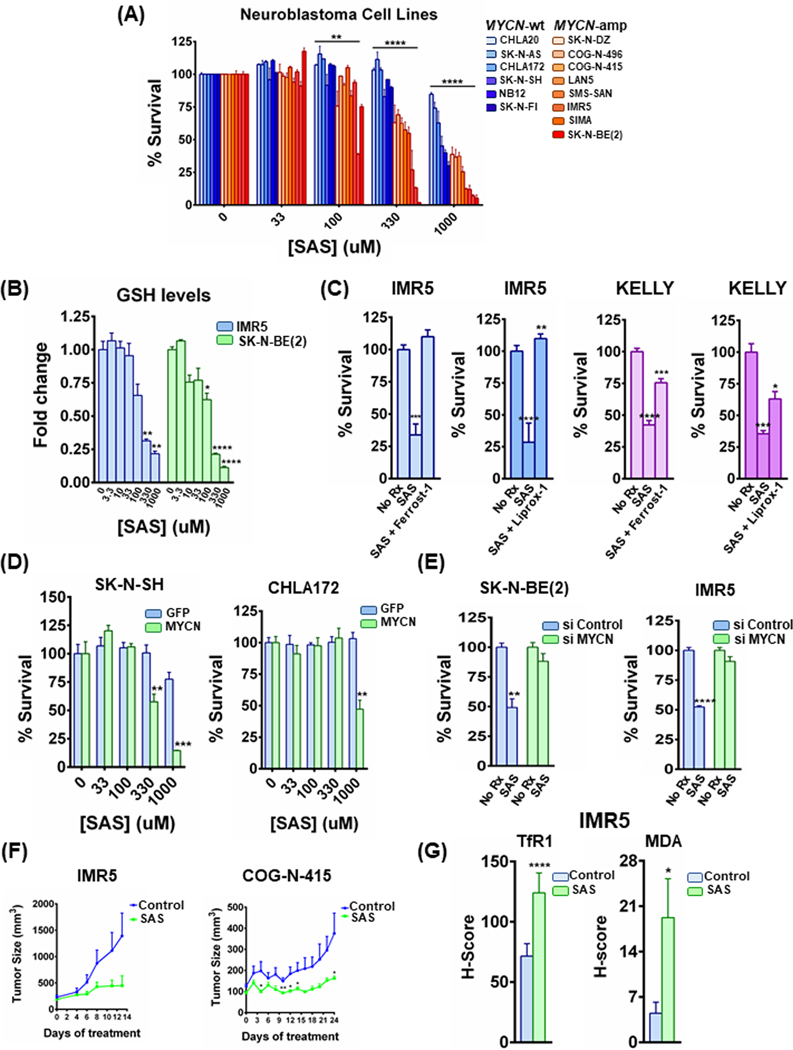
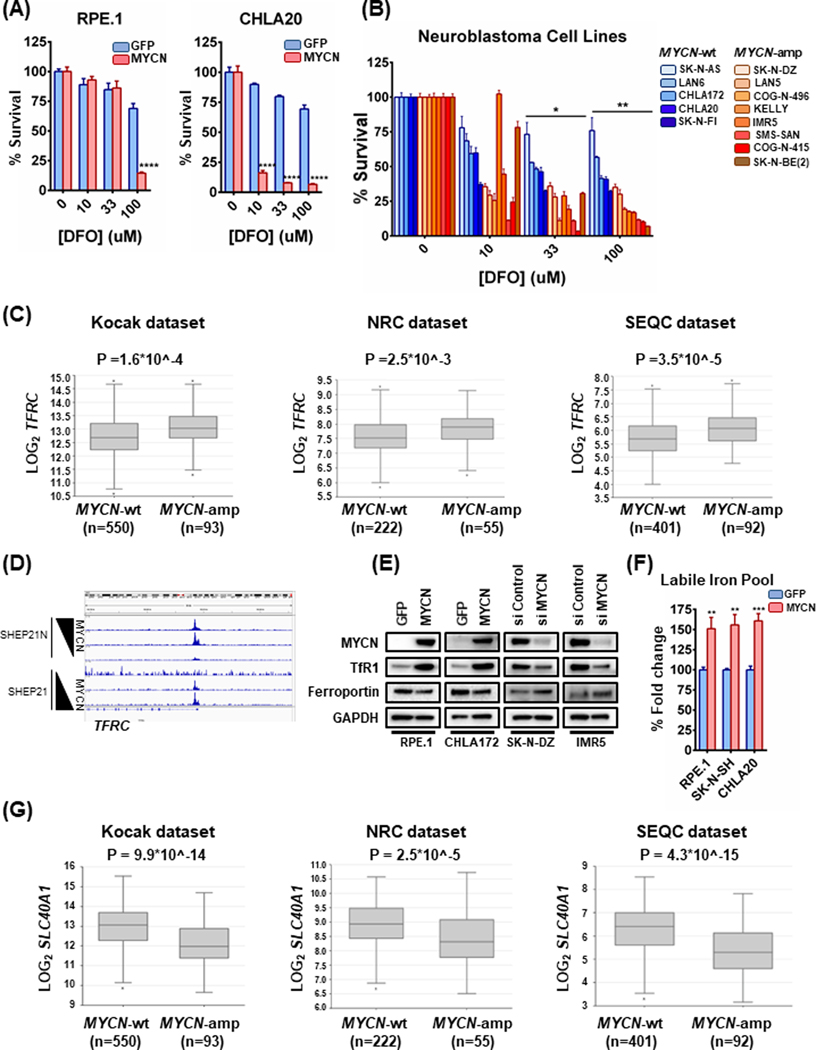
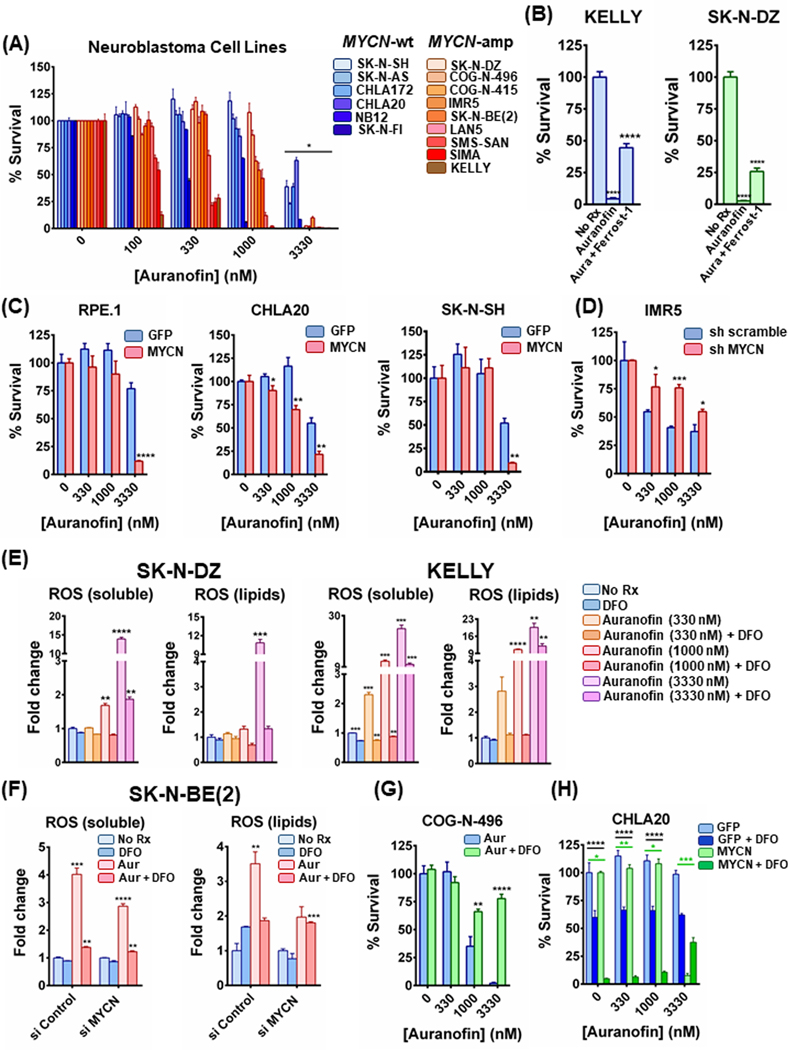
is amplified in 20% to 25% of neuroblastoma, and -amplified neuroblastoma contributes to a large percent of pediatric cancer-related deaths. Therapy improvements for this subtype of cancer are a high priority. Here we uncover a MYCN-dependent therapeutic vulnerability in neuroblastoma. Namely, amplified rewires the cell through expression of key receptors, ultimately enhancing iron influx through increased expression of the iron import transferrin receptor 1. Accumulating iron causes reactive oxygen species (ROS) production, and -amplified neuroblastomas show enhanced reliance on the system Xc- cystine/glutamate antiporter for ROS detoxification through increased transcription of this receptor. This dependence creates a marked vulnerability to targeting the system Xc-/glutathione (GSH) pathway with ferroptosis inducers. This reliance can be exploited through therapy with FDA-approved rheumatoid arthritis drugs sulfasalazine (SAS) and auranofin: in -amplified, patient-derived xenograft models, both therapies blocked growth and induced ferroptosis. SAS and auranofin activity was largely mitigated by the ferroptosis inhibitor ferrostatin-1, antioxidants like N-acetyl-L-cysteine, or by the iron scavenger deferoxamine (DFO). DFO reduced auranofin-induced ROS, further linking increased iron capture in -amplified neuroblastoma to a therapeutic vulnerability to ROS-inducing drugs. These data uncover an oncogene vulnerability to ferroptosis caused by increased iron accumulation and subsequent reliance on the system Xc-/GSH pathway. SIGNIFICANCE: This study shows how MYCN increases intracellular iron levels and subsequent GSH pathway activity and demonstrates the antitumor activity of FDA-approved SAS and auranofin in patient-derived xenograft models of -amplified neuroblastoma.
在 20%到 25%的神经母细胞瘤中扩增,而扩增的神经母细胞瘤导致了很大比例的儿科癌症相关死亡。这种癌症亚型的治疗进展是当务之急。在这里,我们揭示了神经母细胞瘤中 MYCN 依赖性的治疗弱点。即,通过表达关键受体,扩增重新布线细胞,最终通过增加铁摄取转铁蛋白受体 1 的表达来增强铁内流。积累的铁会导致活性氧(ROS)的产生,而扩增的神经母细胞瘤通过增加这个受体的转录表现出对系统 Xc-胱氨酸/谷氨酸反向转运蛋白的增强依赖,以清除 ROS。这种依赖性为用铁死亡诱导剂靶向系统 Xc-/谷胱甘肽(GSH)途径创造了明显的脆弱性。这种依赖性可以通过用 FDA 批准的类风湿关节炎药物柳氮磺胺吡啶(SAS)和金诺芬进行治疗来利用:在扩增的、患者来源的异种移植模型中,这两种治疗方法都阻断了肿瘤的生长并诱导了铁死亡。铁死亡抑制剂 ferrostatin-1、抗氧化剂如 N-乙酰-L-半胱氨酸或铁螯合剂去铁胺(DFO)大大减轻了 SAS 和金诺芬的活性。DFO 降低了金诺芬诱导的 ROS,进一步将扩增的神经母细胞瘤中增加的铁捕获与对 ROS 诱导药物的治疗脆弱性联系起来。这些数据揭示了一种由铁积累增加和随后对系统 Xc-/GSH 途径的依赖引起的致癌基因对铁死亡的脆弱性。意义:这项研究表明了 MYCN 如何增加细胞内铁水平和随后的 GSH 途径活性,并证明了 FDA 批准的 SAS 和金诺芬在扩增的神经母细胞瘤患者来源异种移植模型中的抗肿瘤活性。