• 文献检索
  • 文档翻译
  • 深度研究
  • 学术资讯
  • Suppr Zotero 插件Zotero 插件
  • 邀请有礼
  • 套餐&价格
  • 历史记录
应用&插件
Suppr Zotero 插件Zotero 插件浏览器插件Mac 客户端Windows 客户端微信小程序
定价
高级版会员购买积分包购买API积分包
服务
文献检索文档翻译深度研究API 文档MCP 服务
关于我们
关于 Suppr公司介绍联系我们用户协议隐私条款
关注我们

Suppr 超能文献

核心技术专利:CN118964589B侵权必究
粤ICP备2023148730 号-1Suppr @ 2026

文献检索

告别复杂PubMed语法,用中文像聊天一样搜索,搜遍4000万医学文献。AI智能推荐,让科研检索更轻松。

立即免费搜索

文件翻译

保留排版,准确专业,支持PDF/Word/PPT等文件格式,支持 12+语言互译。

免费翻译文档

深度研究

AI帮你快速写综述,25分钟生成高质量综述,智能提取关键信息,辅助科研写作。

立即免费体验

抑郁症、焦虑症和物质使用障碍患者对内脏感觉信号调节的知觉不敏感。

Perceptual insensitivity to the modulation of interoceptive signals in depression, anxiety, and substance use disorders.

机构信息

Laureate Institute for Brain Research, 6655 S Yale Ave, Tulsa, OK, 74136, USA.

Oxley College of Health Sciences, University of Tulsa, Tulsa, OK, USA.

出版信息

Sci Rep. 2021 Jan 22;11(1):2108. doi: 10.1038/s41598-021-81307-3.

DOI:10.1038/s41598-021-81307-3
PMID:33483527
原文链接:https://pmc.ncbi.nlm.nih.gov/articles/PMC7822872/
Abstract

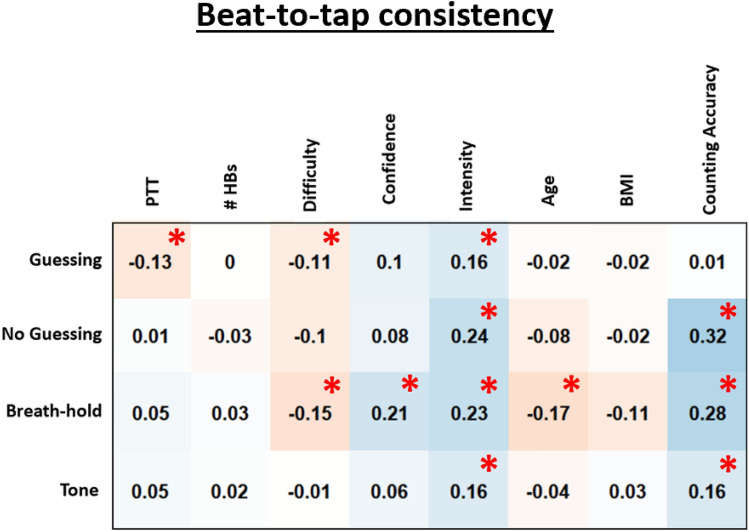
This study employed a series of heartbeat perception tasks to assess the hypothesis that cardiac interoceptive processing in individuals with depression/anxiety (N = 221), and substance use disorders (N = 136) is less flexible than that of healthy individuals (N = 53) in the context of physiological perturbation. Cardiac interoception was assessed via heartbeat tapping when: (1) guessing was allowed; (2) guessing was not allowed; and (3) experiencing an interoceptive perturbation (inspiratory breath hold) expected to amplify cardiac sensation. Healthy participants showed performance improvements across the three conditions, whereas those with depression/anxiety and/or substance use disorder showed minimal improvement. Machine learning analyses suggested that individual differences in these improvements were negatively related to anxiety sensitivity, but explained relatively little variance in performance. These results reveal a perceptual insensitivity to the modulation of interoceptive signals that was evident across several common psychiatric disorders, suggesting that interoceptive deficits in the realm of psychopathology manifest most prominently during states of homeostatic perturbation.

摘要

本研究采用了一系列心跳感知任务,以评估以下假设:在生理干扰的情况下,患有抑郁/焦虑症(N=221)和物质使用障碍(N=136)的个体的心脏内脏感觉加工不如健康个体(N=53)灵活。通过心跳敲击来评估心脏内脏感知,当:(1)允许猜测;(2)不允许猜测;(3)经历预期会放大心脏感觉的内脏感觉干扰(吸气屏息)时。健康参与者在三种情况下均表现出了性能的提高,而患有抑郁/焦虑症和/或物质使用障碍的参与者的提高则很少。机器学习分析表明,这些改善的个体差异与焦虑敏感负相关,但对性能的解释相对较小。这些结果揭示了对内脏感觉信号调制的知觉不敏感,这种不敏感在几种常见的精神障碍中都很明显,这表明在稳态干扰状态下,精神病理学领域的内脏感觉缺陷表现得最为明显。

https://cdn.ncbi.nlm.nih.gov/pmc/blobs/5447/7822872/6c90d4174460/41598_2021_81307_Fig3_HTML.jpg
https://cdn.ncbi.nlm.nih.gov/pmc/blobs/5447/7822872/68ff09832539/41598_2021_81307_Fig1_HTML.jpg
https://cdn.ncbi.nlm.nih.gov/pmc/blobs/5447/7822872/be8dcc4c47cd/41598_2021_81307_Fig2_HTML.jpg
https://cdn.ncbi.nlm.nih.gov/pmc/blobs/5447/7822872/6c90d4174460/41598_2021_81307_Fig3_HTML.jpg
https://cdn.ncbi.nlm.nih.gov/pmc/blobs/5447/7822872/68ff09832539/41598_2021_81307_Fig1_HTML.jpg
https://cdn.ncbi.nlm.nih.gov/pmc/blobs/5447/7822872/be8dcc4c47cd/41598_2021_81307_Fig2_HTML.jpg
https://cdn.ncbi.nlm.nih.gov/pmc/blobs/5447/7822872/6c90d4174460/41598_2021_81307_Fig3_HTML.jpg

相似文献

1
Perceptual insensitivity to the modulation of interoceptive signals in depression, anxiety, and substance use disorders.抑郁症、焦虑症和物质使用障碍患者对内脏感觉信号调节的知觉不敏感。
Sci Rep. 2021 Jan 22;11(1):2108. doi: 10.1038/s41598-021-81307-3.
2
A Bayesian computational model reveals a failure to adapt interoceptive precision estimates across depression, anxiety, eating, and substance use disorders.贝叶斯计算模型揭示了在抑郁、焦虑、饮食和物质使用障碍中,内感受精度估计无法适应的情况。
PLoS Comput Biol. 2020 Dec 14;16(12):e1008484. doi: 10.1371/journal.pcbi.1008484. eCollection 2020 Dec.
3
Sleep and the heart: Interoceptive differences linked to poor experiential sleep quality in anxiety and depression.睡眠与心脏:内感受差异与焦虑和抑郁中不良的体验性睡眠质量相关。
Biol Psychol. 2017 Jul;127:163-172. doi: 10.1016/j.biopsycho.2017.05.011. Epub 2017 May 26.
4
Transdiagnostic failure to adapt interoceptive precision estimates across affective, substance use, and eating disorders: A replication and extension of previous results.跨情感障碍、物质使用障碍和进食障碍的内感受性精度估计的跨诊断适应失败:对先前结果的复制和扩展。
Biol Psychol. 2024 Sep;191:108825. doi: 10.1016/j.biopsycho.2024.108825. Epub 2024 May 31.
5
Cardiac interoception in patients accessing secondary mental health services: A transdiagnostic study.使用二级心理健康服务患者的心脏内感受:一项跨诊断研究。
Auton Neurosci. 2023 Mar;245:103072. doi: 10.1016/j.autneu.2023.103072. Epub 2023 Jan 13.
6
Sensitivity to changes in rate of heartbeats as a measure of interoceptive ability.心率变化敏感性作为内感受能力的测量指标。
J Neurophysiol. 2021 Nov 1;126(5):1799-1813. doi: 10.1152/jn.00059.2021. Epub 2021 Oct 20.
7
Trait and state interoceptive abnormalities are associated with dissociation and seizure frequency in patients with functional seizures.特质和状态内感受异常与功能性癫痫患者的分离和癫痫发作频率有关。
Epilepsia. 2020 Jun;61(6):1156-1165. doi: 10.1111/epi.16532. Epub 2020 Jun 5.
8
Normal interoceptive accuracy in women with bulimia nervosa.神经性贪食症女性的正常内感受准确性。
Psychiatry Res. 2016 Jun 30;240:328-332. doi: 10.1016/j.psychres.2016.04.072. Epub 2016 Apr 22.
9
The roles of interoceptive sensitivity and metacognitive interoception in panic.内感受性敏感性和元认知内感受在惊恐障碍中的作用。
Behav Brain Funct. 2015 Apr 8;11:14. doi: 10.1186/s12993-015-0058-8.
10
Interoception, somatic symptoms, and somatization tendency in Chinese individuals with subsyndromal depression: A follow-up study.亚综合征抑郁个体的内感受、躯体症状和躯体化倾向:一项随访研究。
Psych J. 2024 Aug;13(4):616-624. doi: 10.1002/pchj.739. Epub 2024 Feb 16.

引用本文的文献

1
Computational Mechanisms of Approach-Avoidance Conflict Predictively Differentiate Between Affective and Substance Use Disorders.趋近-回避冲突的计算机制可预测区分情感障碍和物质使用障碍。
Comput Psychiatr. 2025 Sep 5;9(1):159-186. doi: 10.5334/cpsy.131. eCollection 2025.
2
Factors Linking Interoception and Sleep Across the Adult Lifespan.贯穿成年期将内感受与睡眠联系起来的因素。
Psychophysiology. 2025 Aug;62(8):e70120. doi: 10.1111/psyp.70120.
3
Inconsistent Bodily Feedback? Interoceptive Sensibility Affects Internet Gaming Disorder in Emerging Adults.

本文引用的文献

1
Neural Circuits of Interoception.内脏感知的神经回路。
Trends Neurosci. 2021 Jan;44(1):17-28. doi: 10.1016/j.tins.2020.09.011.
2
A Bayesian computational model reveals a failure to adapt interoceptive precision estimates across depression, anxiety, eating, and substance use disorders.贝叶斯计算模型揭示了在抑郁、焦虑、饮食和物质使用障碍中,内感受精度估计无法适应的情况。
PLoS Comput Biol. 2020 Dec 14;16(12):e1008484. doi: 10.1371/journal.pcbi.1008484. eCollection 2020 Dec.
3
Greater decision uncertainty characterizes a transdiagnostic patient sample during approach-avoidance conflict: a computational modelling approach.
身体反馈不一致?内感受敏感性影响青少年的网络成瘾障碍。
Behav Sci (Basel). 2025 Jun 30;15(7):896. doi: 10.3390/bs15070896.
4
Neurophysiological dynamics of visceral signals in emotion, self and bodily consciousness.情绪、自我与身体意识中内脏信号的神经生理动力学
Proc Biol Sci. 2025 Jun;292(2048):20242625. doi: 10.1098/rspb.2024.2625. Epub 2025 Jun 4.
5
Measuring Cardiac Interoceptive Accuracy in Infancy: Lessons From the Adult Literature.测量婴儿期的心脏内感受准确性:来自成人文献的经验教训。
Psychophysiology. 2025 Mar;62(3):e70041. doi: 10.1111/psyp.70041.
6
Mindfulness Training vs Recovery Support for Opioid Use, Craving, and Anxiety During Buprenorphine Treatment: A Randomized Clinical Trial.丁丙诺啡治疗期间正念训练与阿片类药物使用、渴望及焦虑的康复支持对比:一项随机临床试验
JAMA Netw Open. 2025 Jan 2;8(1):e2454950. doi: 10.1001/jamanetworkopen.2024.54950.
7
Computational Mechanisms of Learning and Forgetting Differentiate Affective and Substance Use Disorders.学习与遗忘的计算机制区分情感障碍和物质使用障碍。
Res Sq. 2024 Oct 31:rs.3.rs-4682224. doi: 10.21203/rs.3.rs-4682224/v1.
8
Change starts with the body: Interoceptive appreciation mediates the effect of mindfulness training on behavior change - an effect moderated by depression severity.改变始于身体:内感受性觉知调节正念训练对行为改变的影响——该效应受抑郁严重程度的调节。
Psychiatry Res. 2024 Dec;342:116230. doi: 10.1016/j.psychres.2024.116230. Epub 2024 Oct 19.
9
Impulsivity, trauma history, and interoceptive awareness contribute to completion of a criminal diversion substance use treatment program for women.冲动性、创伤史和内感受性觉知有助于女性完成刑事分流物质使用治疗项目。
Front Psychol. 2024 Sep 4;15:1390199. doi: 10.3389/fpsyg.2024.1390199. eCollection 2024.
10
A Computational Account of the Development and Evolution of Psychotic Symptoms.精神病症状发展与演变的计算学阐释
Biol Psychiatry. 2025 Jan 15;97(2):117-127. doi: 10.1016/j.biopsych.2024.08.026. Epub 2024 Sep 10.
在趋近-回避冲突中,跨诊断患者样本的决策不确定性更大:一种计算建模方法。
J Psychiatry Neurosci. 2021 Jan 4;46(1):E74-E87. doi: 10.1503/jpn.200032.
4
Imprecise action selection in substance use disorder: Evidence for active learning impairments when solving the explore-exploit dilemma.物质使用障碍中的不精确动作选择:在解决探索-利用困境时主动学习损伤的证据。
Drug Alcohol Depend. 2020 Oct 1;215:108208. doi: 10.1016/j.drugalcdep.2020.108208. Epub 2020 Aug 6.
5
Publisher Correction: Forms of prediction in the nervous system.出版商更正:神经系统中的预测形式。
Nat Rev Neurosci. 2020 May;21(5):297. doi: 10.1038/s41583-020-0296-0.
6
Comment on "Zamariola et al. (2018), Interoceptive Accuracy Scores are Problematic: Evidence from Simple Bivariate Correlations"-The empirical data base, the conceptual reasoning and the analysis behind this statement are misconceived and do not support the authors' conclusions.评 Zamariola 等人(2018)的《内感受准确性评分存在问题:来自简单二元相关的证据》-该论述背后的实证数据库、概念推理和分析存在误解,并不支持作者的结论。
Biol Psychol. 2020 Apr;152:107870. doi: 10.1016/j.biopsycho.2020.107870. Epub 2020 Feb 21.
7
A heartfelt response to Zimprich et al. (2020), and Ainley et al. (2020)'s commentaries: Acknowledging issues with the HCT would benefit interoception research.对 Zimprich 等人(2020 年)和 Ainley 等人(2020 年)评论的衷心回应:承认 HCT 的问题将有益于内脏感知研究。
Biol Psychol. 2020 Apr;152:107869. doi: 10.1016/j.biopsycho.2020.107869. Epub 2020 Feb 20.
8
Interoceptive attention in opioid and stimulant use disorder.阿片类药物和兴奋剂使用障碍中的内感受性注意
Addict Biol. 2020 Nov;25(6):e12831. doi: 10.1111/adb.12831. Epub 2019 Oct 16.
9
A review of neuroimaging studies in generalized anxiety disorder: "So where do we stand?".广泛性焦虑障碍的神经影像学研究述评:“那么我们现在处于什么位置?”。
J Neural Transm (Vienna). 2019 Sep;126(9):1203-1216. doi: 10.1007/s00702-019-02024-w. Epub 2019 Jun 20.
10
Major Depressive Disorder Is Associated with Impaired Interoceptive Accuracy: A Systematic Review.重度抑郁症与内感受准确性受损相关:一项系统综述。
Brain Sci. 2019 Jun 6;9(6):131. doi: 10.3390/brainsci9060131.