Laboratory of Clinical Investigation, National Institute on Aging, National Institutes of Health, Baltimore, MD, 21224, USA.
Translational Gerontology Branch, National Institute on Aging, National Institutes of Health, Baltimore, MD, 21224, USA.
Int J Obes (Lond). 2021 Apr;45(4):850-859. doi: 10.1038/s41366-021-00749-x. Epub 2021 Jan 22.
Myelin loss is a central feature of several neurodegenerative diseases, including Alzheimer's disease (AD). In animal studies, a link has been established between obesity and impairment of oligodendrocyte maturation, the cells that produce and maintain myelin. Although clinical magnetic resonance imaging (MRI) studies have revealed microstructural alterations of cerebral white matter tissue in subjects with obesity, no specific myelin vs. obesity correlation studies have been performed in humans using a direct myelin content metric.
To assess the association between obesity and myelin integrity in cerebral white matter using advanced MRI methodology for myelin content imaging.
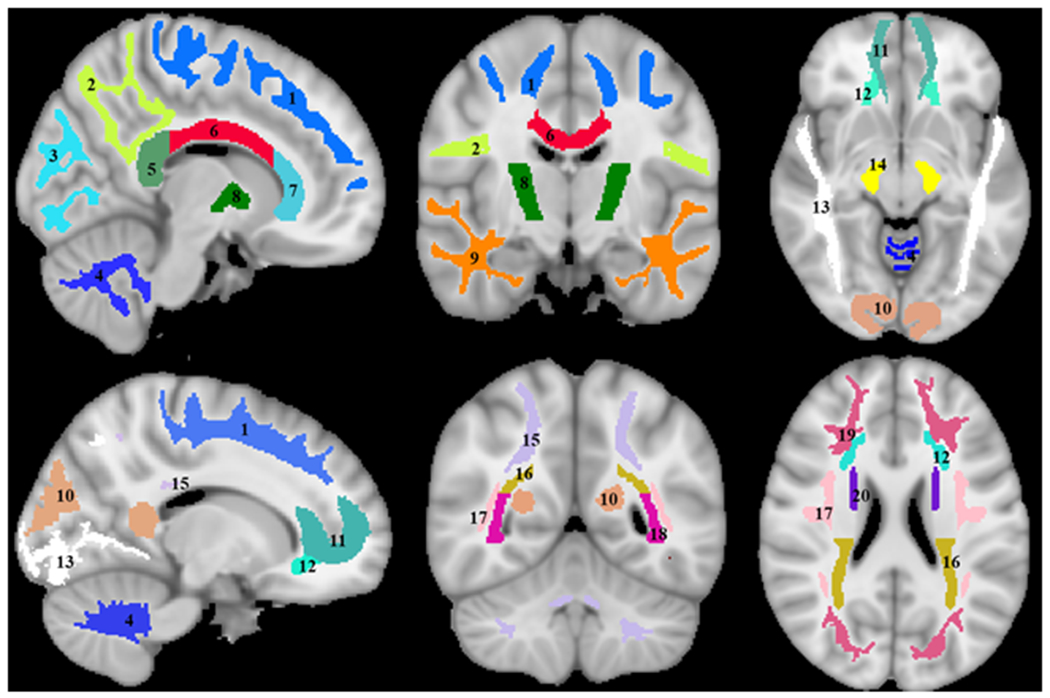
Studies were performed in the clinical unit of the National Institute on Aging on a cohort of 119 cognitively unimpaired adults. Using advanced MRI methodology, we measured whole-brain myelin water fraction (MWF), a marker of myelin content. Automated brain mapping algorithms and statistical models were used to evaluate the relationships between MWF and obesity, measured using the body mass index (BMI) or waist circumference (WC), in various white matter brain regions.
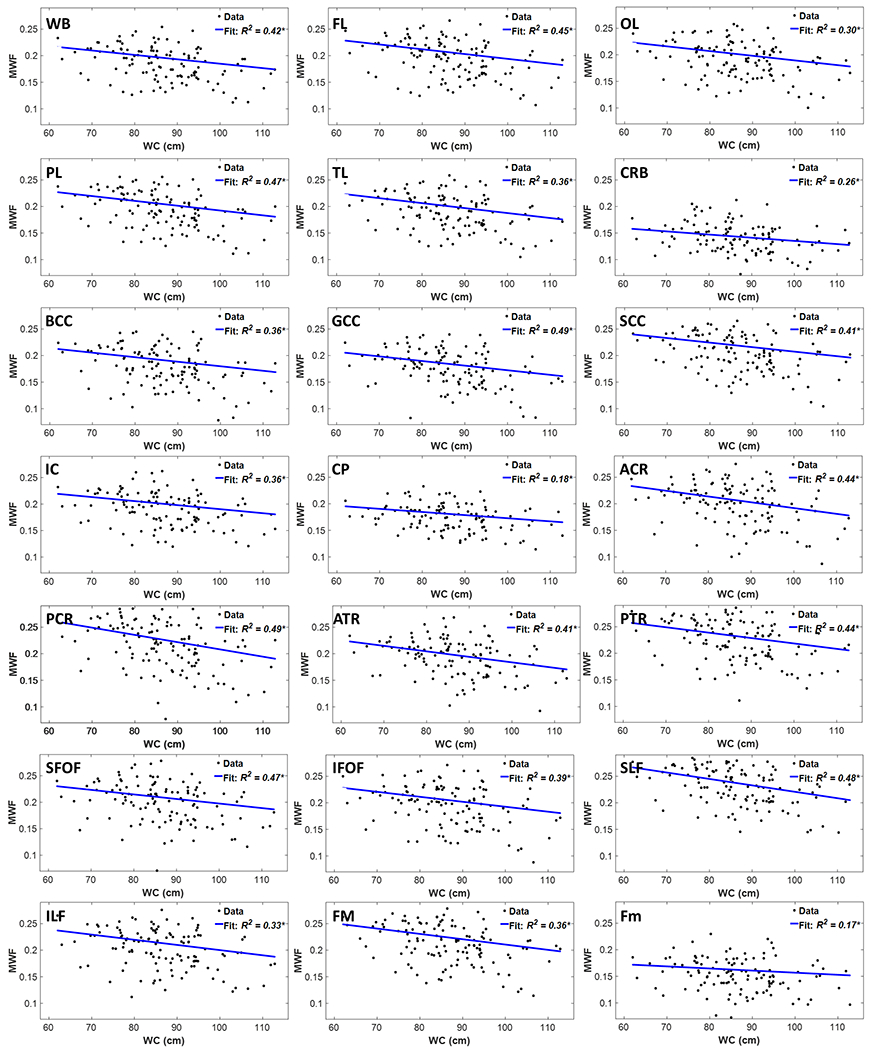
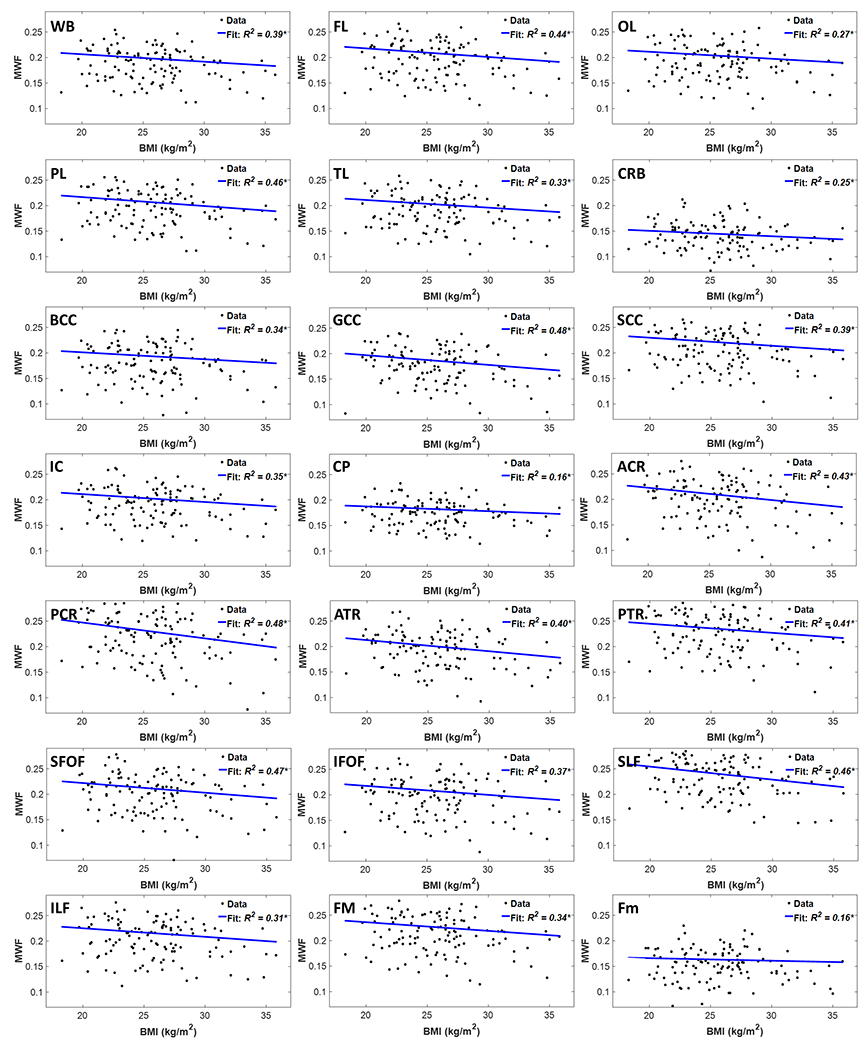
MWF was negatively associated with BMI or WC in all brain regions evaluated. These associations, adjusted for sex, ethnicity, and age, were statistically significant in most brain regions examined (p < 0.05), with higher BMI or WC corresponding to lower myelin content. Finally, in agreement with previous work, MWF exhibited a quadratic, inverted U-shaped, association with age; this is attributed to the process of myelination from youth through middle age, followed by demyelination afterward.
These findings suggest that obesity was significantly associated with white matter integrity, and in particular myelin content. We expect that this work will lay the foundation for further investigations to clarify the nature of myelin damage in neurodegeneration, including AD, and the effect of lifestyle factors such as diet and physical activity on myelination.
髓鞘丢失是包括阿尔茨海默病(AD)在内的几种神经退行性疾病的一个核心特征。在动物研究中,已经发现肥胖与少突胶质细胞成熟受损之间存在联系,少突胶质细胞是产生和维持髓鞘的细胞。尽管临床磁共振成像(MRI)研究已经揭示了肥胖受试者大脑白质组织的微观结构改变,但尚未使用直接的髓鞘含量指标在人类中进行特定的髓鞘与肥胖相关性研究。
使用先进的髓鞘含量成像 MRI 方法评估肥胖与大脑白质髓鞘完整性之间的相关性。
在国家老龄化研究所的临床单位对 119 名认知正常的成年人进行了研究。使用先进的 MRI 方法,我们测量了全脑髓鞘水分数(MWF),这是髓鞘含量的标志物。使用自动脑图谱算法和统计模型评估了 MWF 与肥胖之间的关系,肥胖使用体重指数(BMI)或腰围(WC)测量,评估了各个大脑白质区域。
MWF 与所有评估的大脑区域的 BMI 或 WC 呈负相关。这些关联在大多数检查的大脑区域中(p<0.05)经过性别、种族和年龄调整后具有统计学意义,较高的 BMI 或 WC 对应较低的髓鞘含量。最后,与之前的工作一致,MWF 与年龄呈二次、倒置 U 形相关;这归因于从青年到中年的髓鞘形成过程,之后是脱髓鞘过程。
这些发现表明肥胖与白质完整性,特别是髓鞘含量显著相关。我们期望这项工作将为进一步研究奠定基础,以阐明神经退行性变(包括 AD)中髓鞘损伤的性质,以及饮食和体育活动等生活方式因素对髓鞘形成的影响。