Concordia Institute for Information Systems Engineering, Gina Cody School of Engineering and Computer Science, Concordia University, Montreal, QC, Canada.
Sci Rep. 2021 Jan 22;11(1):2119. doi: 10.1038/s41598-021-81655-0.
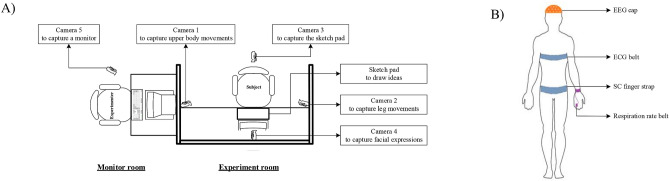
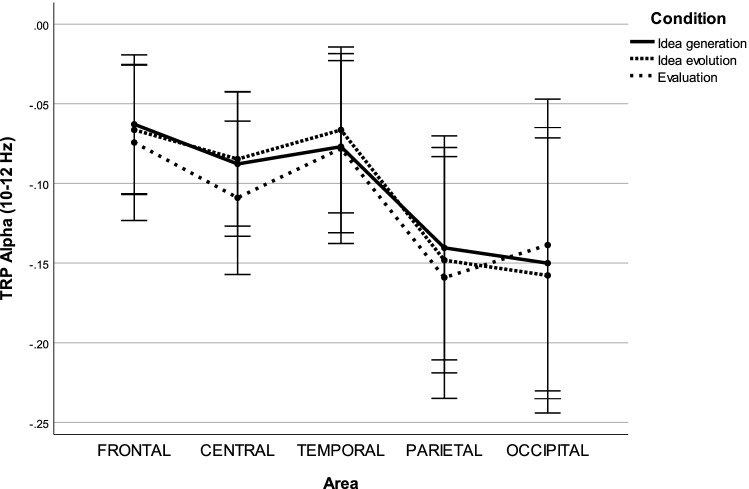
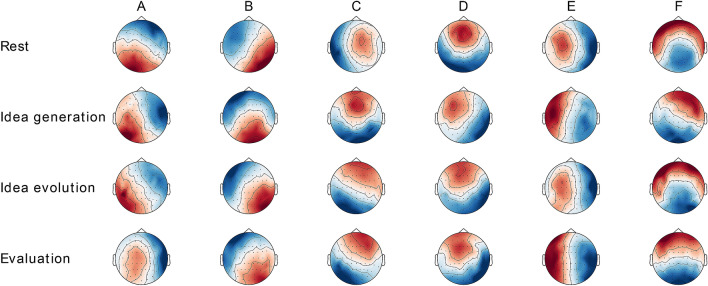
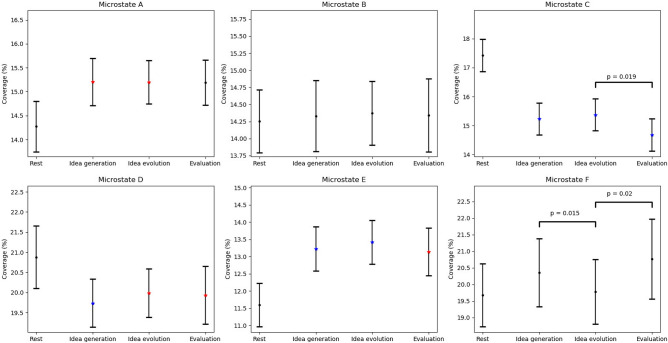
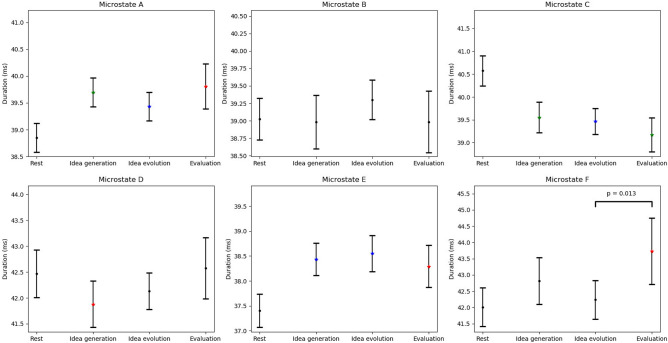
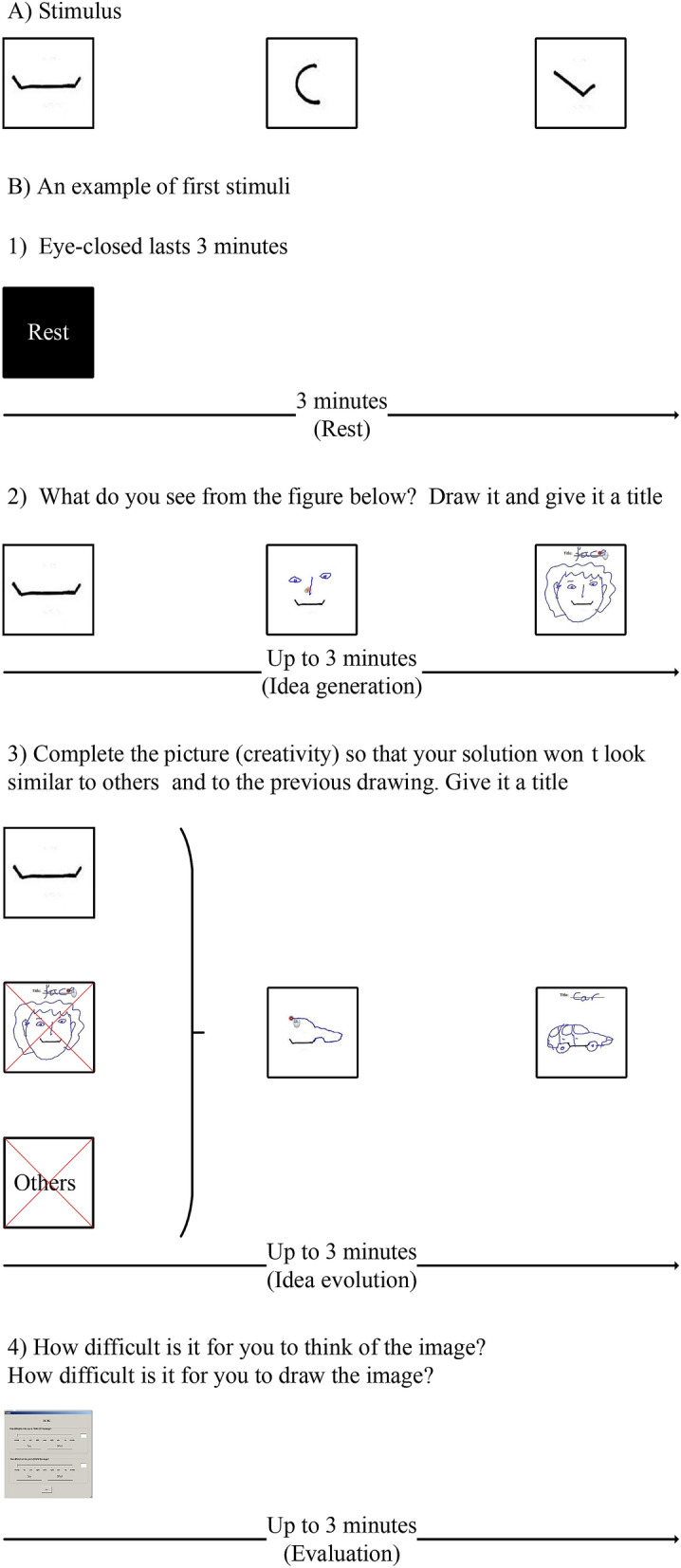
Many neurocognitive studies endeavor to understand neural mechanisms of basic creative activities in strictly controlled experiments. However, little evidence is available regarding the neural mechanisms of interactions between basic activities underlying creativity in such experiments. Moreover, strictly controlled experiments might limit flexibility/freedom needed for creative exploration. Thus, this study investigated the whole-brain neuronal networks' interactions between three modes of thinking: idea generation, idea evolution, and evaluation in a loosely controlled creativity experiment. The loosely controlled creativity experiment will provide a degree of flexibility/freedom for participants to incubate creative ideas through extending response time from a few seconds to 3 min. In the experiment, participants accomplished a modified figural Torrance Test of Creative Thinking (TTCT-F) while their EEG signals were recorded. During idea generation, a participant was instructed to complete a sketch that was immediately triggered by a sketch stimulus at first sight. During idea evolution, a participant was instructed to complete a sketch that is radically distinctive from what was immediately triggered by the sketch stimulus. During the evaluation, a participant was instructed to evaluate difficulties of thinking and drawing during idea generation and evolution. It is expected that participants would use their experience to intuitively complete a sketch during idea generation while they could use more divergent and imaginative thinking to complete a possible creative sketch during idea evolution. Such an experimental design is named as a loosely controlled creativity experiment, which offers an approach to studying creativity in an ecologically valid manner. The validity of the loosely controlled creativity experiment could be verified through comparing its findings on phenomena that have been effectively studied by validated experimental research. It was found from our experiment that alpha power decreased significantly from rest to the three modes of thinking. These findings are consistent with that from visual creativity research based on event-related (de)synchronization (ERD/ERS) and task-related power changes (TRP). Specifically, in the lower alpha band (8-10 Hz), the decreases of alpha power were significantly lower over almost the entire scalp during idea evolution compared to the other modes of thinking. This finding indicated that idea evolution requires less general attention demands than the other two modes of thinking since the lower alpha ERD has been reported as being more likely to reflect general task demands such as attentional processes. In the upper alpha band (10-12 Hz), the decreases of alpha power were significantly higher over central sites during the evaluation compared to idea evolution. This finding indicated that evaluation involves more task-specific demands since the upper alpha ERD has been found as being more likely to reflect task-specific demands such as memory and intelligence, as was defined in the literature. In addition, new findings were obtained since the loosely controlled creativity experiment could activate multiple brain networks to accomplish the tasks involving the three modes of thinking. EEG microstate analysis was used to structure the unstructured EEG data to detect the activation of multiple brain networks. Combined EEG-fMRI and EEG source localization studies have indicated that EEG microstate classes are closely associated with the resting-state network as identified using fMRI. It was found that the default mode network was more active during idea evolution compared to the other two modes of thinking, while the cognitive control network was more active during the evaluation compared to the other two modes of thinking. This finding indicated that idea evolution might be more associated with unconscious and internal directed attention processes. Taken together, the loosely controlled creativity experiment with the support of EEG microstate analysis appears to offer an effective approach to investigating the real-world complex creativity activity.
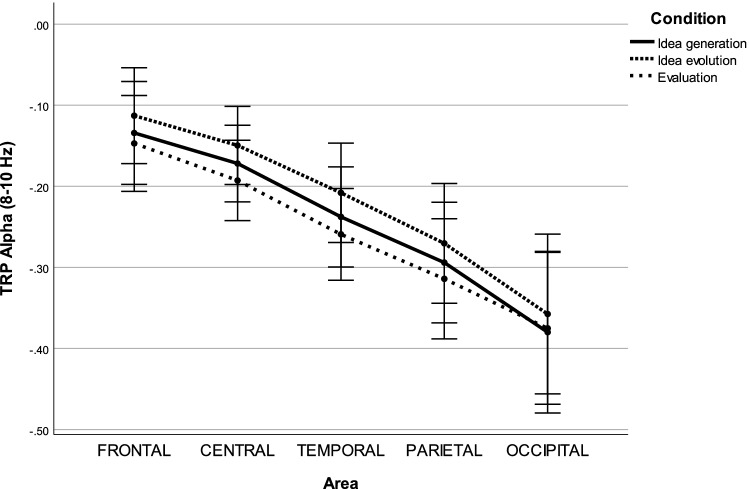
许多神经认知研究都致力于在严格控制的实验中理解基本创造性活动的神经机制。然而,关于这些实验中基本活动之间相互作用的神经机制的证据很少。此外,严格控制的实验可能会限制创造性探索所需的灵活性/自由度。因此,本研究在一个松散控制的创造力实验中,调查了三种思维模式(想法生成、想法进化和评估)之间的全脑神经元网络相互作用。在这个松散控制的创造力实验中,参与者通过将反应时间从几秒钟延长到 3 分钟,为参与者孵化创意想法提供了一定程度的灵活性/自由度。在实验中,参与者完成了一个修改后的图形式托兰斯创造力测验(TTCT-F),同时记录了他们的 EEG 信号。在想法生成阶段,参与者被要求完成一个草图,这个草图是由第一眼看到的草图刺激立即引发的。在想法进化阶段,参与者被要求完成一个与草图刺激立即引发的内容截然不同的草图。在评估阶段,参与者被要求评估在想法生成和进化过程中思维和绘画的难度。预计参与者将利用自己的经验直观地完成一个草图,而在想法进化过程中,他们可以使用更多发散和富有想象力的思维来完成一个可能的创意草图。这种实验设计被命名为松散控制的创造力实验,它为以生态有效的方式研究创造力提供了一种方法。通过比较松散控制的创造力实验在已被有效研究的现象上的发现,可以验证其有效性。我们的实验发现,阿尔法功率从休息状态显著下降到三种思维模式。这些发现与基于事件相关(去)同步(ERD/ERS)和任务相关功率变化(TRP)的视觉创造力研究的结果一致。具体来说,在较低的阿尔法波段(8-10 Hz),与其他两种思维模式相比,阿尔法功率在进化过程中几乎整个头皮上的下降幅度明显较低。这一发现表明,与其他两种思维模式相比,进化过程需要的一般注意力需求较少,因为已经报道较低的阿尔法 ERD 更有可能反映一般的任务需求,例如注意过程。在上一个阿尔法波段(10-12 Hz),与进化过程相比,评估过程中中央部位的阿尔法功率下降幅度明显较高。这一发现表明,评估涉及更多特定于任务的需求,因为已经发现上一个阿尔法 ERD 更有可能反映特定于任务的需求,例如记忆和智力,这在文献中已经定义。此外,由于松散控制的创造力实验可以激活多个大脑网络来完成涉及三种思维模式的任务,因此获得了新的发现。脑电图微状态分析被用来对非结构化的脑电图数据进行结构分析,以检测多个大脑网络的激活。脑电图-功能磁共振成像(EEG-fMRI)和脑电图源定位研究表明,脑电图微状态类别与使用 fMRI 识别的静息状态网络密切相关。结果发现,与其他两种思维模式相比,默认模式网络在进化过程中更活跃,而与其他两种思维模式相比,认知控制网络在评估过程中更活跃。这一发现表明,进化过程可能与无意识和内部导向的注意力过程更相关。综上所述,在脑电图微状态分析的支持下,松散控制的创造力实验似乎提供了一种有效的方法来研究现实世界中复杂的创造力活动。