University of Liège, Liège, Belgium.
Department of Health Services Research, CAPHRI Care and Public Health Research Institute, Maastricht University, P.O. Box 616, Maastricht, 6200 MD, The Netherlands.
Orphanet J Rare Dis. 2021 Jan 23;16(1):47. doi: 10.1186/s13023-021-01695-7.
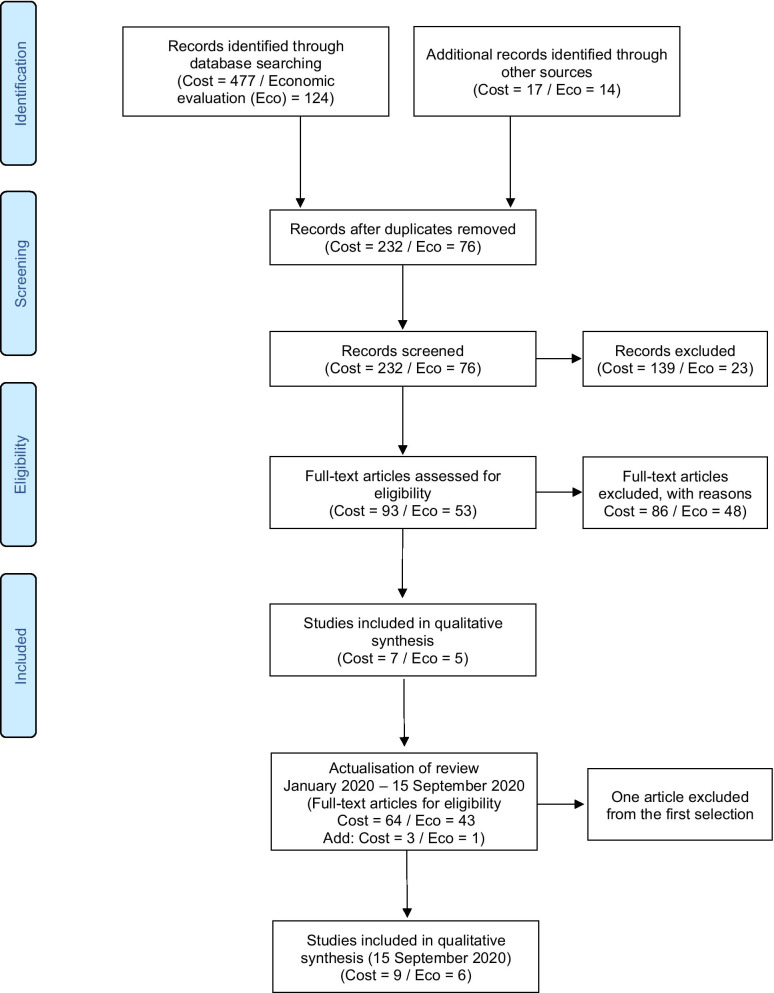
Spinal muscular atrophy (SMA) is a rare and devastating condition for which new disease-modifying treatments have recently been approved. Given the increasing importance of economic considerations in healthcare decision-making, this review summarizes the studies assessing the cost of SMA and economic evaluations of treatments. A systematic review of the literature in PubMed and Scopus up to 15 September 2020 was conducted according to PRISMA guidelines.
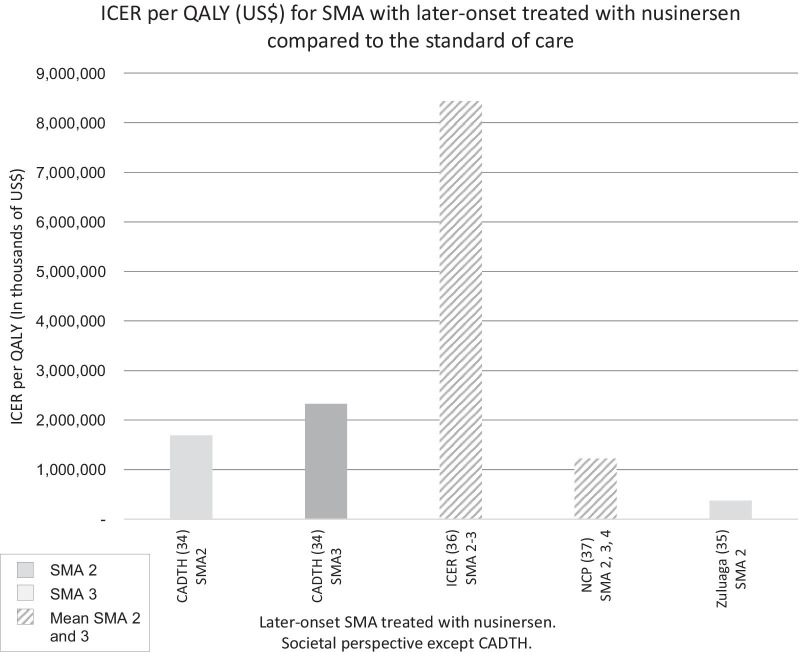
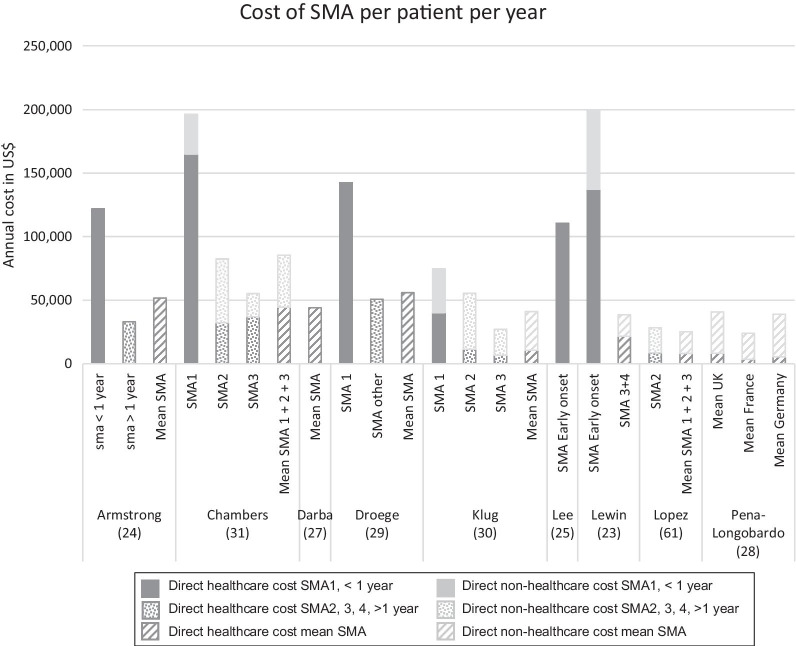
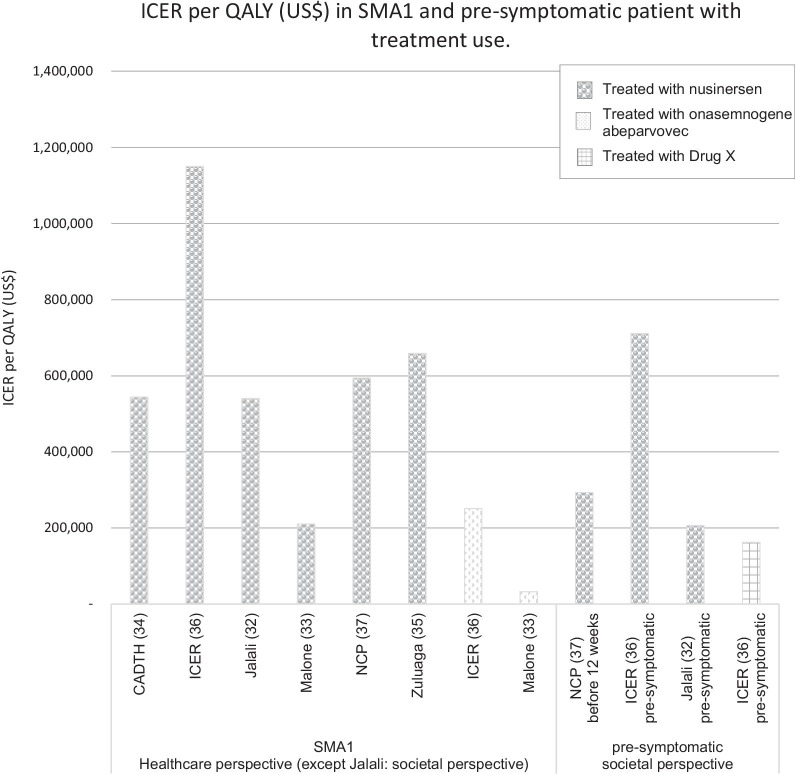
Nine studies reporting the annual cost of care of patients with SMA and six evaluations of the cost-effectiveness of SMA treatments were identified. The average annual cost of SMA1, the most frequent and severe form in which symptoms appear before the age of 6 months were similar according to the different studies, ranged from $75,047 to $196,429 per year. The yearly costs for the forms of the later-onset form, called SMA2, SMA3, and SMA4, which were usually pooled in estimates of healthcare costs, were more variable, ranging from $27,157 to $82,474. The evaluations of cost-effectiveness of treatment compared nusinersen treatment against standard of care (n = 3), two treatments (nusinersen and onasemnogene abeparvovec) against each other and no drug treatment (n = 1), nusinersen versus onasemnogene abeparvovec (n = 1), and standard of care versus nusinersen with and without newborn screening (n = 1). The incremental cost-effectiveness ratio (ICER) of nusinersen compared to standard of care in SMA1 ranged from $210,095 to $1,150,455 per quality-adjusted life years (QALY) gained and that for onasemnogene abeparvovec ranged from $32,464 to $251,403. For pre-symptomatic patients, the ICER value ranged from $206,409 to $735,519. The ICERs for later-onset forms of SMA (2, 3 and 4) were more diverse ranging from $275,943 to $8,438,049.
This review confirms the substantial cost burden of standard of care for SMA patients and the high cost-effectiveness ratios of the approved drugs at the current price when delivered in post-symptomatic patients. Since few studies have been conducted so far, there is a need for further prospective and independent economic studies in pre- and post-symptomatic patients.
脊髓性肌萎缩症(SMA)是一种罕见且严重的疾病,最近已有新的治疗方法获批。鉴于在医疗保健决策中经济考虑因素的重要性日益增加,因此本文对 SMA 的成本评估研究和治疗经济学评价进行了综述。按照 PRISMA 指南,我们对 PubMed 和 Scopus 截至 2020 年 9 月 15 日的文献进行了系统检索。
共检索到 9 项关于 SMA 患者治疗费用的研究和 6 项 SMA 治疗成本效益评价。根据不同的研究,最常见且症状在 6 个月前出现的 SMA1 患者的年平均治疗费用相似,每年为 75047 美元至 196429 美元。对于较晚发病的 SMA2、SMA3 和 SMA4 形式,其年度成本通常在医疗保健成本估计中被汇总,差异较大,每年为 27157 美元至 82474 美元。3 项研究比较了 nusinersen 治疗与标准治疗的成本效益,2 项研究比较了 nusinersen 和 onasemnogene abeparvovec 之间的成本效益,1 项研究比较了无药物治疗的成本效益,1 项研究比较了 nusinersen 和 onasemnogene abeparvovec 之间的成本效益,1 项研究比较了标准治疗与有和无新生儿筛查的 nusinersen 之间的成本效益。SMA1 患者中,nusinersen 与标准治疗相比的增量成本效益比(ICER)为每获得 1 个质量调整生命年(QALY)需 210095 美元至 1150455 美元,onasemnogene abeparvovec 的 ICER 为 32464 美元至 251403 美元。对于有症状前患者,ICER 值为 206409 美元至 735519 美元。SMA 较晚发病形式(2、3 和 4)的 ICER 更为多样化,为 275943 美元至 8438049 美元。
本文证实了 SMA 患者标准治疗的费用负担巨大,在当前价格下,获批药物对有症状和无症状患者的成本效益比都很高。由于迄今为止进行的研究较少,因此需要对有症状前和无症状患者进行进一步的前瞻性和独立的经济研究。