Department of Cell Biology and Anatomy, Institute of Biomedicine, University of Turku, Kiinamyllynkatu 10, 20520, Turku, Finland.
Department of Dermatology, University of Turku and Turku University Hospital, Turku, Finland.
Mol Biol Rep. 2021 Feb;48(2):1243-1254. doi: 10.1007/s11033-020-06128-5. Epub 2021 Jan 24.
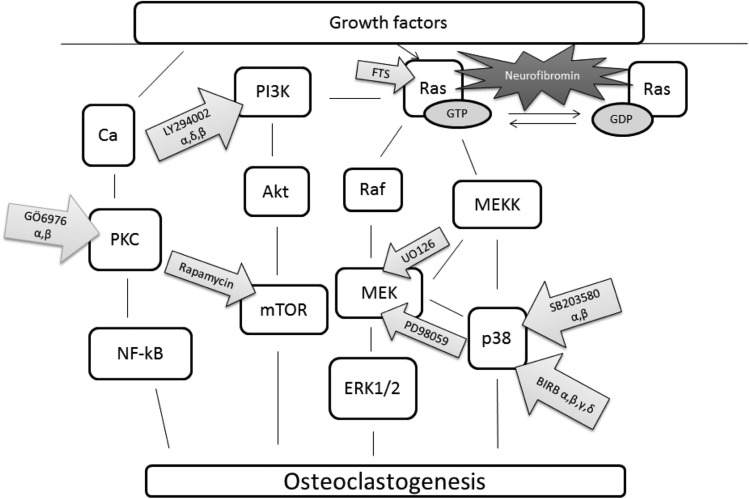
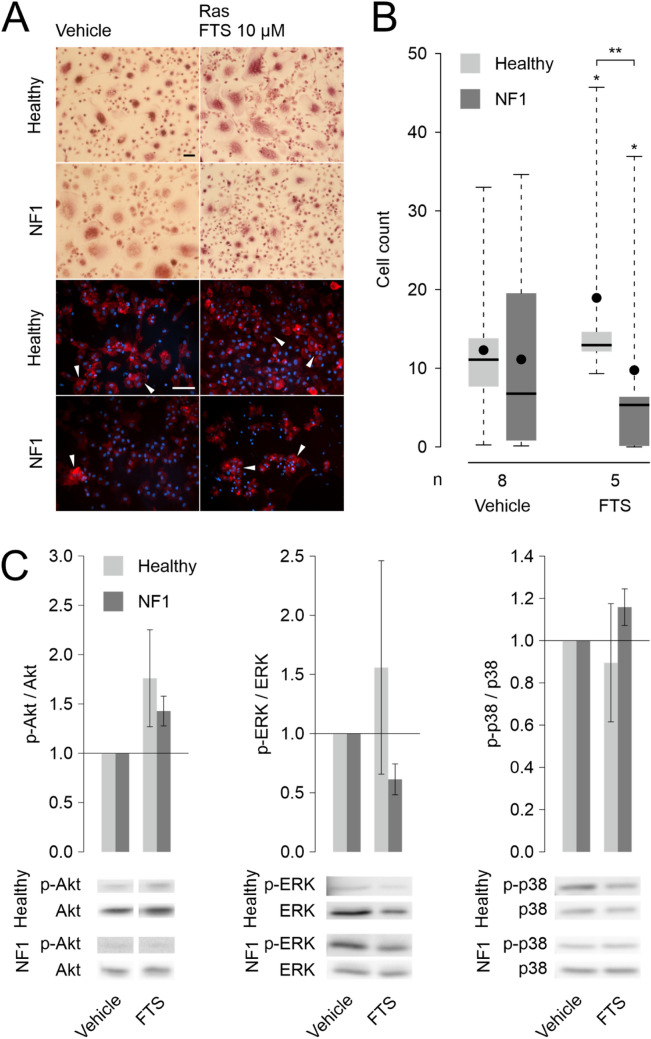
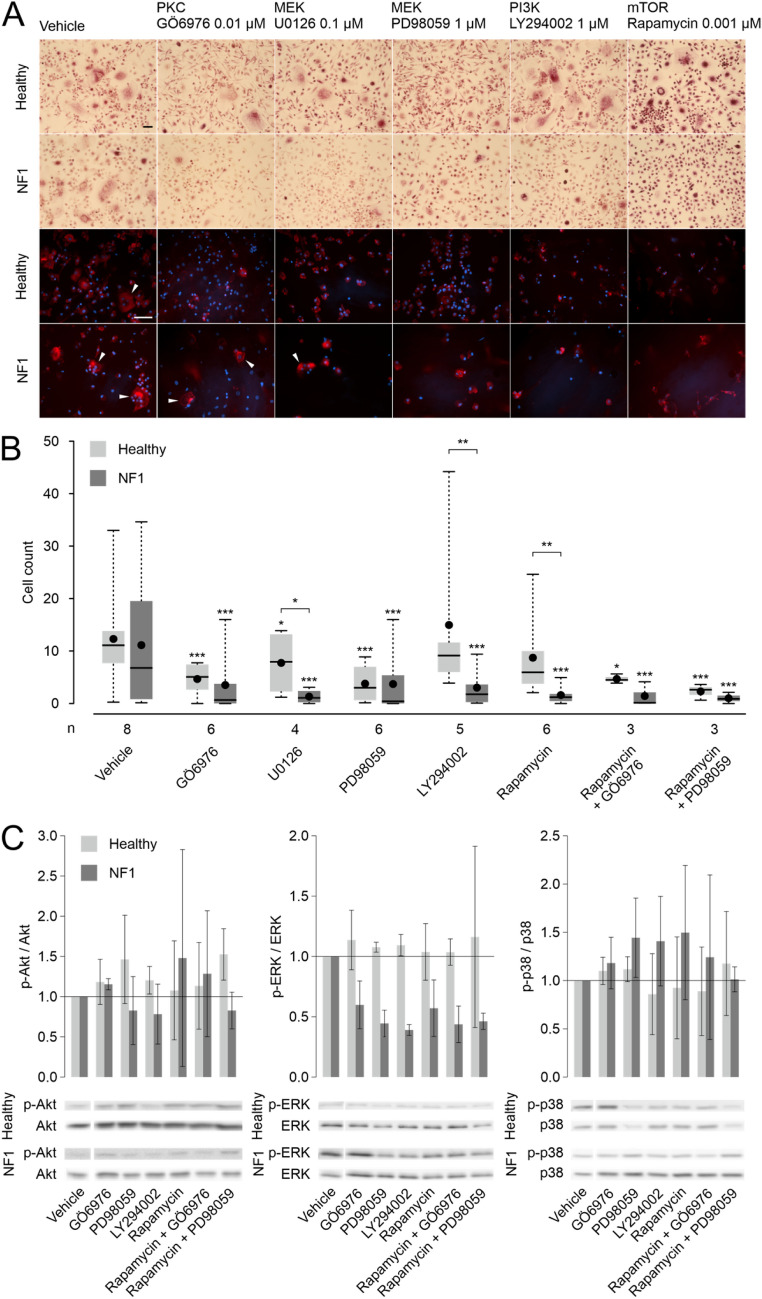
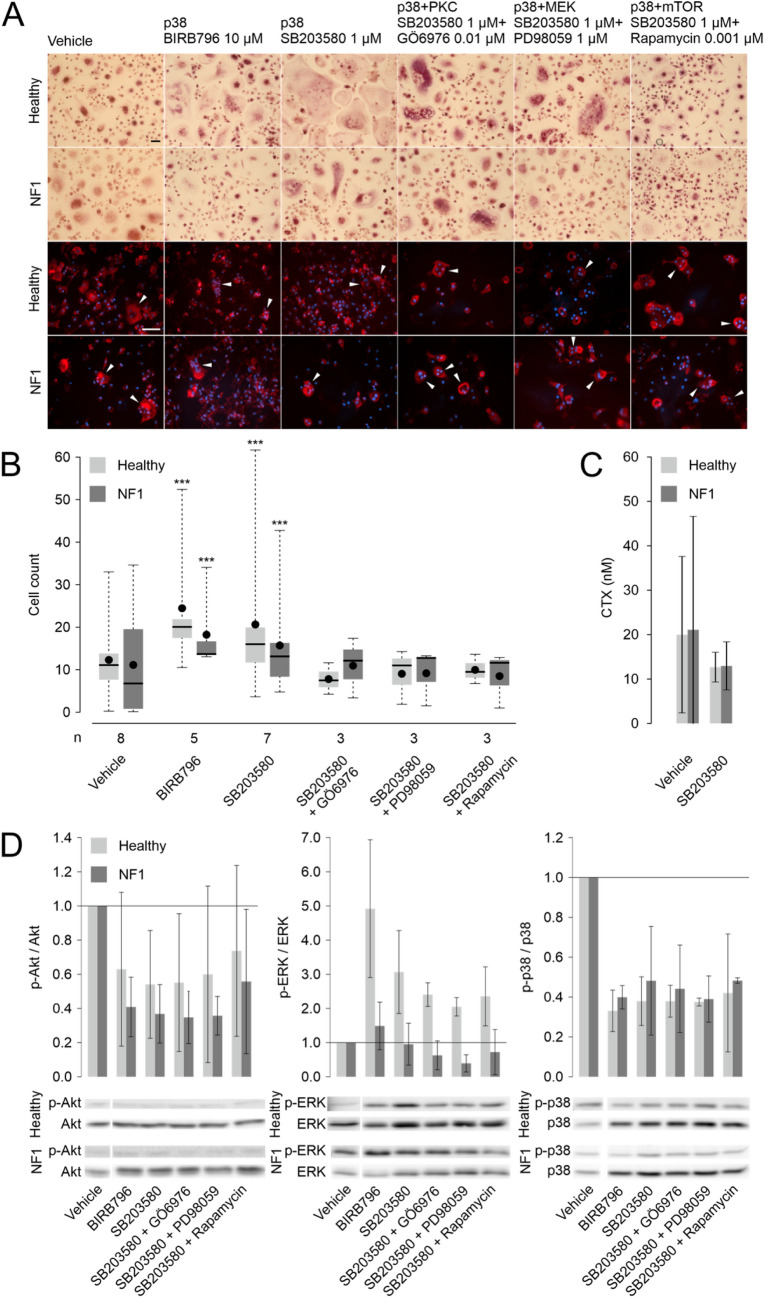
Little is known about the signaling pathways involved in the differentiation of human osteoclasts. The present study evaluated the roles of the Ras/PI3K/Akt/mTOR, Ras/Raf/MEK1/2/ERK1/2, calcium-PKC, and p38 signaling pathways in human osteoclast differentiation. Mononuclear cells were isolated from the peripheral blood of control persons and patients with neurofibromatosis 1 (NF1), and the cells were differentiated into osteoclasts in the presence of signaling pathway inhibitors. Osteoclast differentiation was assessed using tartrate-resistant acid phosphatase 5B. Inhibition of most signaling pathways with chemical inhibitors decreased the number of human osteoclasts and disrupted F-actin ring formation, while the inhibition of p38 resulted in an increased number of osteoclasts, which is a finding contradictory to previous murine studies. However, the p38 inhibition did not increase the bone resorption capacity of the cells. Ras-inhibitor FTS increased osteoclastogenesis in samples from control persons, but an inhibitory effect was observed in NF1 samples. Inhibition of MEK, PI3K, and mTOR reduced markedly the number of NF1-deficient osteoclasts, but no effect was observed in control samples. Western blot analyses showed that the changes in the phosphorylation of ERK1/2 correlated with the number of osteoclasts. Our results highlight the fact that osteoclastogenesis is regulated by multiple interacting signaling pathways and emphasize that murine and human findings related to osteoclastogenesis are not necessarily equivalent.
关于参与人类破骨细胞分化的信号通路知之甚少。本研究评估了 Ras/PI3K/Akt/mTOR、Ras/Raf/MEK1/2/ERK1/2、钙-PKC 和 p38 信号通路在人类破骨细胞分化中的作用。从正常人外周血和神经纤维瘤病 1 (NF1) 患者中分离出单核细胞,并在信号通路抑制剂存在的情况下将细胞分化为破骨细胞。通过抗酒石酸酸性磷酸酶 5B 评估破骨细胞分化。用化学抑制剂抑制大多数信号通路会减少人类破骨细胞的数量并破坏 F-肌动蛋白环的形成,而抑制 p38 则会导致破骨细胞数量增加,这与之前的小鼠研究结果相反。然而,p38 抑制不会增加细胞的骨吸收能力。Ras 抑制剂 FTS 增加了正常人样本中的破骨细胞生成,但在 NF1 样本中观察到抑制作用。MEK、PI3K 和 mTOR 的抑制显著减少了 NF1 缺陷型破骨细胞的数量,但在对照样本中未观察到这种作用。Western blot 分析表明,ERK1/2 的磷酸化变化与破骨细胞的数量相关。我们的结果强调了破骨细胞生成受多种相互作用的信号通路调节的事实,并强调了与破骨细胞生成相关的小鼠和人类发现不一定等同。