Smiljanić Milutin, Petek Urša, Bele Marjan, Ruiz-Zepeda Francisco, Šala Martin, Jovanovič Primož, Gaberšček Miran, Hodnik Nejc
Department of Materials Chemistry, National Institute of Chemistry, Hajdrihova 19, 1000 Ljubljana, Slovenia.
Laboratory for Atomic Physics, Institute for Nuclear Sciences Vinča, University of Belgrade, Mike Alasa 12-14, 11001 Belgrade, Serbia.
J Phys Chem C Nanomater Interfaces. 2021 Jan 14;125(1):635-647. doi: 10.1021/acs.jpcc.0c10033. Epub 2021 Jan 6.
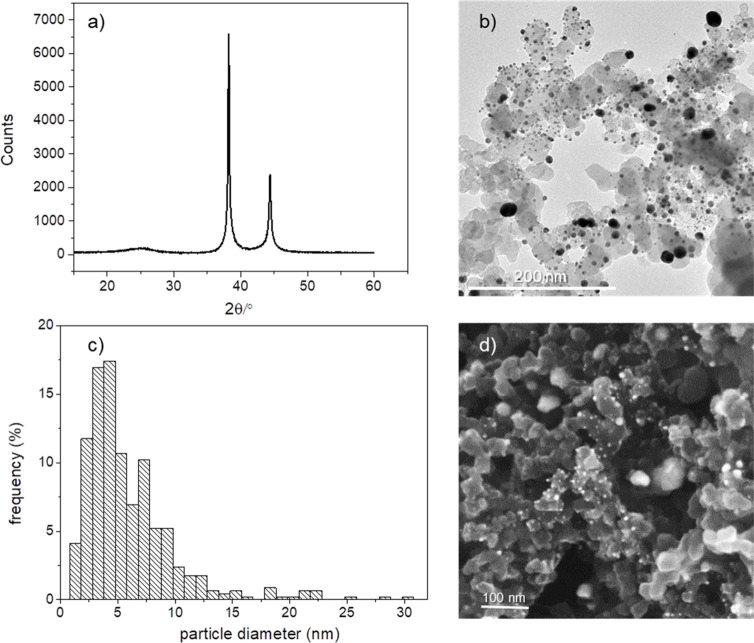
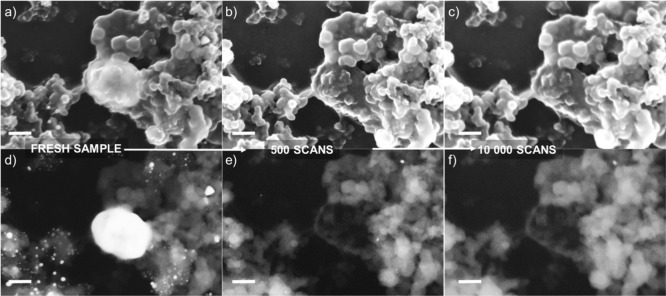
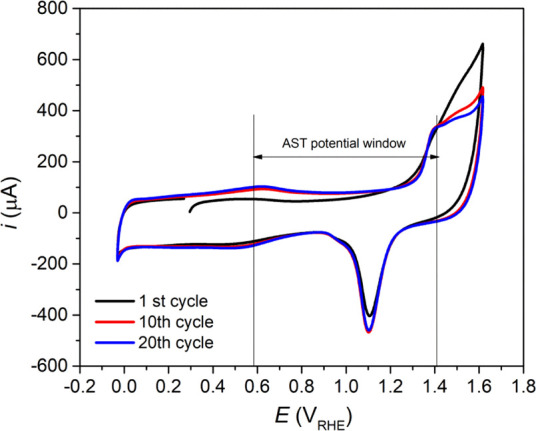
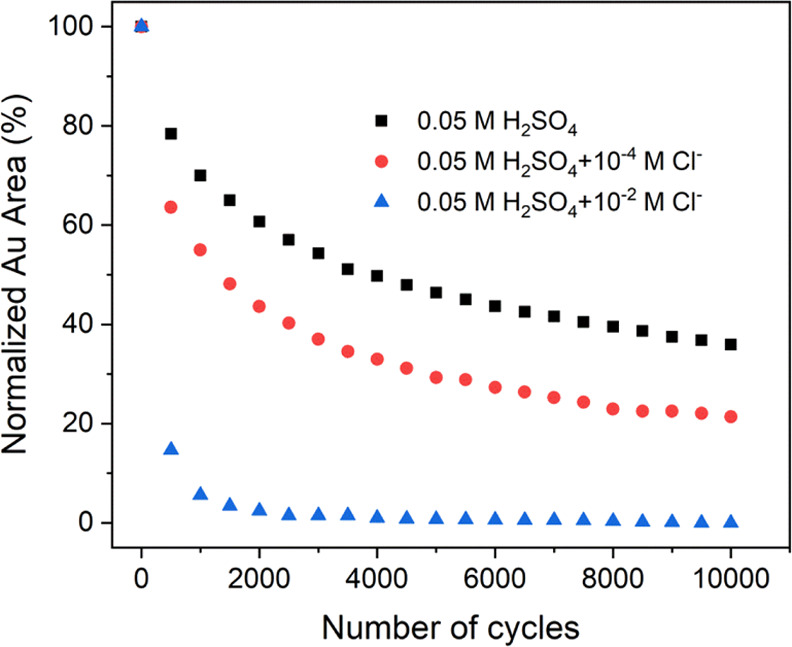
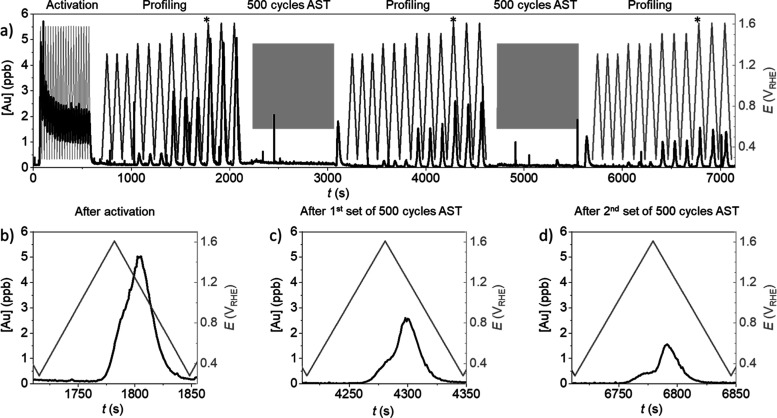
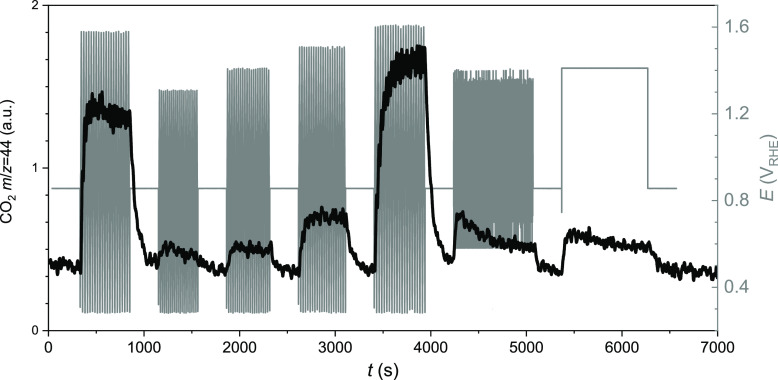
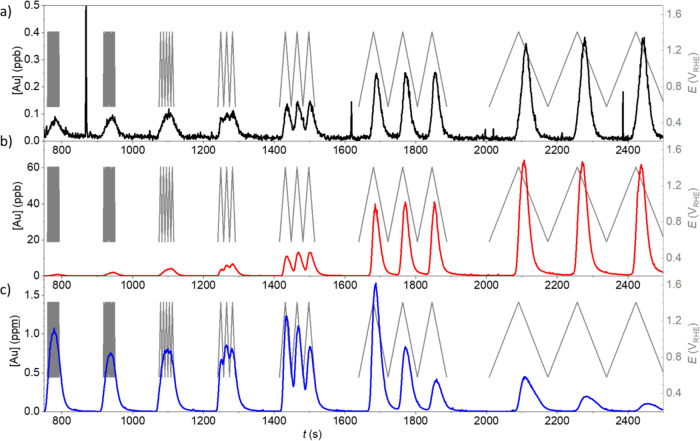
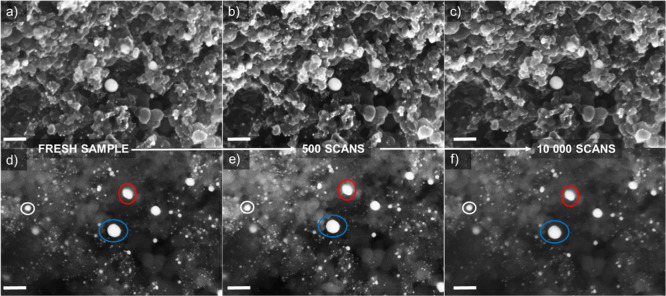
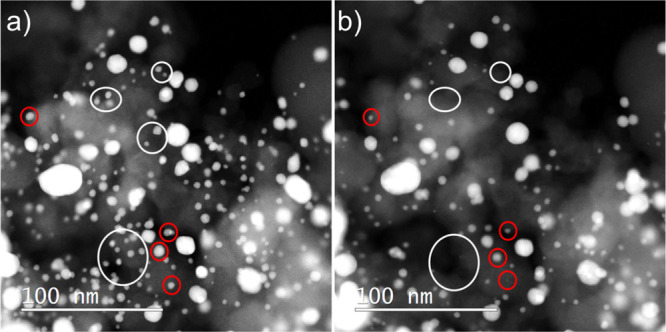
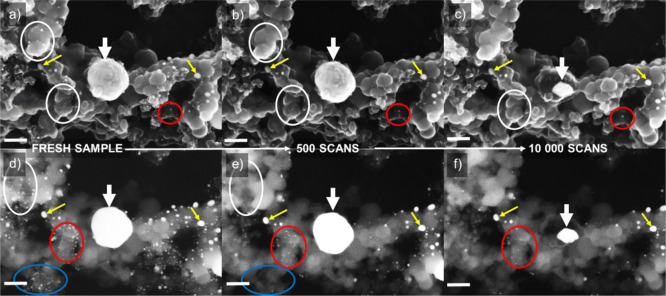
Electrochemical stability of a commercial Au/C catalyst in an acidic electrolyte has been investigated by an accelerated stress test (AST), which consisted of 10,000 voltammetric scans (1 V/s) in the potential range between 0.58 and 1.41 V. Loss of Au electrochemical surface area (ESA) during the AST pointed out to the degradation of Au/C. Coupling of an electrochemical flow cell with ICP-MS showed that only a minor amount of gold is dissolved despite the substantial loss of gold ESA during the AST (∼35% of initial value remains at the end of the AST). According to the electrochemical mass spectrometry experiments, carbon corrosion occurs during the AST but to a minor extent. By using identical location scanning electron microscopy and identical location transmission electron microscopy, it was possible to discern that the dissolution of small Au particles (<5 nm) within the polydisperse Au/C sample is the main degradation mechanism. The mass of such particles gives only a minor contribution to the overall Au mass of the polydisperse sample while giving a major contribution to the overall ESA, which explains a significant loss of ESA and minor loss of mass during the AST. The addition of low amounts of chloride anions (10 M) substantially promoted the degradation of gold nanoparticles. At an even higher concentration of chlorides (10 M), the dissolution of gold was rather effective, which is useful from the recycling point of view when rapid leaching of gold is desirable.
通过加速应力测试(AST)研究了商业Au/C催化剂在酸性电解质中的电化学稳定性,该测试包括在0.58至1.41 V的电位范围内进行10000次伏安扫描(1 V/s)。AST期间Au电化学表面积(ESA)的损失表明Au/C发生了降解。将电化学流通池与ICP-MS联用表明,尽管在AST期间金的ESA大量损失(AST结束时约35%的初始值保留),但只有少量金溶解。根据电化学质谱实验,AST期间发生了碳腐蚀,但程度较小。通过使用相同位置扫描电子显微镜和相同位置透射电子显微镜,可以看出多分散Au/C样品中小于5 nm的小金颗粒的溶解是主要降解机制。这些颗粒的质量对多分散样品的总Au质量贡献很小,而对总ESA贡献很大,这解释了AST期间ESA的显著损失和质量的少量损失。添加少量氯离子(10 M)大大促进了金纳米颗粒的降解。在更高浓度的氯化物(10 M)下,金的溶解相当有效,从需要快速浸出金的回收角度来看这是有用的。