Hengartner Michael P, Schulthess Lukas, Sorensen Anders, Framer Adele
Department of Applied Psychology, Zurich University of Applied Sciences (ZHAW), PO Box 707, Zurich, 8037, Switzerland.
Department of Applied Psychology, Zurich University of Applied Sciences, Switzerland.
Ther Adv Psychopharmacol. 2020 Dec 24;10:2045125320980573. doi: 10.1177/2045125320980573. eCollection 2020.
Protracted withdrawal syndrome (PWS) after stopping antidepressants (frequently also referred to as post-acute withdrawal syndrome or PAWS) has been described in a few case reports. However, a detailed quantitative analysis of specific symptom manifestations in antidepressant PWS is still lacking.
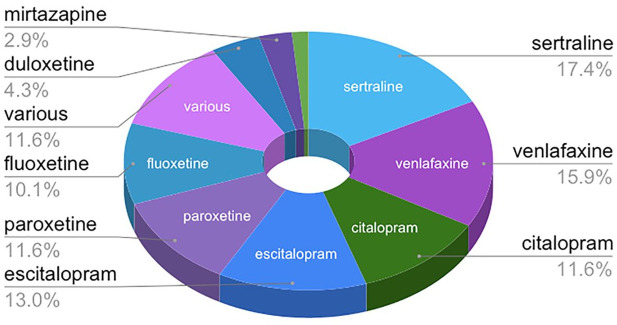
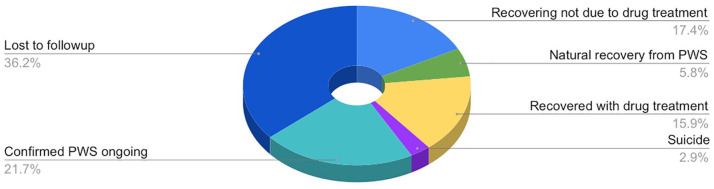
We extracted patient narratives from a large English-language internet forum SurvivingAntidepressants.org, a peer support site concerned about withdrawal from antidepressants. PWS was ascertained based on diagnostic criteria proposed by Chouinard and Chouinard, specifically ⩾6 months of continuous antidepressant use, with emergence of new and/or more intense symptoms after discontinuation that last beyond the initial 6 weeks of acute withdrawal. We assessed medication history, outcome of PWS, and the prevalence of specific symptoms.
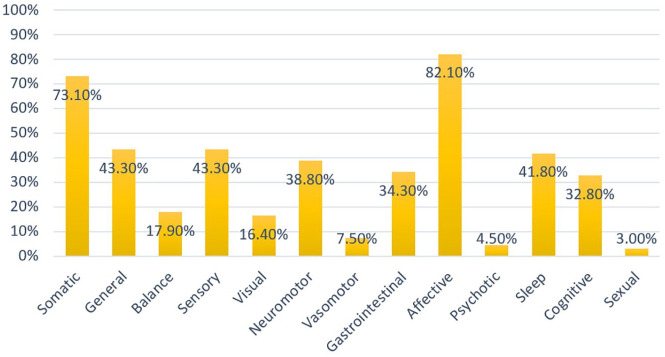
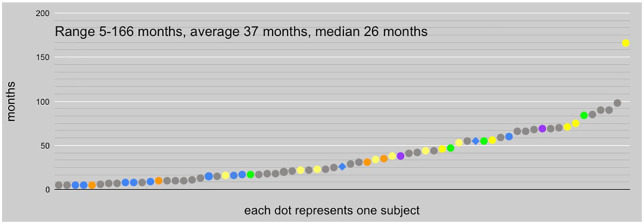
In total, = 69 individual reports of protracted withdrawal were selected for analysis. At time of the subjects' most recent reports, duration of PWS ranged from 5 to 166 months, mean = 37 months, median = 26 months. Length of time on the antidepressant causing protracted withdrawal ranged from 6 to 278 months, mean = 96 months, and median = 79 months. Throughout the withdrawal experience, affective symptoms, mostly anxiety, depression, emerging suicidality and agitation, were reported by 81%. Somatic symptoms, mostly headache, fatigue, dizziness, brain zaps, visual changes, muscle aches, tremor, diarrhea, and nausea were reported by 75%. Sleep problems (44%) and cognitive impairments (32%) were mentioned less frequently. These broad symptom domains were largely uncorrelated.
PWS or PAWS from antidepressants can be severe and long-lasting, and its manifestations clinically heterogeneous. Long-term antidepressant exposure may cause multiple body system impairments. Although both somatic and affective symptoms are frequent, they are mostly unrelated in terms of occurrence. Proper recognition and detection of PWS thus requires a comprehensive assessment of medication history, duration of the withdrawal syndrome, and its various somatic, affective, sleep, and cognitive symptoms.
少数病例报告中描述了停用抗抑郁药后的迁延性戒断综合征(PWS,常也被称为急性戒断后综合征或PAWS)。然而,仍缺乏对抗抑郁药PWS中特定症状表现的详细定量分析。
我们从一个大型英语互联网论坛SurvivingAntidepressants.org提取患者叙述,该论坛是一个关注抗抑郁药戒断的同伴支持网站。根据Chouinard和Chouinard提出的诊断标准确定PWS,具体为连续使用抗抑郁药⩾6个月,停药后出现新的和/或更强烈的症状,且持续超过急性戒断的最初6周。我们评估了用药史、PWS的结果以及特定症状的患病率。
总共选择了69份迁延性戒断的个体报告进行分析。在受试者最近一次报告时,PWS的持续时间为5至166个月,平均为37个月,中位数为26个月。导致迁延性戒断的抗抑郁药使用时间为6至278个月,平均为96个月,中位数为79个月。在整个戒断过程中,81%的人报告了情感症状,主要是焦虑、抑郁、出现自杀观念和激越。75%的人报告了躯体症状,主要是头痛、疲劳、头晕、脑鸣、视力变化、肌肉疼痛、震颤、腹泻和恶心。睡眠问题(44%)和认知障碍(32%)的提及频率较低。这些广泛的症状领域在很大程度上不相关。
抗抑郁药引起的PWS或PAWS可能严重且持久,其表现具有临床异质性。长期接触抗抑郁药可能导致多个身体系统受损。虽然躯体症状和情感症状都很常见,但它们在发生方面大多无关。因此,正确识别和检测PWS需要全面评估用药史、戒断综合征的持续时间及其各种躯体、情感、睡眠和认知症状。