Bhamidipati Theja, Doan Huy L, Hossein-Javaheri Nariman, Tang Hao T, Soliman Mohsin
General Surgery, Menorah Medical Center/Kansas City University, Overland Park, USA.
General Surgery, Kansas City University School of Medicine, Kansas City, USA.
Cureus. 2020 Dec 19;12(12):e12170. doi: 10.7759/cureus.12170.
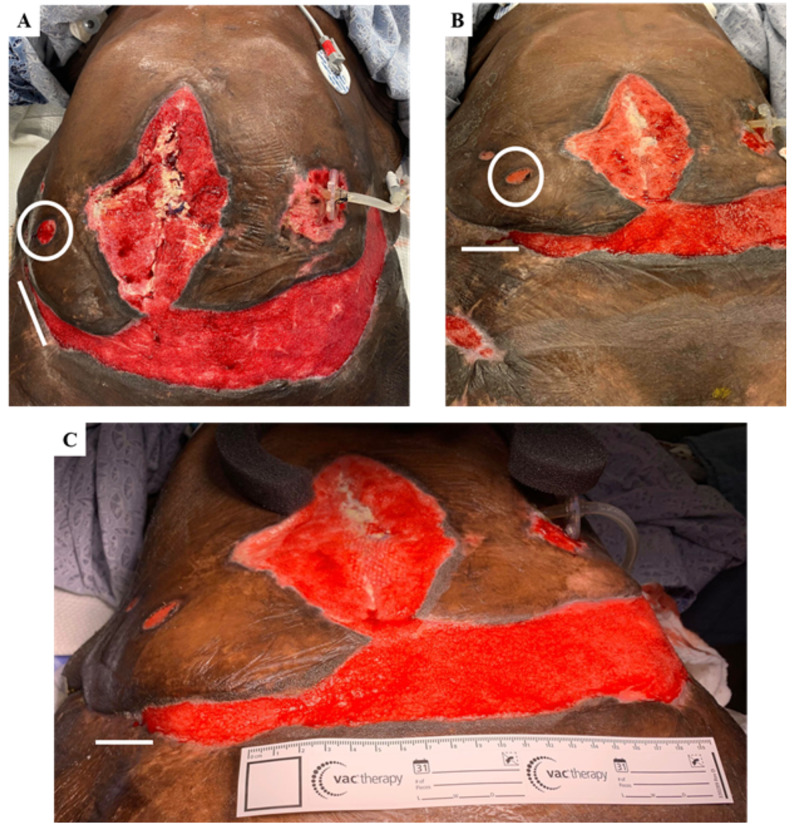
Calciphylaxis is a poorly understood disease with high morbidity and mortality. The current primary literature on treatment is lacking; however, disease management often involves a multifaceted approach with a primary focus on consistent wound care. This report describes a case outlining the long-term management of nonuremic calciphylaxis wounds in a patient with severe malnutrition with the use of human amniotic membrane grafts, aggressive surgical debridement, nutritional therapy, and advanced wound healing techniques. A 38-year-old African American female with a history of non-uremic calciphylaxis presented from a transitional facility with numerous non-healing wounds in the setting of severe malnutrition secondary to bariatric surgery. Biweekly wound debridement was initiated utilizing an amniotic stem cell skin graft, dry applicable absorbent dressing, high-frequency ultrasonic ablation, and wound vacuum-assisted closure (VAC) over the course of approximately nine months. Nutritional supplementation was given in the form of jejunostomy tube feed due to a gastric bypass and a perforated viscus. At the current date, the patient demonstrates significant improvement in pain and wound healing. The patient is also able to ambulate with care and has begun steps towards independent management of wounds. Future goals of care include independent bedside wound management, placement of allograft, and discharge to a long-term care facility. Most patients with refractory pain, widespread necrotic wounds, and dangerous comorbidities will inevitably be referred to palliative care. This case creates a framework for the long term management of medically complex patients with nonuremic calciphylaxis using human amniotic membrane stem cell grafts and appropriate advanced wound care techniques.
钙过敏是一种了解甚少、发病率和死亡率都很高的疾病。目前关于其治疗的主要文献资料匮乏;然而,疾病管理通常需要多方面的方法,主要侧重于持续的伤口护理。本报告描述了一个病例,概述了一名严重营养不良患者的非尿毒症性钙过敏伤口的长期管理,采用了人羊膜移植、积极的手术清创、营养治疗和先进的伤口愈合技术。一名38岁有非尿毒症性钙过敏病史的非裔美国女性从一家过渡护理机构前来就诊,她因减肥手术后严重营养不良,身上有多处伤口不愈合。在大约九个月的时间里,每两周进行一次伤口清创,使用羊膜干细胞皮肤移植、干式适用吸收性敷料、高频超声消融和伤口负压封闭引流(VAC)。由于胃旁路手术和脏器穿孔,通过空肠造口管饲进行营养补充。目前,患者的疼痛和伤口愈合情况有了显著改善。患者也能够小心行走,并已开始朝着独立管理伤口迈进。未来的护理目标包括独立的床边伤口管理、同种异体移植的植入以及转至长期护理机构。大多数有难治性疼痛、广泛坏死伤口和危险合并症的患者将不可避免地被转诊至姑息治疗。本病例为使用人羊膜干细胞移植和适当的先进伤口护理技术对患有非尿毒症性钙过敏的医学复杂患者进行长期管理建立了一个框架。