Hu Yaru, Zhu Le, Ma Cong
Key Laboratory of Molecular Biophysics of the Ministry of Education, College of Life Science and Technology, Huazhong University of Science and Technology, Wuhan, China.
Front Cell Dev Biol. 2021 Jan 6;8:609708. doi: 10.3389/fcell.2020.609708. eCollection 2020.
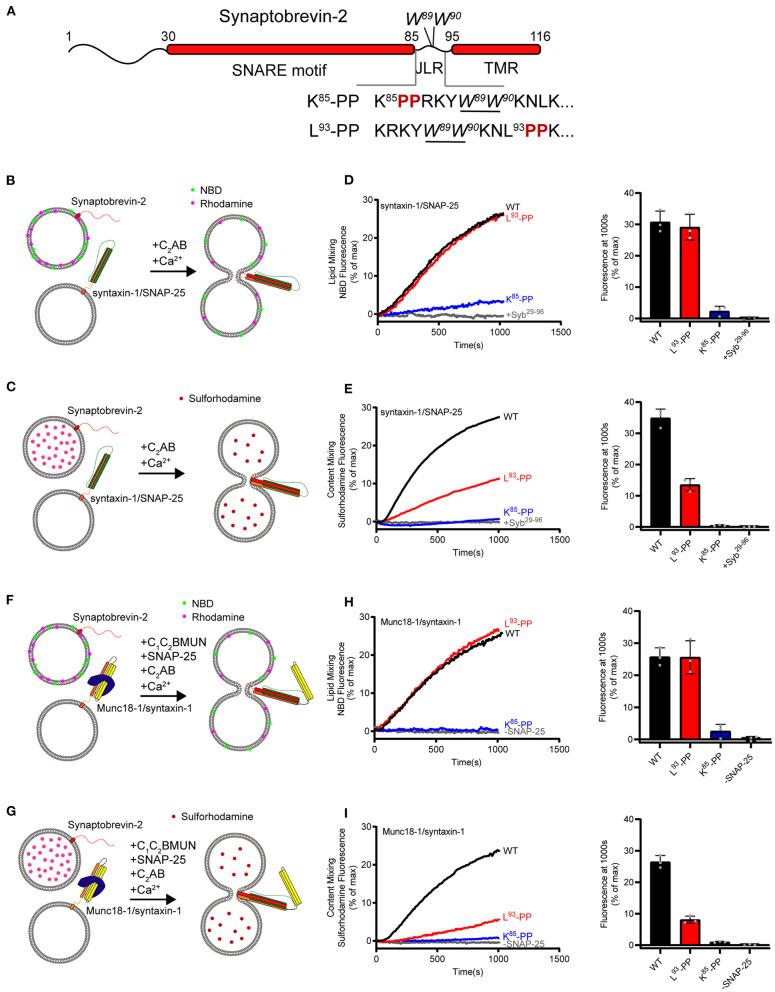
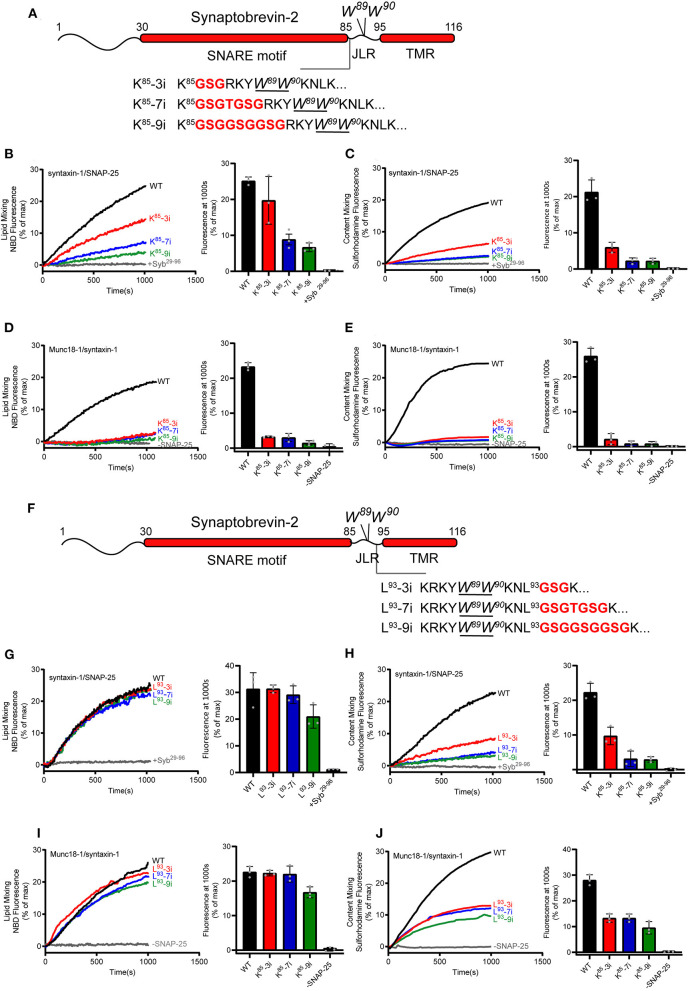
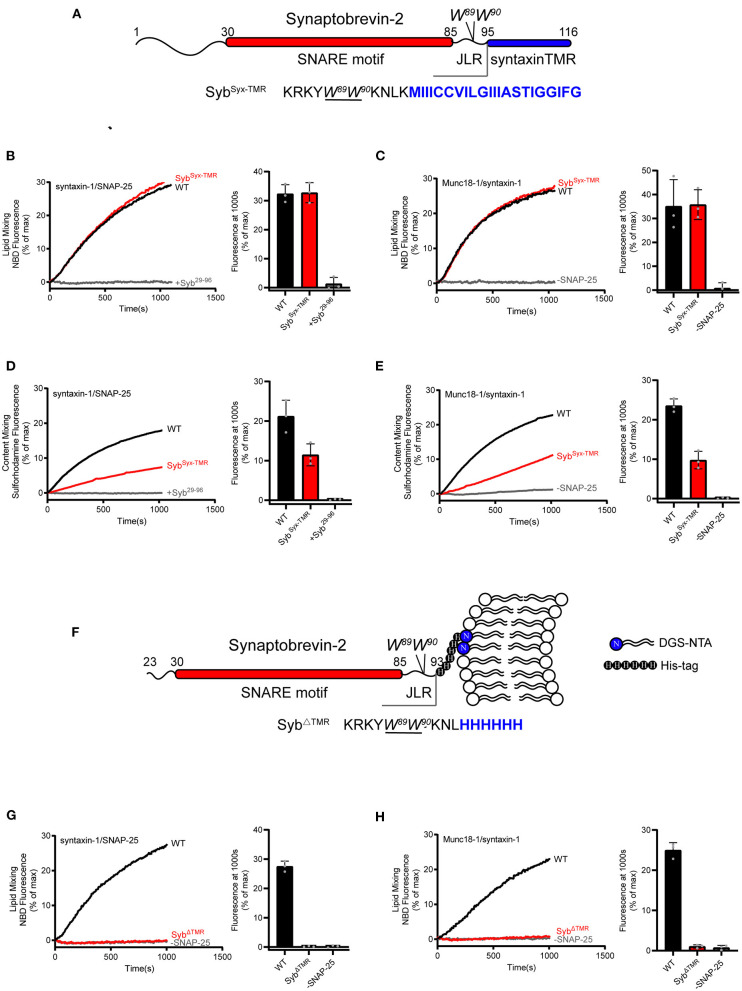
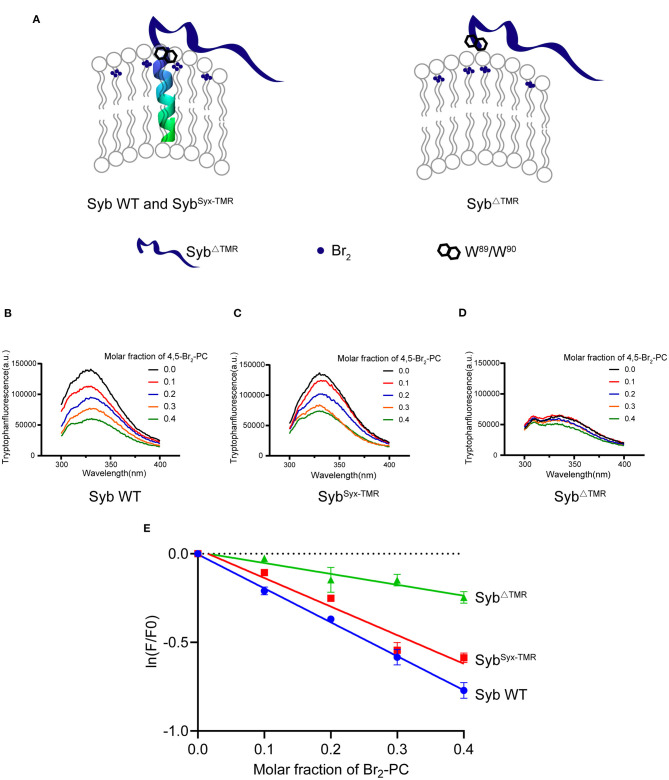
Formation of the -SNARE complex is believed to generate a force transfer to the membranes to promote membrane fusion, but the underlying mechanism remains elusive. In this study, we show that helix-breaking and/or length-increasing insertions in the juxtamembrane linker region of synaptobrevin-2 exert diverse effects on liposome fusion, in a manner dependent on the insertion position relative to the two conserved tryptophan residues (W/W). Helical extension of synaptobrevin-2 to W/W is a prerequisite for initiating membrane merger. The transmembrane region of synaptobrevin-2 enables proper localization of W/W at the membrane interface to gate force transfer. Besides, our data indicate that the SNARE regulatory components Munc18-1 and Munc13-1 impose liposome fusion strong demand on tight coupling between the SNARE motif and the transmembrane region of synaptobrevin-2.
人们认为-SNARE复合体的形成会产生向膜的力传递以促进膜融合,但其潜在机制仍不清楚。在本研究中,我们表明,突触融合蛋白-2近膜连接区的螺旋破坏和/或长度增加插入对脂质体融合产生不同影响,其方式取决于相对于两个保守色氨酸残基(W/W)的插入位置。突触融合蛋白-2向W/W的螺旋延伸是启动膜融合的先决条件。突触融合蛋白-2的跨膜区域使W/W在膜界面正确定位以控制力传递。此外,我们的数据表明,SNARE调节成分Munc18-1和Munc13-1对SNARE基序与突触融合蛋白-2跨膜区域之间的紧密偶联施加了对脂质体融合的强烈需求。