Zheng Fenshuang, Zhang Min, Yang Xingwei, Wu Feilong, Wang Gan, Feng Xingxing, Ombati Rose, Zuo Ruiling, Yang Canju, Liu Jun, Lai Ren, Luo Xiaodong, Long Chengbo
Department of Emergency Medicine, Second People's Hospital of Yunnan Province, Kunming, China.
Key Laboratory of Animal Models and Human Disease Mechanisms of Chinese Academy of Sciences & Yunnan Province, Kunming Institute of Zoology, Kunming, China.
Front Vet Sci. 2021 Jan 7;7:615915. doi: 10.3389/fvets.2020.615915. eCollection 2020.
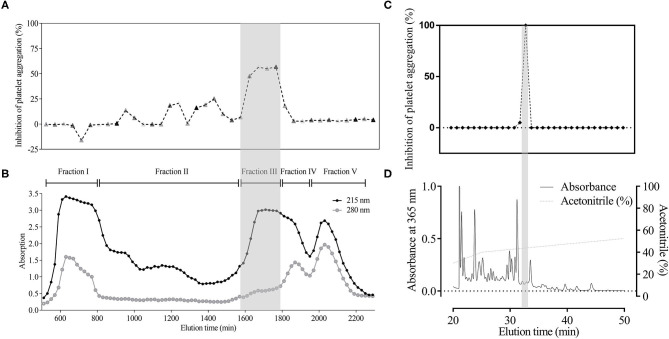
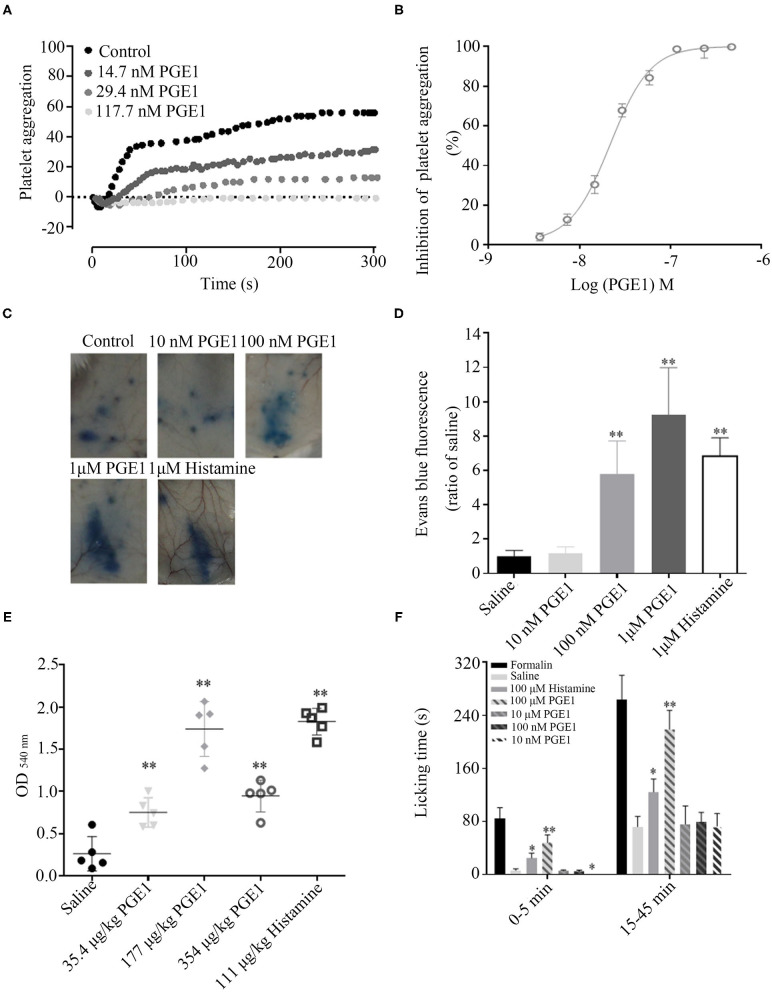
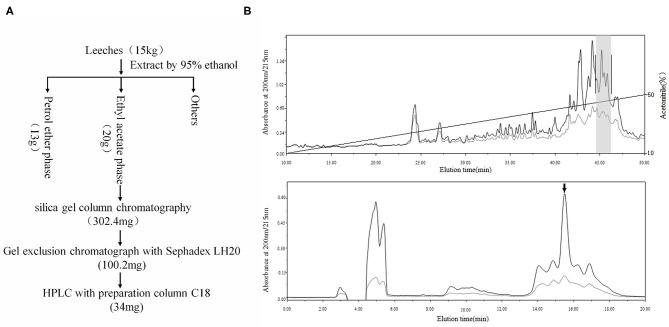
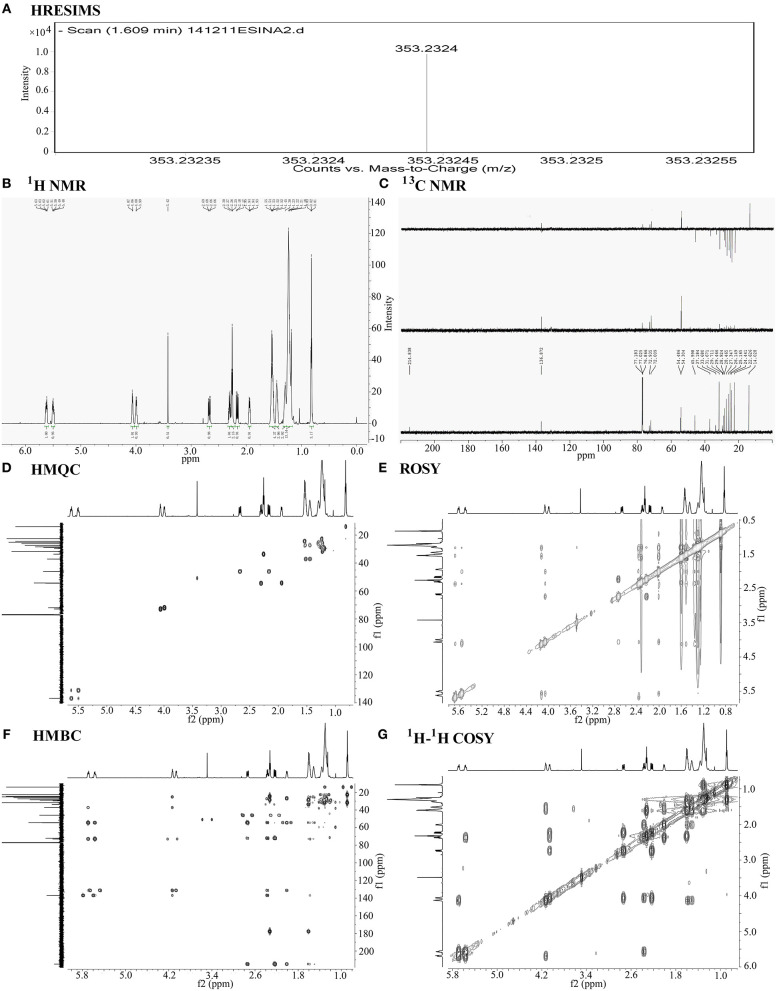
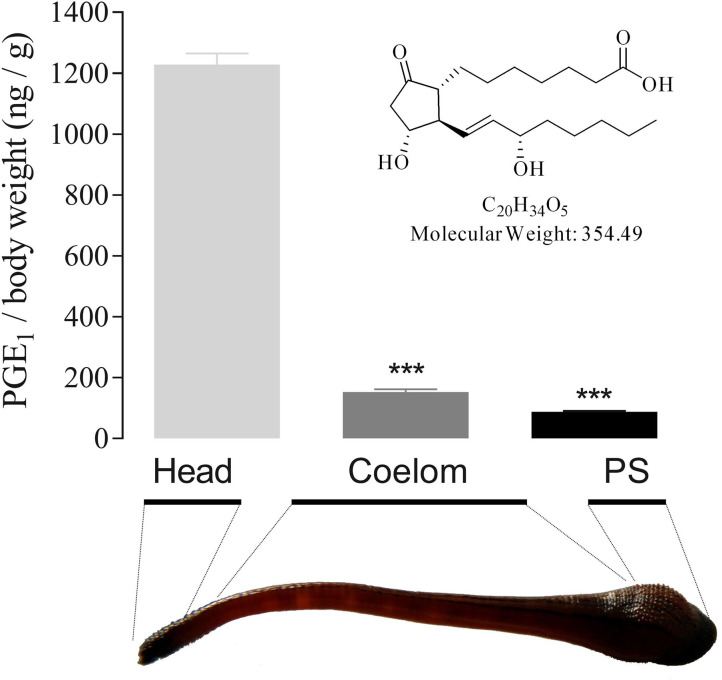
From a survival perspective, it is hypothesized that leech saliva exhibits certain physiological effects to ensure fast blood-feeding, including analgesia, anesthesia, and anti-inflammation to stay undetected by the host and vasodilatation and anti-hemostasis to ensure a steady, rapid, and sustained blood flow to the feeding site. Many anti-hemostatic compounds have been identified in leech saliva, such as hirudin, calin, and bdellin A. However, no specific substance with direct vasodilatory and anti-inflammatory function has been reported from forest leech saliva. Herein, using activity-guided analysis, prostaglandin E1 (PGE1) was identified for the first time as an efficient molecular tool for forest leech blood sucking. The structure of PGE1 was analyzed by nuclear magnetic resonance spectroscopy and high-resolution electrospray ionization mass spectroscopy. PGE1 was found to be primarily distributed in the leech salivary gland (1228.36 ng/g body weight). We also analyzed how forest leech PGE1 affects platelet aggregation, skin vascular permeability, bleeding time, and pain. Results indicated that PGE1 efficiently inhibited platelet aggregation induced by adenosine diphosphate (ADP) (5 μM) with an IC of 21.81 ± 2.24 nM. At doses of 10, 100 nM, and 1 μM, PGE1 increased vascular permeability by 1.18, 5.8, and 9.2 times. It also prolonged bleeding time in a concentration-independent manner. In the formalin-induced mouse paw pain model, PGE1 suppressed acute pain. To the best of our knowledge, this is the first report on PGE1 in invertebrates. The functions of PGE1, such as vasodilation, platelet aggregation inhibition, anti-inflammation, and pain alleviation, may facilitate the ingestion of host blood by leeches.
从生存角度来看,有假说认为水蛭唾液具有某些生理作用以确保快速吸血,包括镇痛、麻醉和抗炎作用,从而不被宿主察觉,以及血管舒张和抗凝血作用,以确保向吸血部位稳定、快速且持续地供血。水蛭唾液中已鉴定出许多抗凝血化合物,如水蛭素、卡林和蛭素A。然而,尚未有报道称森林水蛭唾液中有具有直接血管舒张和抗炎功能的特定物质。在此,通过活性导向分析,首次鉴定出前列腺素E1(PGE1)是森林水蛭吸血的一种有效分子工具。通过核磁共振光谱和高分辨电喷雾电离质谱分析了PGE1的结构。发现PGE1主要分布在水蛭唾液腺中(1228.36纳克/克体重)。我们还分析了森林水蛭PGE1如何影响血小板聚集、皮肤血管通透性、出血时间和疼痛。结果表明,PGE1能有效抑制由5微摩尔二磷酸腺苷(ADP)诱导的血小板聚集,其半数抑制浓度为21.81±2.24纳摩尔。在10纳摩尔、100纳摩尔和1微摩尔的剂量下,PGE1使血管通透性分别增加了1.18倍、5.8倍和9.2倍。它还以浓度无关的方式延长了出血时间。在福尔马林诱导的小鼠爪部疼痛模型中,PGE1抑制了急性疼痛。据我们所知,这是关于无脊椎动物中PGE1的首次报道。PGE1的血管舒张、抑制血小板聚集、抗炎和镇痛等功能可能有助于水蛭摄取宿主血液。