Schütz Francine, Figueiredo-Braga Margarida, Barata Pedro, Cruz-Martins Natália
Department of Biomedicine.
Department of Neurosciences and Mental Health, Faculty of Medicine, University of Porto.
Porto Biomed J. 2021 Jan 18;6(1):e111. doi: 10.1097/j.pbj.0000000000000111. eCollection 2021 Jan-Feb.
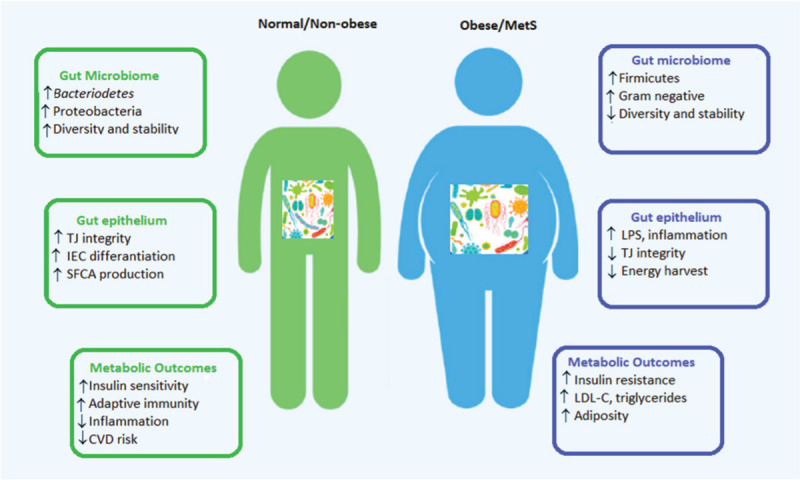
Obesity prevalence has increased worldwide over the years, with pandemic levels being already reached, besides to its huge economic and health impacts. The multifactorial pathogenesis of obesity partly explains the important challenge posed to health policy regarding its clinical treatment, with increasing evidences have shown that obesity and metabolic disturbances are closely linked to variations in gut microbiota (GM) function and composition. Indeed, GM play a key contribution in energy metabolism, with GM modulation being increasingly linked to changes in body weight and body mass index. In such matter, probiotics have been proposed as a promising new therapeutic strategy to treat/prevent obesity. Thus, this review aims to provide an overview on the clinical impact and effectiveness of probiotics in obese individuals.
多年来,肥胖症患病率在全球范围内呈上升趋势,除了其巨大的经济和健康影响外,已经达到了大流行的程度。肥胖症的多因素发病机制部分解释了在临床治疗方面对卫生政策构成的重大挑战,越来越多的证据表明,肥胖和代谢紊乱与肠道微生物群(GM)功能和组成的变化密切相关。事实上,GM在能量代谢中起着关键作用,GM调节与体重和体重指数的变化越来越相关。在这方面,益生菌已被提议作为一种有前景的治疗/预防肥胖症的新治疗策略。因此,本综述旨在概述益生菌对肥胖个体的临床影响和有效性。