• 文献检索
  • 文档翻译
  • 深度研究
  • 学术资讯
  • Suppr Zotero 插件Zotero 插件
  • 邀请有礼
  • 套餐&价格
  • 历史记录
应用&插件
Suppr Zotero 插件Zotero 插件浏览器插件Mac 客户端Windows 客户端微信小程序
定价
高级版会员购买积分包购买API积分包
服务
文献检索文档翻译深度研究API 文档MCP 服务
关于我们
关于 Suppr公司介绍联系我们用户协议隐私条款
关注我们

Suppr 超能文献

核心技术专利:CN118964589B侵权必究
粤ICP备2023148730 号-1Suppr @ 2026

文献检索

告别复杂PubMed语法,用中文像聊天一样搜索,搜遍4000万医学文献。AI智能推荐,让科研检索更轻松。

立即免费搜索

文件翻译

保留排版,准确专业,支持PDF/Word/PPT等文件格式,支持 12+语言互译。

免费翻译文档

深度研究

AI帮你快速写综述,25分钟生成高质量综述,智能提取关键信息,辅助科研写作。

立即免费体验

疫情期间人们关心什么?从推特上检测关于新冠病毒的不断演变的话题。

What Are People Concerned About During the Pandemic? Detecting Evolving Topics about COVID-19 from Twitter.

作者信息

Chang Chia-Hsuan, Monselise Michal, Yang Christopher C

机构信息

College of Computing and Informatics, Drexel University, Philadelphia, PA USA.

Department of Information Management, National Sun Yat-sen University, Kaohsiung City, Taiwan.

出版信息

J Healthc Inform Res. 2021;5(1):70-97. doi: 10.1007/s41666-020-00083-3. Epub 2021 Jan 17.

DOI:10.1007/s41666-020-00083-3
PMID:33490856
原文链接:https://pmc.ncbi.nlm.nih.gov/articles/PMC7811869/
Abstract

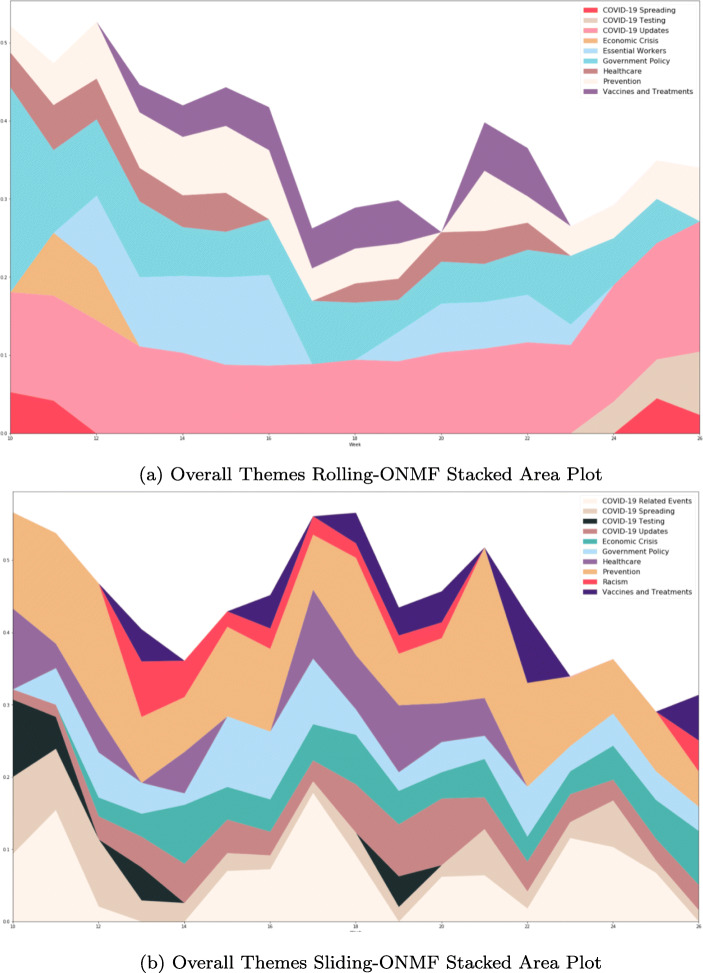
With the novel coronavirus (COVID-19) pandemic affecting the lives of the citizens of over 200 countries, there is a need for policy makers and clinicians to understand public sentiment and track the spread of the disease. One of the sources for gaining valuable insight into public sentiment is through social media. This study aims to extract this insight by producing a list of the most discussed topics regarding COVID-19 on Twitter every week and monitoring the evolution of topics from week to week. This research will propose two topic mining that can handle a large-scale dataset-rolling online non-negative matrix factorization (Rolling-ONMF) and sliding online non-negative matrix factorization (Sliding-ONMF)-and compare the insights produced by both techniques. Each algorithm produces 425 topics over the course of 17 weeks. However, topics that have not evolved from one week to the next beyond a certain evolution threshold are consolidated into a single topic. Since the topics produced by the Rolling-ONMF algorithm each week depend on the topics from the previous week, we find that the Sliding-ONMF algorithm produces more varied topics each week; however, the topics produced by the Rolling-ONMF algorithm contain keywords that appear more consistent with each other when reviewing the terms manually. We also observe that the Sliding-ONMF algorithm is able to capture events that have shorter time frames rather than ones that last throughout many months while the Rolling-ONMF algorithm detects more general themes due to a higher average evolution score which leads to more topic consolidation. We have also conducted a qualitative analysis and grouped the detected topics into themes. A number of important themes such as government policy, economic crisis, COVID-19-related updates, COVID-19-related events, prevention, vaccines and treatments, and COVID-19 testing are identified. These reflected the concerns related to the pandemic expressed in social media.

摘要

新型冠状病毒(COVID-19)大流行影响着200多个国家公民的生活,政策制定者和临床医生需要了解公众情绪并追踪疾病的传播情况。获取公众情绪有价值见解的来源之一是社交媒体。本研究旨在通过每周生成一份关于Twitter上COVID-19讨论最多的话题列表,并监测话题每周的演变情况来提取这种见解。本研究将提出两种能够处理大规模数据集的主题挖掘方法——滚动在线非负矩阵分解(Rolling-ONMF)和滑动在线非负矩阵分解(Sliding-ONMF)——并比较这两种技术产生的见解。在17周的时间里,每种算法都生成了425个主题。然而,在超过某个演变阈值后,从一周到下一周没有演变的主题会被合并为一个主题。由于Rolling-ONMF算法每周生成的主题取决于前一周的主题,我们发现Sliding-ONMF算法每周生成的主题更多样化;然而,在人工查看这些术语时,Rolling-ONMF算法生成的主题包含的关键词彼此之间显得更一致。我们还观察到,Sliding-ONMF算法能够捕捉时间框架较短的事件,而不是持续数月的事件,而Rolling-ONMF算法由于平均演变得分较高,能够检测到更一般的主题,这导致更多的主题合并。我们还进行了定性分析,并将检测到的主题分组为不同的主题。识别出了一些重要主题,如政府政策、经济危机、COVID-19相关更新、COVID-19相关事件、预防、疫苗和治疗以及COVID-19检测。这些反映了社交媒体中表达的与疫情相关的担忧。
https://cdn.ncbi.nlm.nih.gov/pmc/blobs/0391/8982709/c7d13b08b901/41666_2020_83_Fig8_HTML.jpg
https://cdn.ncbi.nlm.nih.gov/pmc/blobs/0391/8982709/0b7605df0500/41666_2020_83_Fig1_HTML.jpg
https://cdn.ncbi.nlm.nih.gov/pmc/blobs/0391/8982709/cff3a8ebf0a5/41666_2020_83_Fig2_HTML.jpg
https://cdn.ncbi.nlm.nih.gov/pmc/blobs/0391/8982709/2233fab94faf/41666_2020_83_Fig3_HTML.jpg
https://cdn.ncbi.nlm.nih.gov/pmc/blobs/0391/8982709/23655415cc29/41666_2020_83_Fig4_HTML.jpg
https://cdn.ncbi.nlm.nih.gov/pmc/blobs/0391/8982709/75a15475a79a/41666_2020_83_Fig5_HTML.jpg
https://cdn.ncbi.nlm.nih.gov/pmc/blobs/0391/8982709/0c217074fa46/41666_2020_83_Fig6a_HTML.jpg
https://cdn.ncbi.nlm.nih.gov/pmc/blobs/0391/8982709/234a0255e450/41666_2020_83_Fig7a_HTML.jpg
https://cdn.ncbi.nlm.nih.gov/pmc/blobs/0391/8982709/c7d13b08b901/41666_2020_83_Fig8_HTML.jpg
https://cdn.ncbi.nlm.nih.gov/pmc/blobs/0391/8982709/0b7605df0500/41666_2020_83_Fig1_HTML.jpg
https://cdn.ncbi.nlm.nih.gov/pmc/blobs/0391/8982709/cff3a8ebf0a5/41666_2020_83_Fig2_HTML.jpg
https://cdn.ncbi.nlm.nih.gov/pmc/blobs/0391/8982709/2233fab94faf/41666_2020_83_Fig3_HTML.jpg
https://cdn.ncbi.nlm.nih.gov/pmc/blobs/0391/8982709/23655415cc29/41666_2020_83_Fig4_HTML.jpg
https://cdn.ncbi.nlm.nih.gov/pmc/blobs/0391/8982709/75a15475a79a/41666_2020_83_Fig5_HTML.jpg
https://cdn.ncbi.nlm.nih.gov/pmc/blobs/0391/8982709/0c217074fa46/41666_2020_83_Fig6a_HTML.jpg
https://cdn.ncbi.nlm.nih.gov/pmc/blobs/0391/8982709/234a0255e450/41666_2020_83_Fig7a_HTML.jpg
https://cdn.ncbi.nlm.nih.gov/pmc/blobs/0391/8982709/c7d13b08b901/41666_2020_83_Fig8_HTML.jpg

相似文献

1
What Are People Concerned About During the Pandemic? Detecting Evolving Topics about COVID-19 from Twitter.疫情期间人们关心什么?从推特上检测关于新冠病毒的不断演变的话题。
J Healthc Inform Res. 2021;5(1):70-97. doi: 10.1007/s41666-020-00083-3. Epub 2021 Jan 17.
2
Concerns Expressed by Chinese Social Media Users During the COVID-19 Pandemic: Content Analysis of Sina Weibo Microblogging Data.新冠疫情期间中国社交媒体用户表达的担忧:对新浪微博数据的内容分析
J Med Internet Res. 2020 Nov 26;22(11):e22152. doi: 10.2196/22152.
3
Top Concerns of Tweeters During the COVID-19 Pandemic: Infoveillance Study.新冠疫情期间推特用户的主要担忧:信息监测研究
J Med Internet Res. 2020 Apr 21;22(4):e19016. doi: 10.2196/19016.
4
Emotions and Topics Expressed on Twitter During the COVID-19 Pandemic in the United Kingdom: Comparative Geolocation and Text Mining Analysis.在英国 COVID-19 大流行期间在 Twitter 上表达的情绪和主题:比较地理定位和文本挖掘分析。
J Med Internet Res. 2022 Oct 5;24(10):e40323. doi: 10.2196/40323.
5
COVID-19 Vaccine-Related Discussion on Twitter: Topic Modeling and Sentiment Analysis.新冠疫苗相关推文的讨论:主题建模和情感分析。
J Med Internet Res. 2021 Jun 29;23(6):e24435. doi: 10.2196/24435.
6
Social Media Insights Into US Mental Health During the COVID-19 Pandemic: Longitudinal Analysis of Twitter Data.社交媒体洞察美国在 COVID-19 大流行期间的心理健康状况:对 Twitter 数据的纵向分析。
J Med Internet Res. 2020 Dec 14;22(12):e21418. doi: 10.2196/21418.
7
Examining Public Sentiments and Attitudes Toward COVID-19 Vaccination: Infoveillance Study Using Twitter Posts.审视公众对新冠疫苗接种的情绪和态度:利用推特帖子的信息监测研究
JMIR Infodemiology. 2022 Apr 15;2(1):e33909. doi: 10.2196/33909. eCollection 2022 Jan-Jun.
8
Topics, Trends, and Sentiments of Tweets About the COVID-19 Pandemic: Temporal Infoveillance Study.关于新冠疫情的推文主题、趋势和情绪:时间信息监测研究
J Med Internet Res. 2020 Oct 23;22(10):e22624. doi: 10.2196/22624.
9
Understanding the Public Discussion About the Centers for Disease Control and Prevention During the COVID-19 Pandemic Using Twitter Data: Text Mining Analysis Study.利用推特数据理解 COVID-19 大流行期间公众对疾病控制与预防中心的讨论:文本挖掘分析研究。
J Med Internet Res. 2021 Feb 9;23(2):e25108. doi: 10.2196/25108.
10
Public Perception of the COVID-19 Pandemic on Twitter: Sentiment Analysis and Topic Modeling Study.公众对 Twitter 上 COVID-19 大流行的看法:情感分析和主题建模研究。
JMIR Public Health Surveill. 2020 Nov 11;6(4):e21978. doi: 10.2196/21978.

引用本文的文献

1
Twitter Analysis of Health Care Workers' Sentiment and Discourse Regarding Post-COVID-19 Condition in Children and Young People: Mixed Methods Study.社交媒体分析医护人员对儿童和青少年新冠后状况的情绪和言论:混合方法研究
J Med Internet Res. 2024 Apr 17;26:e50139. doi: 10.2196/50139.
2
Social media and attitudes towards a COVID-19 vaccination: A systematic review of the literature.社交媒体与对新冠疫苗接种的态度:文献系统综述
EClinicalMedicine. 2022 Jun;48:101454. doi: 10.1016/j.eclinm.2022.101454. Epub 2022 May 20.
3
Topics and Sentiments of Public Concerns Regarding COVID-19 Vaccines: Social Media Trend Analysis.

本文引用的文献

1
Nursing Homes Are Ground Zero for COVID-19 Pandemic.养老院是新冠疫情的重灾区。
JAMA Health Forum. 2020 Mar 2;1(3):e200369. doi: 10.1001/jamahealthforum.2020.0369.
2
Tracking Social Media Discourse About the COVID-19 Pandemic: Development of a Public Coronavirus Twitter Data Set.追踪社交媒体上关于 COVID-19 大流行的讨论:公共冠状病毒 Twitter 数据集的开发。
JMIR Public Health Surveill. 2020 May 29;6(2):e19273. doi: 10.2196/19273.
3
Conversations and Medical News Frames on Twitter: Infodemiological Study on COVID-19 in South Korea.
公众对新冠疫苗关注的话题和情绪:社交媒体趋势分析。
J Med Internet Res. 2021 Oct 21;23(10):e30765. doi: 10.2196/30765.
4
The Exchange of Informational Support in Online Health Communities at the Onset of the COVID-19 Pandemic: Content Analysis.新冠疫情初期在线健康社区中的信息支持交流:内容分析
JMIRx Med. 2021 Jul 22;2(3):e27485. doi: 10.2196/27485. eCollection 2021 Jul-Sep.
5
Revealing Public Opinion Towards COVID-19 Vaccines With Twitter Data in the United States: Spatiotemporal Perspective.利用美国推特数据揭示公众对 COVID-19 疫苗的看法:时空透视。
J Med Internet Res. 2021 Sep 10;23(9):e30854. doi: 10.2196/30854.
6
Advocacy, Hesitancy, and Equity: Exploring U.S. Race-Related Discussions of the COVID-19 Vaccine on Twitter.倡导、犹豫和公平:探索美国社交媒体上与 COVID-19 疫苗相关的种族讨论。
Int J Environ Res Public Health. 2021 May 26;18(11):5693. doi: 10.3390/ijerph18115693.
推特上的对话与医学新闻框架:韩国新冠肺炎信息流行病学研究
J Med Internet Res. 2020 May 5;22(5):e18897. doi: 10.2196/18897.
4
Data Mining and Content Analysis of the Chinese Social Media Platform Weibo During the Early COVID-19 Outbreak: Retrospective Observational Infoveillance Study.新冠疫情早期的中文社交媒体平台微博数据挖掘和内容分析:回顾性观察性信息监测研究。
JMIR Public Health Surveill. 2020 Apr 21;6(2):e18700. doi: 10.2196/18700.
5
Coronavirus Goes Viral: Quantifying the COVID-19 Misinformation Epidemic on Twitter.冠状病毒迅速传播:量化推特上关于新冠疫情的错误信息传播情况
Cureus. 2020 Mar 13;12(3):e7255. doi: 10.7759/cureus.7255.
6
Top Concerns of Tweeters During the COVID-19 Pandemic: Infoveillance Study.新冠疫情期间推特用户的主要担忧:信息监测研究
J Med Internet Res. 2020 Apr 21;22(4):e19016. doi: 10.2196/19016.
7
Indications for healthcare surge capacity in European countries facing an exponential increase in coronavirus disease (COVID-19) cases, March 2020.2020 年 3 月,欧洲各国面临冠状病毒病(COVID-19)病例呈指数级增长,医疗应对能力的指征。
Euro Surveill. 2020 Apr;25(13). doi: 10.2807/1560-7917.ES.2020.25.13.2000323.
8
The Italian health system and the COVID-19 challenge.意大利医疗体系与新冠疫情挑战
Lancet Public Health. 2020 May;5(5):e253. doi: 10.1016/S2468-2667(20)30074-8. Epub 2020 Mar 25.
9
Tracking Time Evolution of Collective Attention Clusters in Twitter: Time Evolving Nonnegative Matrix Factorisation.追踪推特上集体关注集群的时间演变:时间演化非负矩阵分解
PLoS One. 2015 Sep 29;10(9):e0139085. doi: 10.1371/journal.pone.0139085. eCollection 2015.
10
Associations Between Exposure to and Expression of Negative Opinions About Human Papillomavirus Vaccines on Social Media: An Observational Study.社交媒体上对人乳头瘤病毒疫苗负面评价的接触与表达之间的关联:一项观察性研究
J Med Internet Res. 2015 Jun 10;17(6):e144. doi: 10.2196/jmir.4343.