Jung Hyunggu, Demiris George, Tarczy-Hornoch Peter, Zachry Mark
Department of Computer Science and Engineering, University of Seoul, Seoul, Republic of Korea.
Department of Artificial Intelligence, University of Seoul, Seoul, Republic of Korea.
JMIR Form Res. 2021 Feb 17;5(2):e14760. doi: 10.2196/14760.
More than 1 in 4 people in the United States aged 65 years and older have type 2 diabetes. For diabetes care, medical nutrition therapy is recommended as a clinically effective intervention. Previous researchers have developed and validated dietary assessment methods using images of food items to improve the accuracy of self-reporting over traditional methods. Nevertheless, little is known about the usability of image-assisted dietary assessment methods for older adults with diabetes.
The aims of this study were (1) to create a food record app for dietary assessments (FRADA) that would support image-assisted dietary assessments, and (2) to evaluate the usability of FRADA for older adults with diabetes.
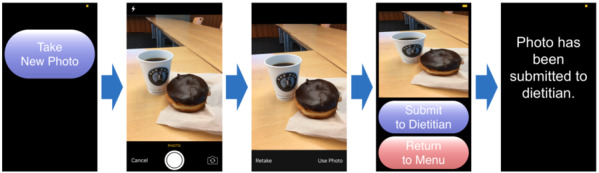
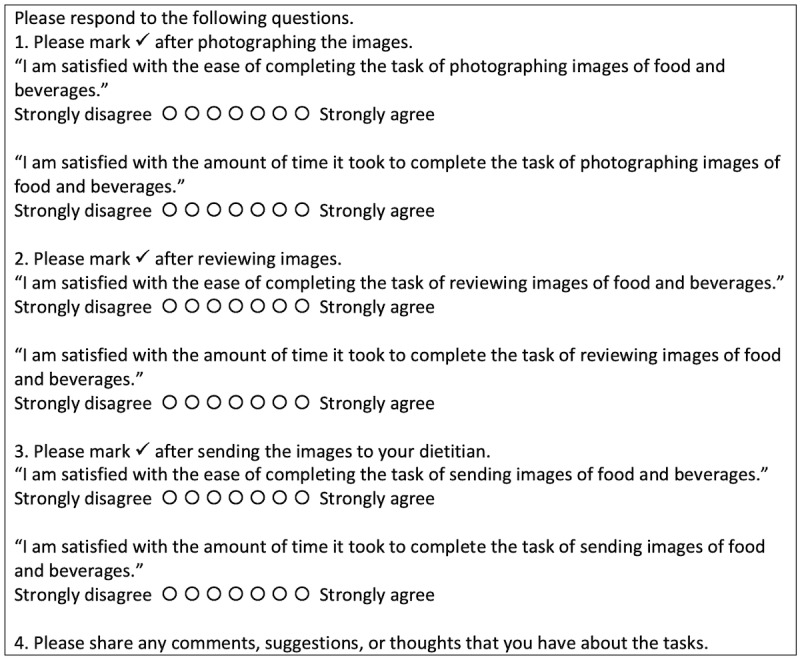
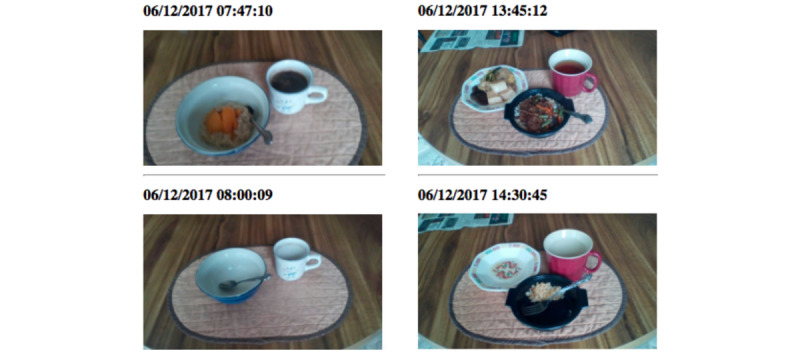
For the development of FRADA, we identified design principles that address the needs of older adults and implemented three fundamental tasks required for image-assisted dietary assessments: capturing, viewing, and transmitting images of food based on the design principles. For the usability assessment of FRADA, older adults aged 65 to 80 years (11 females and 3 males) were assigned to interact with FRADA in a lab-based setting. Participants' opinions of FRADA and its usability were determined by a follow-up survey and interview. As an evaluation indicator of usability, the responses to the survey, including an after-scenario questionnaire, were analyzed. Qualitative data from the interviews confirmed the responses to the survey.
We developed a smartphone app that enables older adults with diabetes to capture, view, and transmit images of food items they consumed. The findings of this study showed that FRADA and its instructions for capturing, viewing, and transmitting images of food items were usable for older adults with diabetes. The survey showed that participants found FRADA easy to use and would consider using FRADA daily. The analysis of the qualitative data from interviews revealed multiple categories, such as the usability of FRADA, potential benefits of using FRADA, potential features to be added to FRADA, and concerns of older adults with diabetes regarding interactions with FRADA.
This study demonstrates in a lab-based setting not only the usability of FRADA by older adults with diabetes but also potential opportunities using FRADA in real-world settings. The findings suggest implications for creating a smartphone app for an image-assisted dietary assessment. Future work still remains to evaluate the feasibility and validity of FRADA with multiple stakeholders, including older adults with diabetes and dietitians.
在美国,65岁及以上的人群中,超过四分之一的人患有2型糖尿病。对于糖尿病护理,医学营养疗法被推荐为一种临床有效的干预措施。以前的研究人员已经开发并验证了使用食品图片的饮食评估方法,以提高自我报告相对于传统方法的准确性。然而,对于患有糖尿病的老年人来说,图像辅助饮食评估方法的可用性知之甚少。
本研究的目的是(1)创建一个用于饮食评估的食物记录应用程序(FRADA),该应用程序将支持图像辅助饮食评估,以及(2)评估FRADA对患有糖尿病的老年人的可用性。
为了开发FRADA,我们确定了满足老年人需求的设计原则,并根据这些设计原则实施了图像辅助饮食评估所需的三项基本任务:拍摄、查看和传输食物图片。对于FRADA的可用性评估,65至80岁的老年人(11名女性和3名男性)被安排在实验室环境中与FRADA进行交互。通过后续调查和访谈确定参与者对FRADA及其可用性的看法。作为可用性的评估指标,对包括情景后问卷在内的调查回复进行了分析。访谈中的定性数据证实了调查回复。
我们开发了一款智能手机应用程序,使患有糖尿病的老年人能够拍摄、查看和传输他们所食用食物的图片。本研究的结果表明,FRADA及其拍摄、查看和传输食物图片的说明对于患有糖尿病的老年人是可用的。调查显示,参与者发现FRADA易于使用,并会考虑每天使用FRADA。对访谈定性数据的分析揭示了多个类别,如FRADA的可用性、使用FRADA的潜在益处、FRADA可能添加的功能以及患有糖尿病的老年人对与FRADA交互的担忧。
本研究在实验室环境中不仅证明了患有糖尿病的老年人对FRADA的可用性,还证明了在现实环境中使用FRADA的潜在机会。研究结果为创建用于图像辅助饮食评估的智能手机应用程序提供了启示。未来的工作仍有待评估FRADA与包括患有糖尿病的老年人和营养师在内的多个利益相关者的可行性和有效性。