Seifert Verena, Richter Susan, Bechmann Nicole, Bachmann Michael, Ziegler Christian G, Pietzsch Jens, Ullrich Martin
Department of Radiopharmaceutical and Chemical Biology, Helmholtz-Zentrum Dresden-Rossendorf, Institute of Radiopharmaceutical Cancer Research, 01328 Dresden, Germany.
Faculty of Chemistry and Food Chemistry, School of Science, Technische Universität Dresden, 01069 Dresden, Germany.
Cancers (Basel). 2021 Jan 21;13(3):385. doi: 10.3390/cancers13030385.
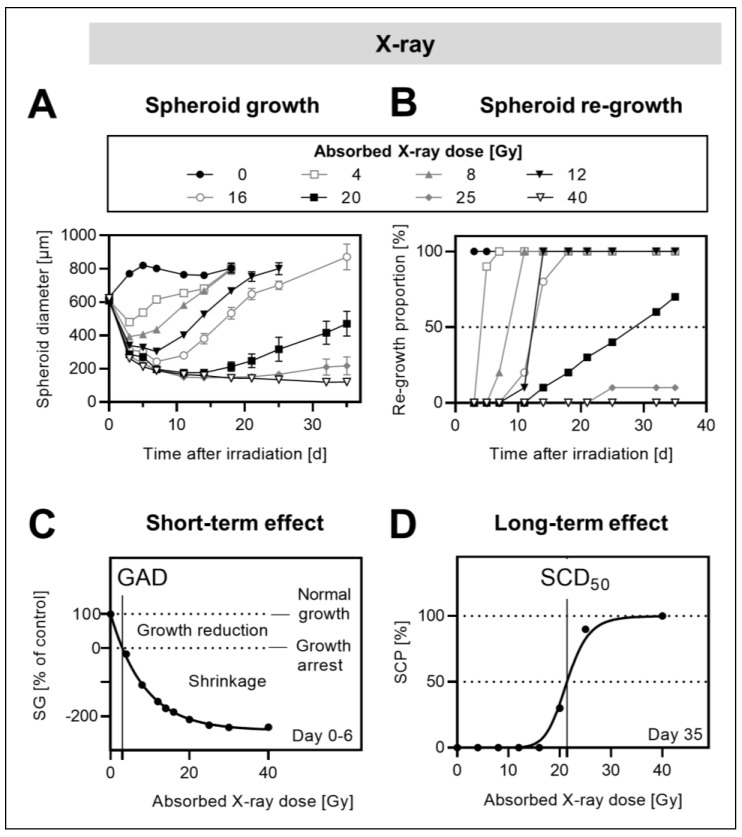
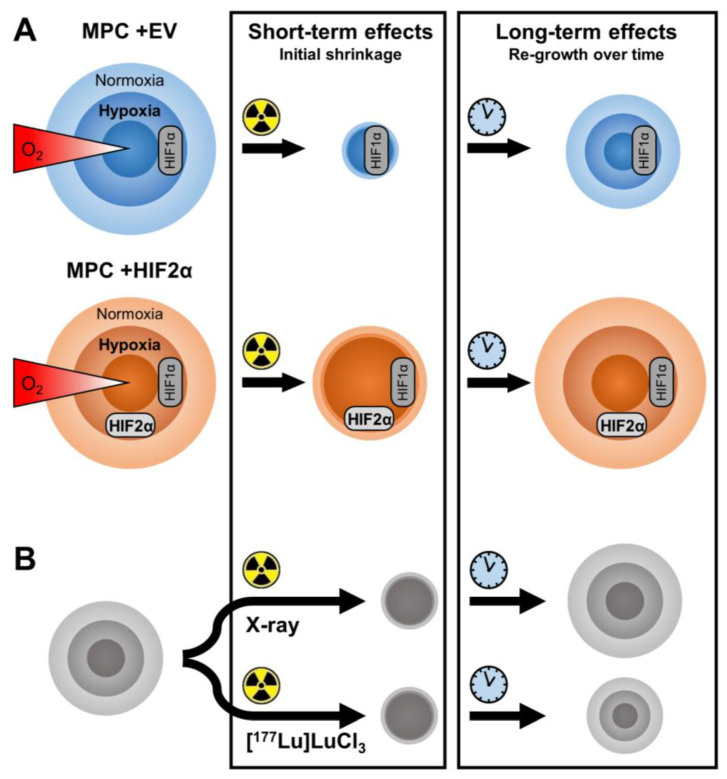
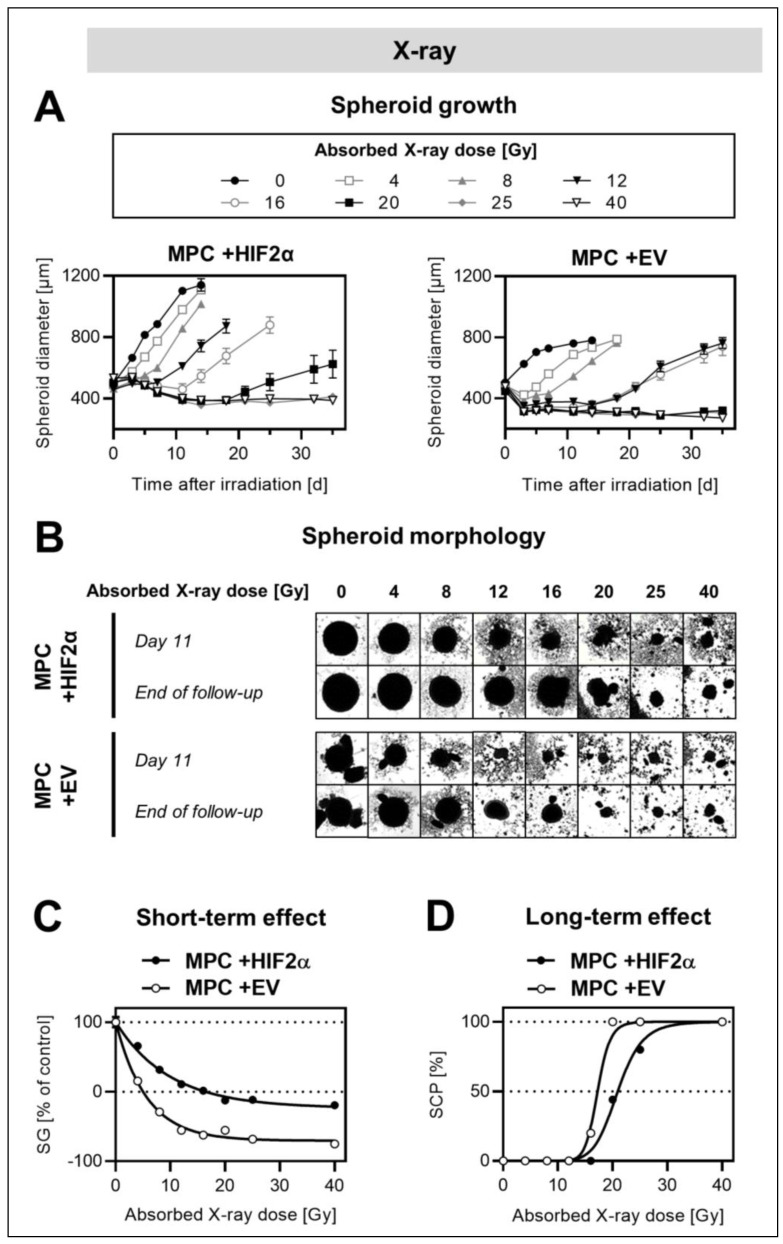
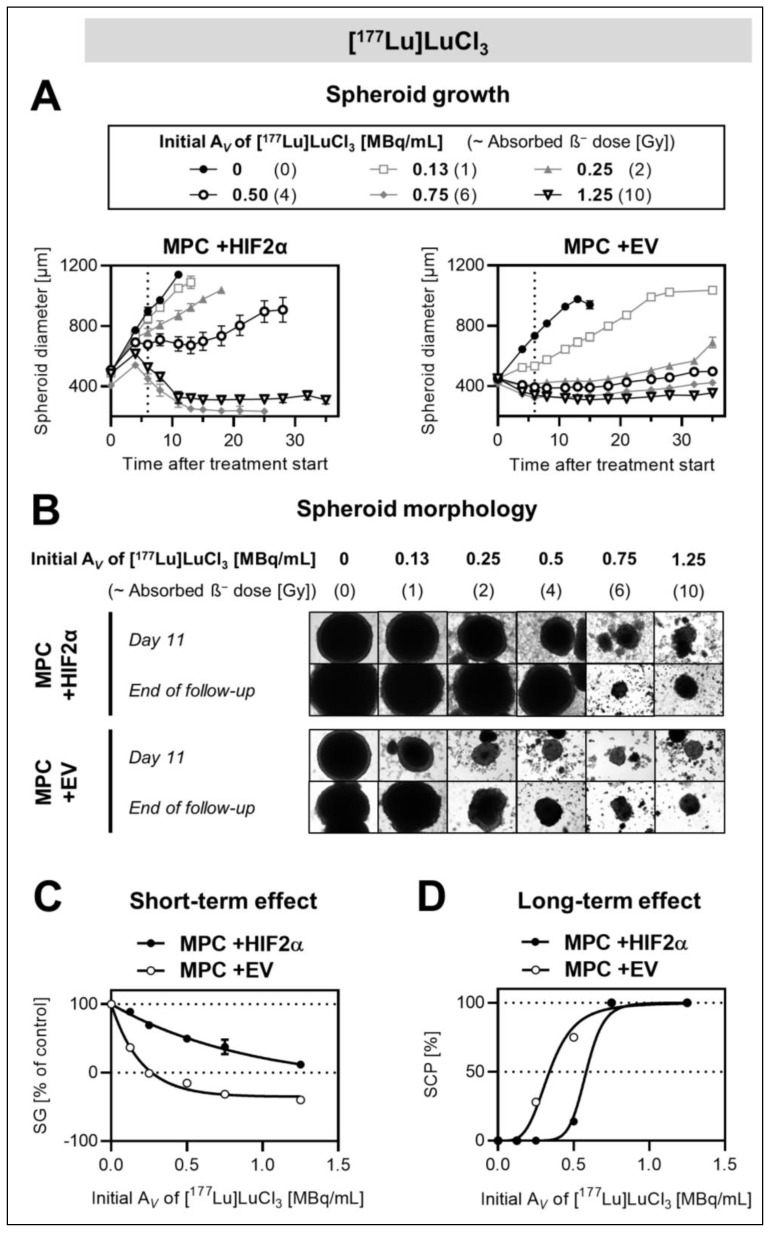
Pheochromocytomas and paragangliomas (PCCs/PGLs) are rare neuroendocrine tumors arising from chromaffin tissue located in the adrenal or ganglia of the sympathetic or parasympathetic nervous system. The treatment of non-resectable or metastatic PCCs/PGLs is still limited to palliative measures, including somatostatin type 2 receptor radionuclide therapy with [Lu]Lu-DOTA-TATE as one of the most effective approaches to date. Nevertheless, the metabolic and molecular determinants of radiation response in PCCs/PGLs have not yet been characterized. This study investigates the effects of hypoxia-inducible factor 2 alpha (HIF2α) on the susceptibility of PCCs/PGLs to radiation treatments using spheroids grown from genetically engineered mouse pheochromocytoma (MPC) cells. The expression of was associated with the significantly increased resistance of MPC spheroids to external X-ray irradiation and exposure to beta particle-emitting [Lu]LuCl compared to -deficient controls. Exposure to [Lu]LuCl provided an increased long-term control of MPC spheroids compared to single-dose external X-ray irradiation. This study provides the first experimental evidence that HIF2α-associated pseudohypoxia contributes to a radioresistant phenotype of PCCs/PGLs. Furthermore, the external irradiation and [Lu]LuCl exposure of MPC spheroids provide surrogate models for radiation treatments to further investigate the metabolic and molecular determinants of radiation responses in PCCs/PGLs and evaluate the effects of neo-adjuvant-in particular, radiosensitizing-treatments in combination with targeted radionuclide therapies.
嗜铬细胞瘤和副神经节瘤(PCCs/PGLs)是罕见的神经内分泌肿瘤,起源于位于肾上腺或交感或副交感神经系统神经节中的嗜铬组织。不可切除或转移性PCCs/PGLs的治疗仍局限于姑息性措施,包括以[镥]镥 - DOTA - TATE进行的生长抑素2型受体放射性核素治疗,这是迄今为止最有效的方法之一。然而,PCCs/PGLs中辐射反应的代谢和分子决定因素尚未得到明确。本研究使用基因工程小鼠嗜铬细胞瘤(MPC)细胞培养的球体,研究缺氧诱导因子2α(HIF2α)对PCCs/PGLs辐射治疗敏感性的影响。与缺乏[具体基因]的对照相比,[具体基因]的表达与MPC球体对外部X射线照射和暴露于发射β粒子的[镥]氯化镥的抗性显著增加有关。与单剂量外部X射线照射相比,暴露于[镥]氯化镥可增强对MPC球体的长期控制。本研究提供了首个实验证据,表明HIF2α相关的假性缺氧促成了PCCs/PGLs的放射抗性表型。此外,MPC球体的外部照射和[镥]氯化镥暴露为辐射治疗提供了替代模型,以进一步研究PCCs/PGLs中辐射反应的代谢和分子决定因素,并评估新辅助治疗(特别是放射增敏治疗)与靶向放射性核素疗法联合使用的效果。