Health Economics and Decision Science, School of Health and Related Research, University of Sheffield, Regent Court, 30 Regent Street, Sheffield, S1 4DA, UK.
Centre for Urgent and Emergency Care Research, School of Health and Related Research, University of Sheffield, Regent Court, 30 Regent Street, Sheffield, S1 4DA, UK.
BMC Emerg Med. 2021 Jan 25;21(1):13. doi: 10.1186/s12873-021-00404-8.
Standard prehospital management for Acute respiratory failure (ARF) involves controlled oxygen therapy. Continuous positive airway pressure (CPAP) is a potentially beneficial alternative treatment, however, it is uncertain whether this could improve outcomes and provide value for money. This study aimed to evaluate the cost-effectiveness of prehospital CPAP in ARF.
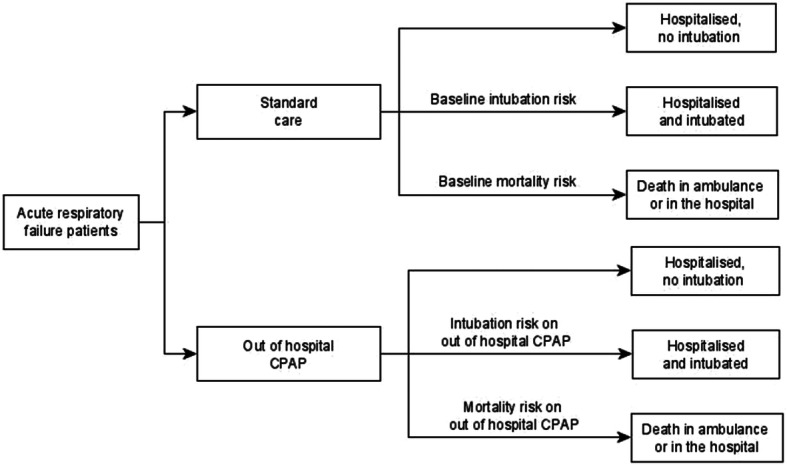
A cost-utility economic evaluation was performed using a probabilistic decision tree model synthesising available evidence. The model consisted of a hypothetical cohort of patients in a representative ambulance service with undifferentiated ARF, receiving standard oxygen therapy or prehospital CPAP. Costs and quality adjusted life years (QALYs) were estimated using methods recommended by NICE.
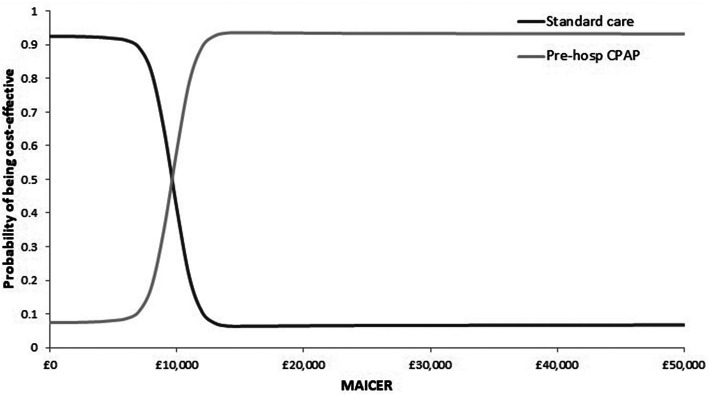
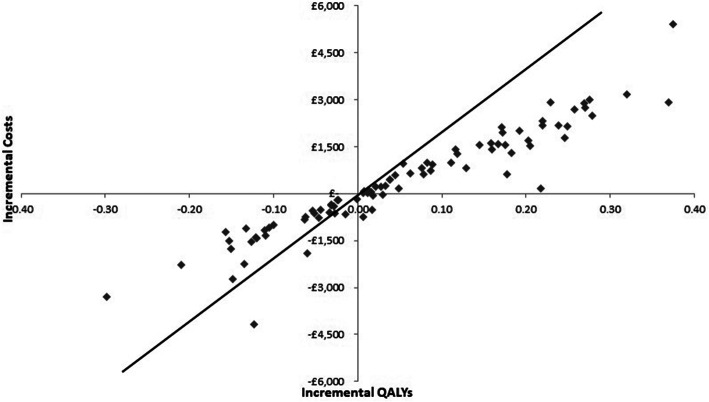
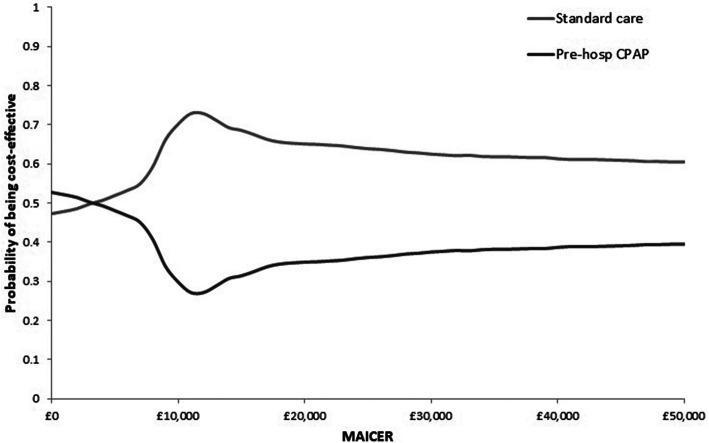
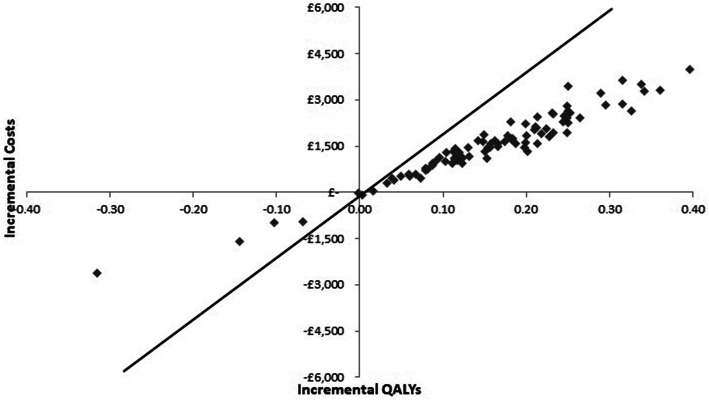
In the base case analysis, using CPAP effectiveness estimates form the ACUTE trial, the mean expected costs of standard care and prehospital CPAP were £15,201 and £14,850 respectively and the corresponding mean expected QALYs were 1.190 and 1.128, respectively. The mean ICER estimated as standard oxygen therapy compared to prehospital CPAP was £5685 per QALY which indicated that standard oxygen therapy strategy was likely to be cost-effective at a threshold of £20,000 per QALY (67% probability). The scenario analysis, using effectiveness estimates from an updated meta-analysis, suggested that prehospital CPAP was more effective (mean incremental QALYs of 0.157), but also more expensive (mean incremental costs of £1522), than standard care. The mean ICER, estimated as prehospital CPAP compared to standard care, was £9712 per QALY. At the £20,000 per QALY prehospital CPAP was highly likely to be the most cost-effective strategy (94%).
Cost-effectiveness of prehospital CPAP depends upon the estimate of effectiveness. When based on a small pragmatic feasibility trial, standard oxygen therapy is cost-effective. When based on meta-analysis of heterogeneous trials, CPAP is cost-effective. Value of information analyses support commissioning of a large pragmatic effectiveness trial, providing feasibility and plausibility conditions are met.
急性呼吸衰竭(ARF)的标准院前管理包括控制性氧疗。持续气道正压通气(CPAP)是一种潜在有益的替代治疗方法,但尚不确定这是否能改善预后并具有成本效益。本研究旨在评估 ARF 院前 CPAP 的成本效益。
使用概率决策树模型对现有证据进行综合,对成本效益经济学评价进行了评估。该模型由一个具有代表性的救护服务中具有未分化 ARF 的假设队列组成,该队列接受标准氧疗或院前 CPAP。使用 NICE 推荐的方法估算成本和质量调整生命年(QALY)。
在基本案例分析中,使用 ACUTE 试验的 CPAP 有效性估计,标准护理和院前 CPAP 的平均预期成本分别为 15201 英镑和 14850 英镑,相应的平均预期 QALY 分别为 1.190 和 1.128。与院前 CPAP 相比,标准氧疗策略的平均增量成本效益比(ICER)估计为 5685 英镑/QALY,这表明在 20000 英镑/QALY 的阈值下,标准氧疗策略可能具有成本效益(67%的概率)。使用更新的荟萃分析的有效性估计进行的情景分析表明,院前 CPAP 更有效(平均增量 QALY 为 0.157),但也更昂贵(平均增量成本为 1522 英镑)。与标准护理相比,CPAP 的平均 ICER 估计为 9712 英镑/QALY。在 20000 英镑/QALY 下,CPAP 极有可能成为最具成本效益的策略(94%)。
院前 CPAP 的成本效益取决于有效性的估计。当基于小型实用可行性试验时,标准氧疗具有成本效益。当基于异质试验的荟萃分析时,CPAP 具有成本效益。信息价值分析支持委托进行大型实用有效性试验,前提是满足可行性和合理性条件。