Laboratory of Cell and Developmental Signaling, Center for Cancer Research, NCI, Frederick, Maryland.
Protein Characterization Laboratory, Leidos Biomedical Research, Frederick National Laboratory for Cancer Research, Frederick, Maryland.
Cancer Discov. 2021 Jun;11(6):1411-1423. doi: 10.1158/2159-8290.CD-20-0797. Epub 2021 Jan 25.
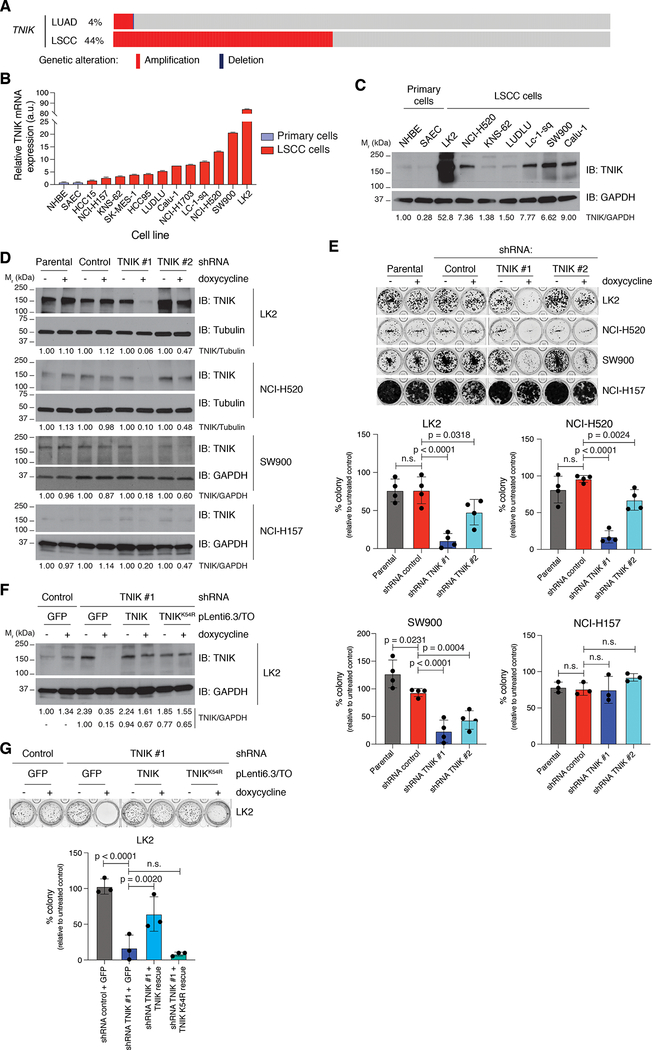
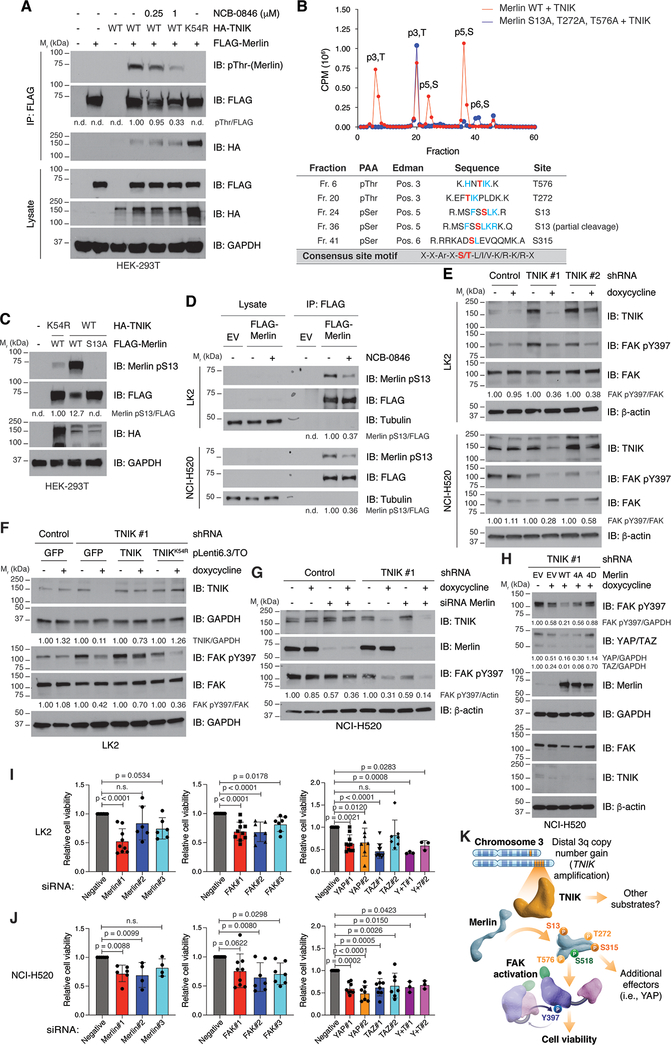
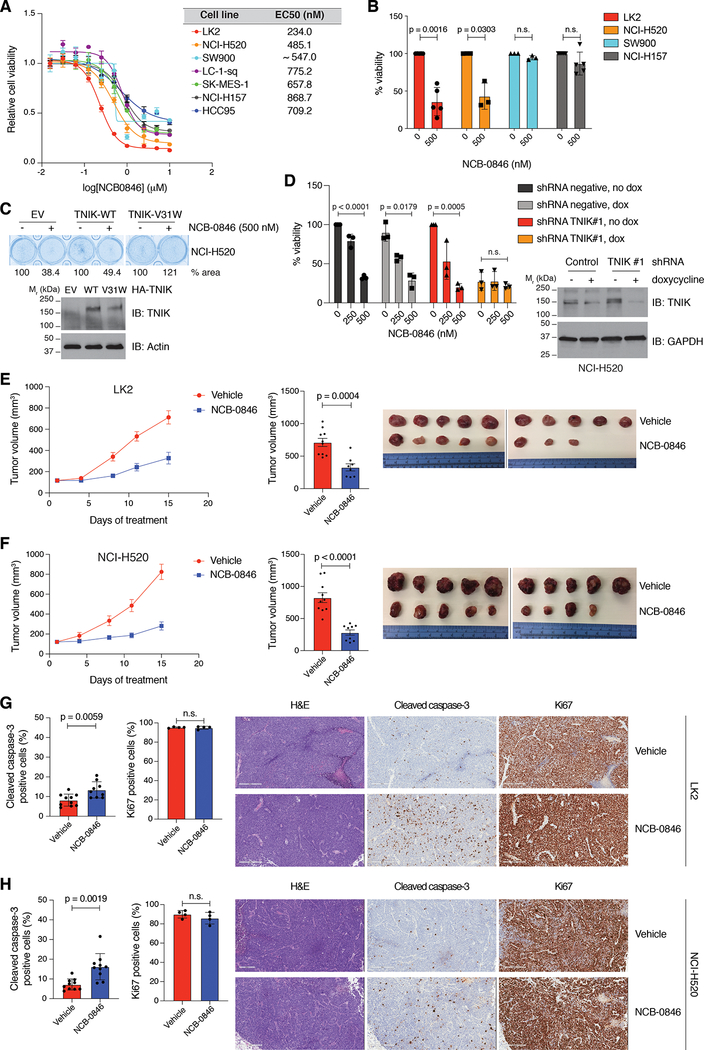
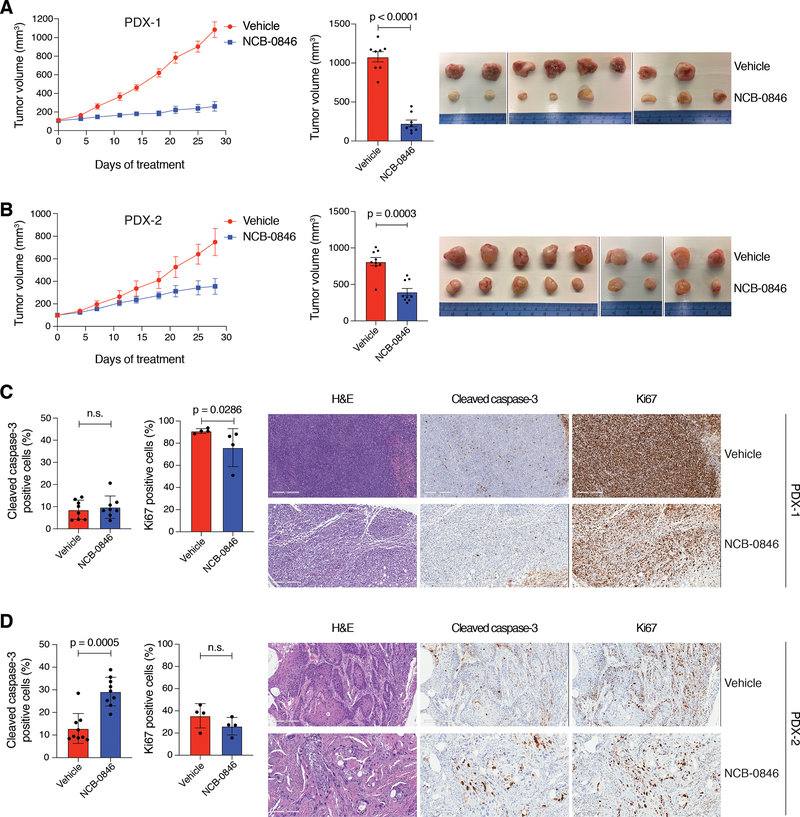
Lung squamous cell carcinoma (LSCC) is the second most prevalent type of lung cancer. Despite extensive genomic characterization, no targeted therapies are approved for the treatment of LSCC. Distal amplification of the 3q chromosome is the most frequent genomic alteration in LSCC, and there is an urgent need to identify efficacious druggable targets within this amplicon. We identify the protein kinase TNIK as a therapeutic target in LSCC. is amplified in approximately 50% of LSCC cases. TNIK genetic depletion or pharmacologic inhibition reduces the growth of LSCC cells and . In addition, TNIK inhibition showed antitumor activity and increased apoptosis in established LSCC patient-derived xenografts. Mechanistically, we identified the tumor suppressor Merlin/ as a novel TNIK substrate and showed that TNIK and Merlin are required for the activation of focal adhesion kinase. In conclusion, our data identify targeting TNIK as a potential therapeutic strategy in LSCC. SIGNIFICANCE: Targeted therapies have not yet been approved for the treatment of LSCC, due to lack of identification of actionable cancer drivers. We define TNIK catalytic activity as essential for maintaining LSCC viability and validate the antitumor efficacy of TNIK inhibition in preclinical models of LSCC..
肺鳞状细胞癌(LSCC)是第二大常见的肺癌类型。尽管进行了广泛的基因组特征分析,但尚无针对 LSCC 的靶向治疗方法获得批准。3q 染色体的远端扩增是 LSCC 中最常见的基因组改变,因此迫切需要在该扩增子中确定有效的可用药靶点。我们确定蛋白激酶 TNIK 是 LSCC 的治疗靶点。 在大约 50%的 LSCC 病例中扩增。TNIK 的遗传缺失或药物抑制可降低 LSCC 细胞的生长 和 。此外,TNIK 抑制在已建立的 LSCC 患者来源的异种移植物中显示出抗肿瘤活性并增加细胞凋亡。从机制上讲,我们确定肿瘤抑制蛋白 Merlin/ 为 TNIK 的新型底物,并表明 TNIK 和 Merlin 是激活粘着斑激酶所必需的。总之,我们的数据确定了靶向 TNIK 是 LSCC 的潜在治疗策略。 意义:由于尚未确定可行的癌症驱动因素,因此尚未批准针对 LSCC 的靶向治疗方法。我们将 TNIK 催化活性定义为维持 LSCC 活力所必需的,并在 LSCC 的临床前模型中验证了 TNIK 抑制的抗肿瘤功效。