School of Earth & Environment, University of Leeds, Woodhouse Lane, Leeds, LS2 9JT, UK.
Department of Earth and Environmental Sciences, University of Waterloo, Waterloo, N2L 3G1, ON, Canada.
Nat Commun. 2021 Jan 25;12(1):570. doi: 10.1038/s41467-020-20627-w.
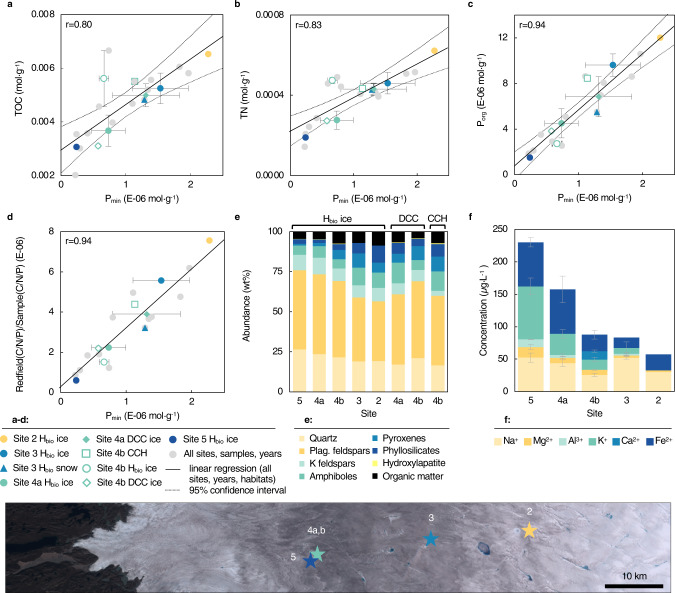
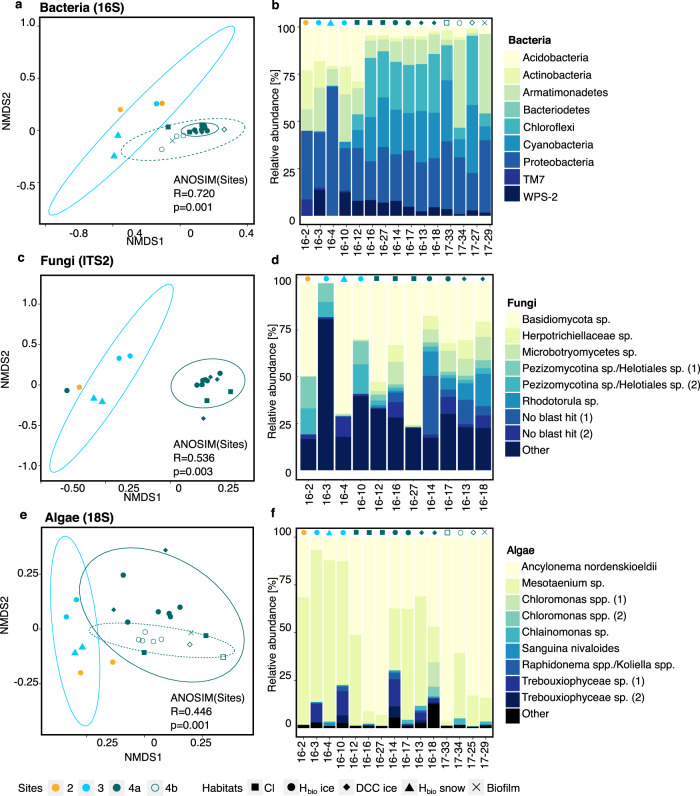
Melting of the Greenland Ice Sheet is a leading cause of land-ice mass loss and cryosphere-attributed sea level rise. Blooms of pigmented glacier ice algae lower ice albedo and accelerate surface melting in the ice sheet's southwest sector. Although glacier ice algae cause up to 13% of the surface melting in this region, the controls on bloom development remain poorly understood. Here we show a direct link between mineral phosphorus in surface ice and glacier ice algae biomass through the quantification of solid and fluid phase phosphorus reservoirs in surface habitats across the southwest ablation zone of the ice sheet. We demonstrate that nutrients from mineral dust likely drive glacier ice algal growth, and thereby identify mineral dust as a secondary control on ice sheet melting.
格陵兰冰原的融化是陆地冰质量损失和冰冻圈引起海平面上升的主要原因。带色的冰川藻类大量繁殖降低了冰的反照率,并加速了冰原西南部分的表面融化。尽管冰川藻类导致该地区高达 13%的表面融化,但对其繁殖发展的控制仍知之甚少。在这里,我们通过量化冰原西南消融区表面生境中固相与流相间的磷储库,展示了表面冰中的矿物磷与冰川藻类生物量之间的直接联系。我们证明,来自矿物尘埃的营养物质可能驱动冰川藻类的生长,从而将矿物尘埃确定为对冰原融化的二次控制因素。