Emerg Infect Dis. 2021 Feb;27(2):430-442. doi: 10.3201/eid2702.191795.
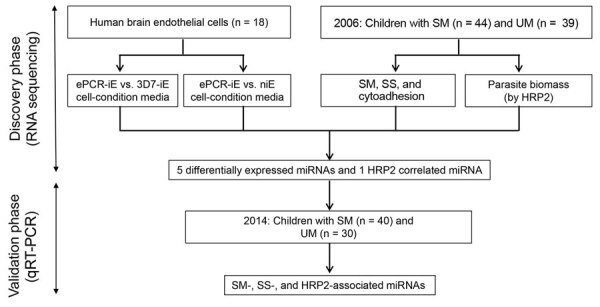
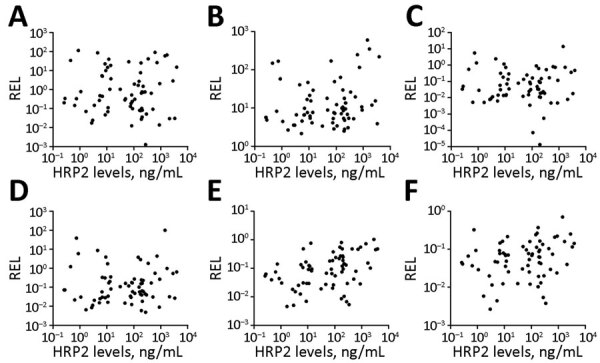
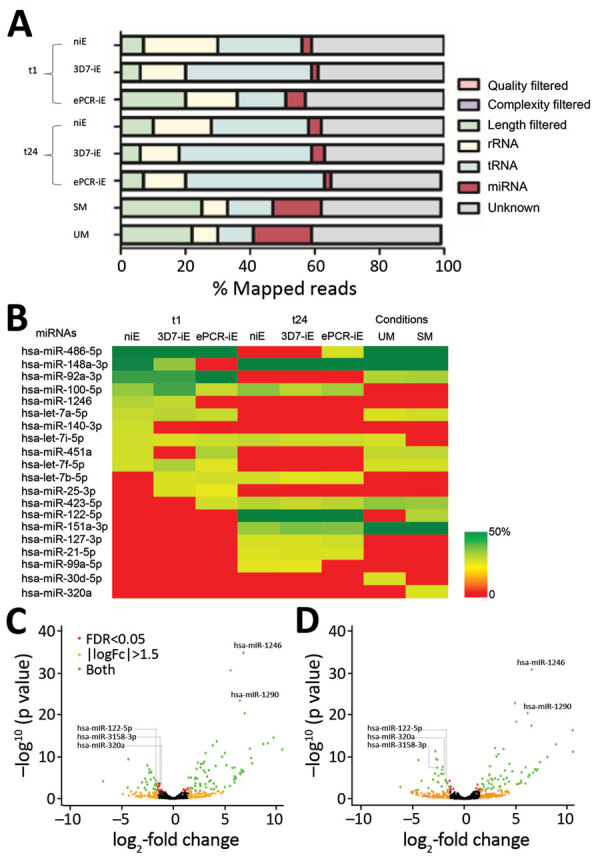
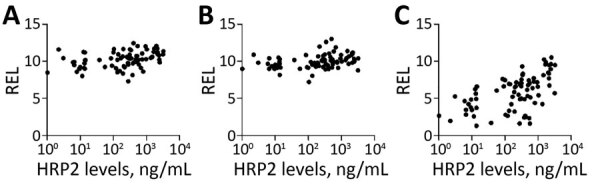
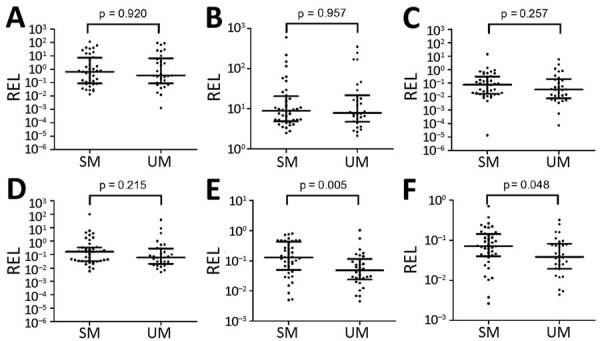
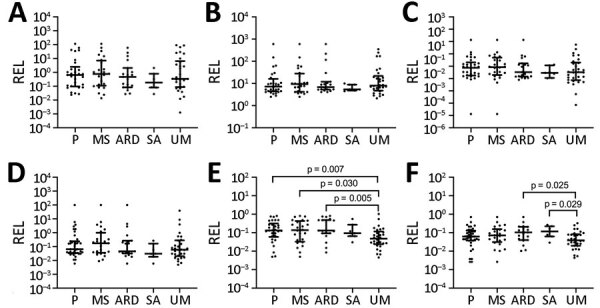
Severe malaria (SM) is a major public health problem in malaria-endemic countries. Sequestration of Plasmodium falciparum-infected erythrocytes in vital organs and the associated inflammation leads to organ dysfunction. MicroRNAs (miRNAs), which are rapidly released from damaged tissues into the host fluids, constitute a promising biomarker for the prognosis of SM. We applied next-generation sequencing to evaluate the differential expression of miRNAs in SM and in uncomplicated malaria (UM) in children in Mozambique. Six miRNAs were associated with in vitro P. falciparum cytoadhesion, severity in children, and P. falciparum biomass. Relative expression of hsa-miR-4497 quantified by TaqMan-quantitative reverse transcription PCR was higher in plasma of children with SM than those with UM (p<0.048) and again correlated with P. falciparum biomass (p = 0.033). These findings suggest that different physiopathological processes in SM and UM lead to differential expression of miRNAs and suggest a pathway for assessing their prognostic value malaria.
严重疟疾(SM)是疟疾流行国家的一个主要公共卫生问题。疟原虫感染的红细胞在重要器官中的隔离和相关的炎症导致器官功能障碍。微小 RNA(miRNA)是从受损组织中迅速释放到宿主液中的,构成了一种有前途的用于预测 SM 的生物标志物。我们应用下一代测序来评估莫桑比克儿童中 SM 和无并发症疟疾(UM)中 miRNA 的差异表达。有 6 个 miRNA 与体外疟原虫细胞黏附、儿童严重程度和疟原虫生物量相关。通过 TaqMan 定量逆转录 PCR 定量的 hsa-miR-4497 的相对表达在 SM 患儿的血浆中高于 UM 患儿(p<0.048),并且再次与疟原虫生物量相关(p = 0.033)。这些发现表明,SM 和 UM 中的不同生理病理过程导致 miRNA 的差异表达,并提示评估其预后价值的途径疟疾。