Department of Neuroscience, College of Medicine, University of Florida, Gainesville, FL, 32610, USA.
Center for Translational Research in Neurodegenerative Disease, College of Medicine, University of Florida, Gainesville, FL, 32610, USA.
Acta Neuropathol. 2021 Mar;141(3):359-381. doi: 10.1007/s00401-021-02264-9. Epub 2021 Jan 26.
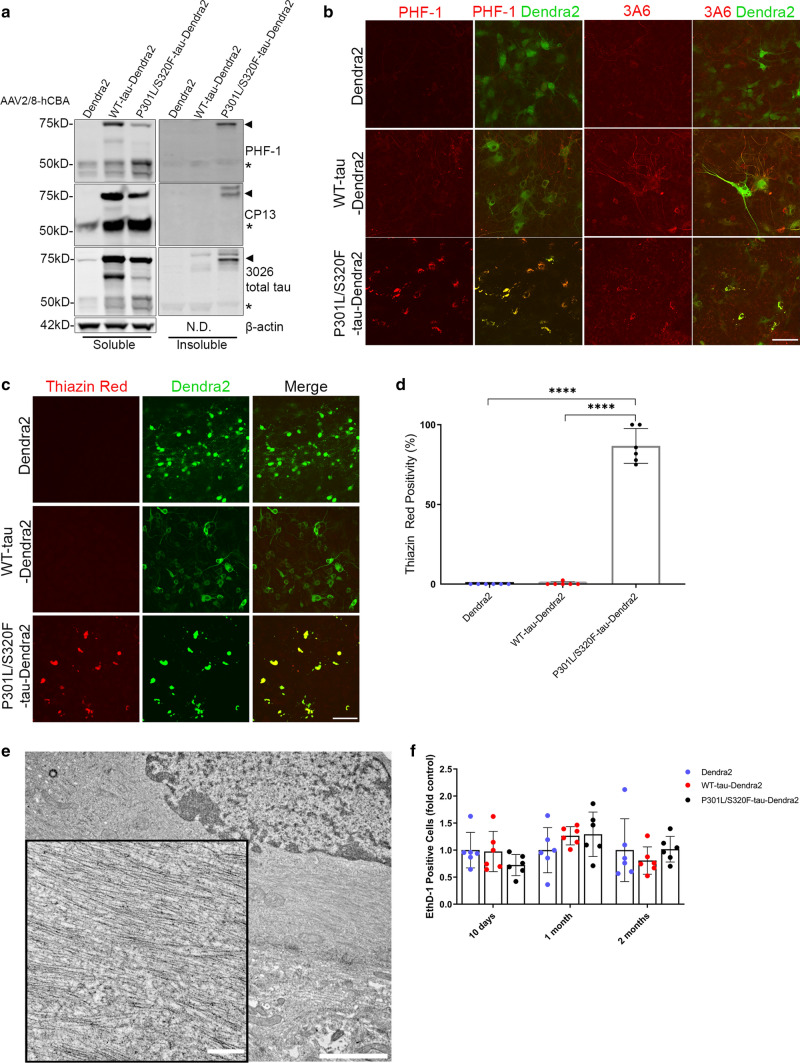
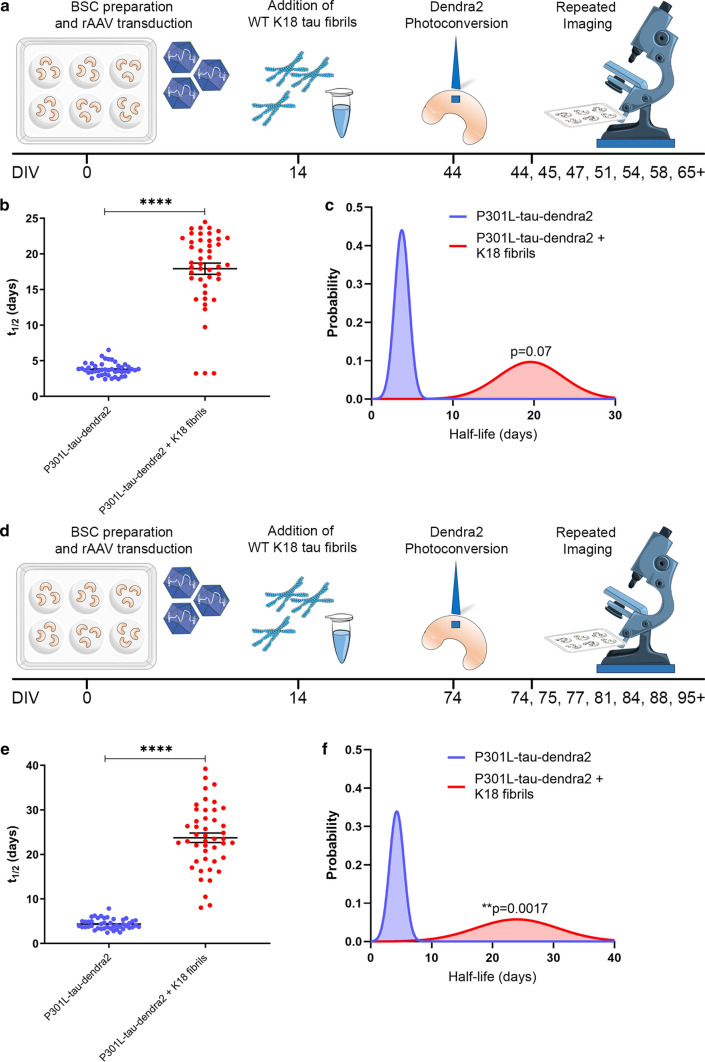
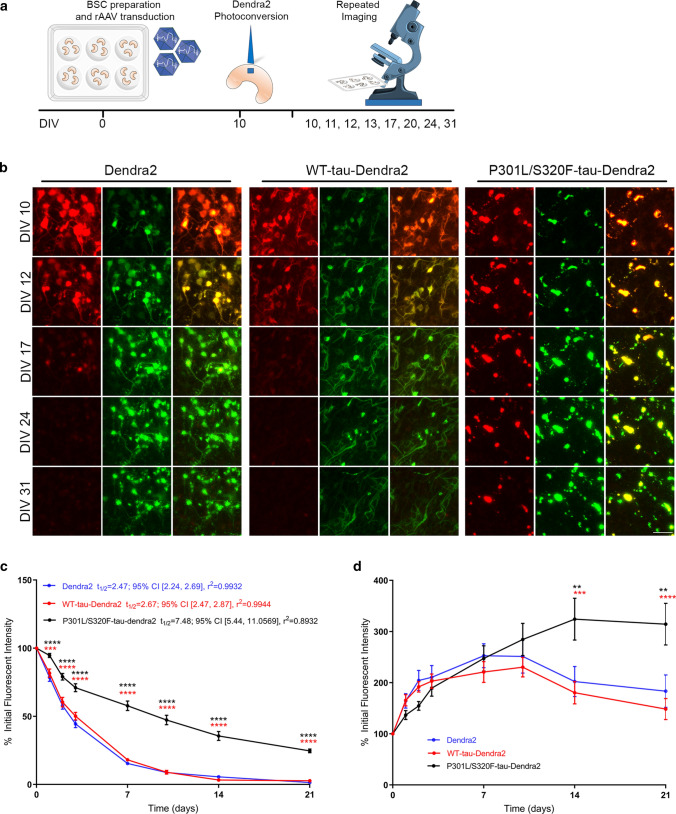
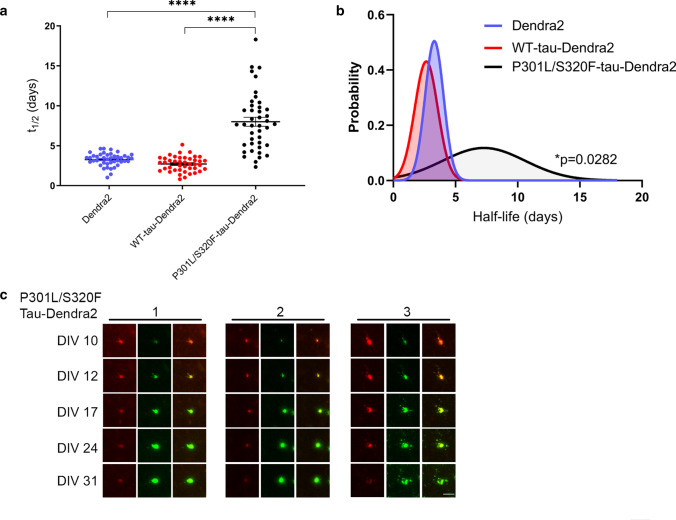
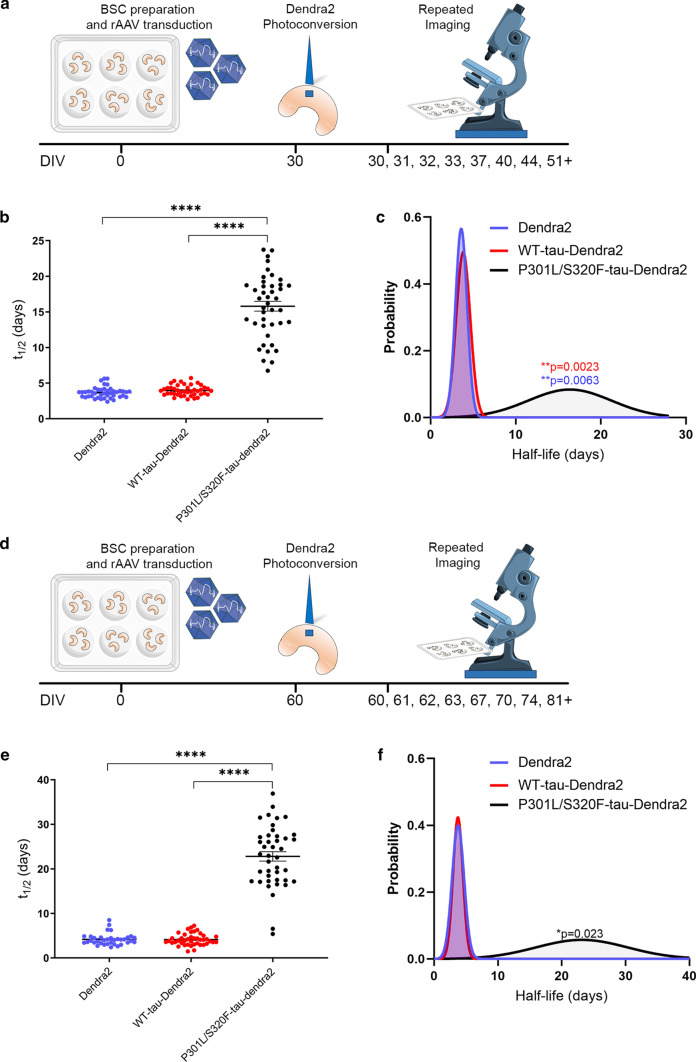
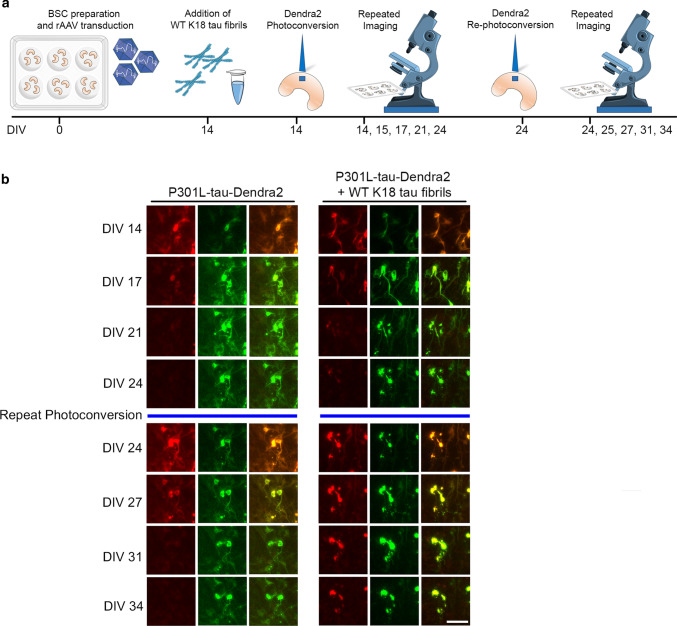
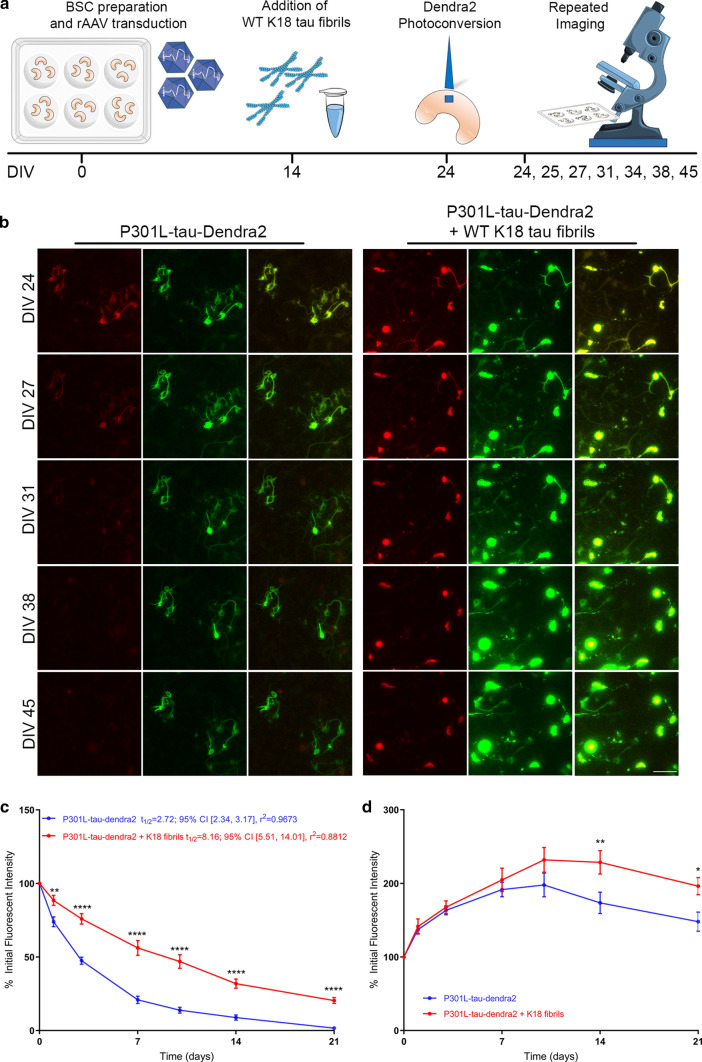
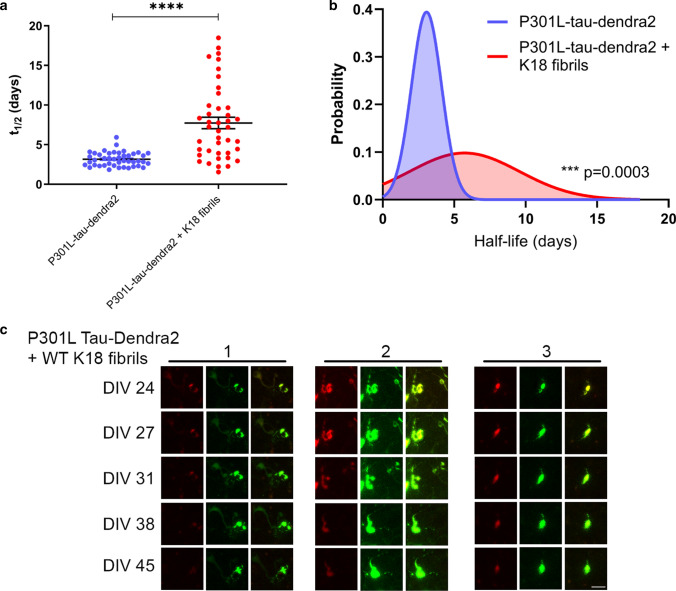
Accumulation of the tau protein in fibrillar intracellular aggregates is a defining feature of multiple neurodegenerative diseases collectively referred to as tauopathies. Despite intensive study of tau, there is limited information on the formation and clearance dynamics of tau inclusions. Using rAAV vectors to mediate expression of Dendra2-tagged human wild-type, P301L and pro-aggregant P301L/S320F tau proteins, with and without the addition of exogenous tau fibrillar seeds, we evaluated tau inclusion dynamics in organotypic brain slice culture (BSC) models using long-term optical pulse labeling methodology. Our studies reveal that tau inclusions typically form in 12-96 h in tauopathy BSC models. Unexpectedly, we demonstrate appreciable turnover of tau within inclusions with an average half-life of ~ 1 week when inclusions are newly formed. When BSCs with inclusions are aged in culture for extended periods, tau inclusions continue to turnover, but their half-lives increase to ~ 2 weeks and ~ 3 weeks after 1 and 2 months in culture, respectively. Individual tau inclusions can be long-lived structures that can persist for months in these BSC models and for even longer in the human brain. However, our data indicate that tau inclusions, are not 'tombstones', but dynamic structures with appreciable turnover. Understanding the cellular processes mediating this inclusion turnover may lead to new therapeutic strategies that could reverse pathological tau inclusion formation.
tau 蛋白在纤维状细胞内聚集体中的积累是多种神经退行性疾病的一个特征,这些疾病统称为 tau 病。尽管对 tau 进行了深入研究,但关于 tau 包含物的形成和清除动力学的信息有限。我们使用 rAAV 载体介导表达 Dendra2 标记的人野生型、P301L 和促聚集 P301L/S320F tau 蛋白,同时添加和不添加外源性 tau 纤维状种子,使用长期光学脉冲标记方法在器官型脑切片培养 (BSC) 模型中评估 tau 包含物的动力学。我们的研究表明,tau 包含物通常在 tau 病 BSC 模型中形成 12-96 小时。出乎意料的是,我们证明了在包含物中 tau 的周转率相当高,当包含物是新形成时,平均半衰期约为 1 周。当含有包含物的 BSCs 在培养中老化延长时间时,tau 包含物仍在不断周转,但它们的半衰期分别增加到培养 1 个月和 2 个月后约 2 周和 3 周。单个 tau 包含物可以是长期存在的结构,可以在这些 BSC 模型中持续数月,甚至在人类大脑中持续更长时间。然而,我们的数据表明,tau 包含物不是“墓碑”,而是具有相当周转率的动态结构。了解介导这种包含物周转率的细胞过程可能会导致新的治疗策略,从而逆转病理性 tau 包含物的形成。