Max-Planck-Institute for Biology of Ageing, Cologne, Germany.
Cologne Excellence Cluster on Cellular Stress Responses in Aging-Associated Diseases (CECAD), University of Cologne, Cologne, Germany.
J Biol Chem. 2021 Jan-Jun;296:100335. doi: 10.1016/j.jbc.2021.100335. Epub 2021 Jan 23.
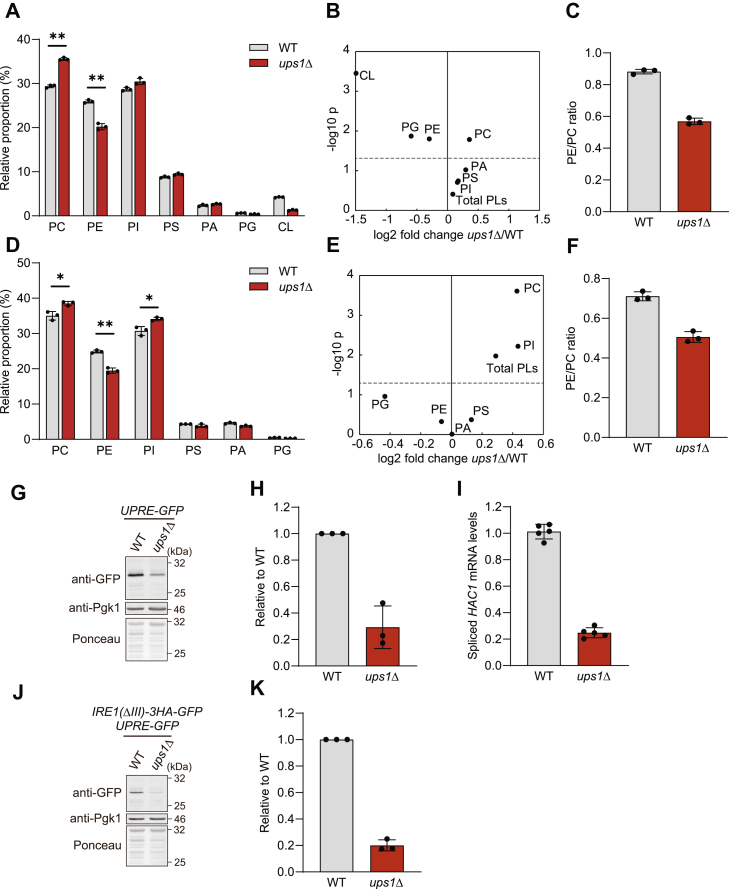
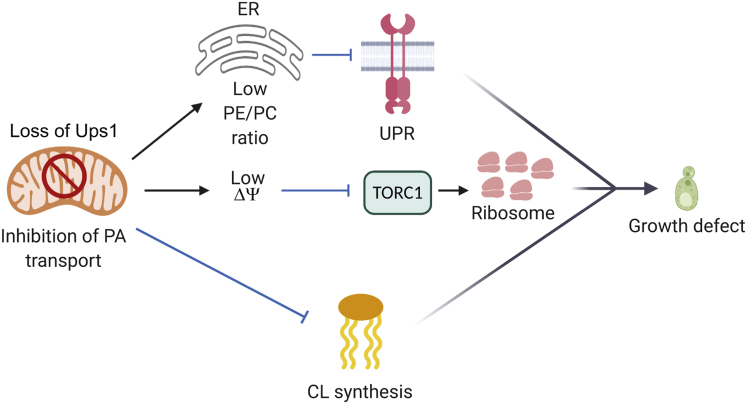
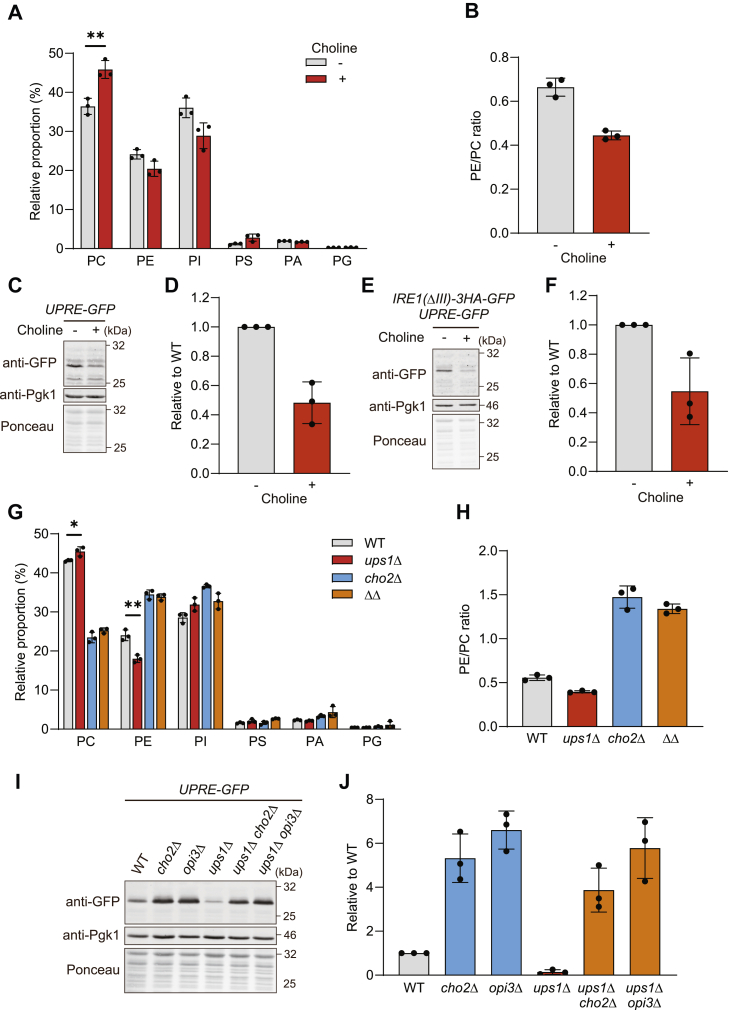
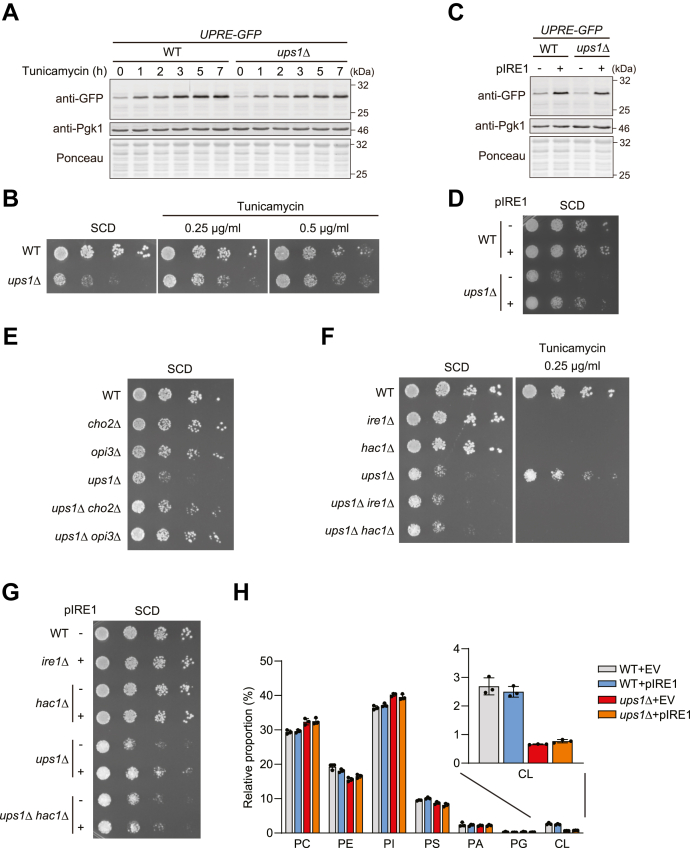
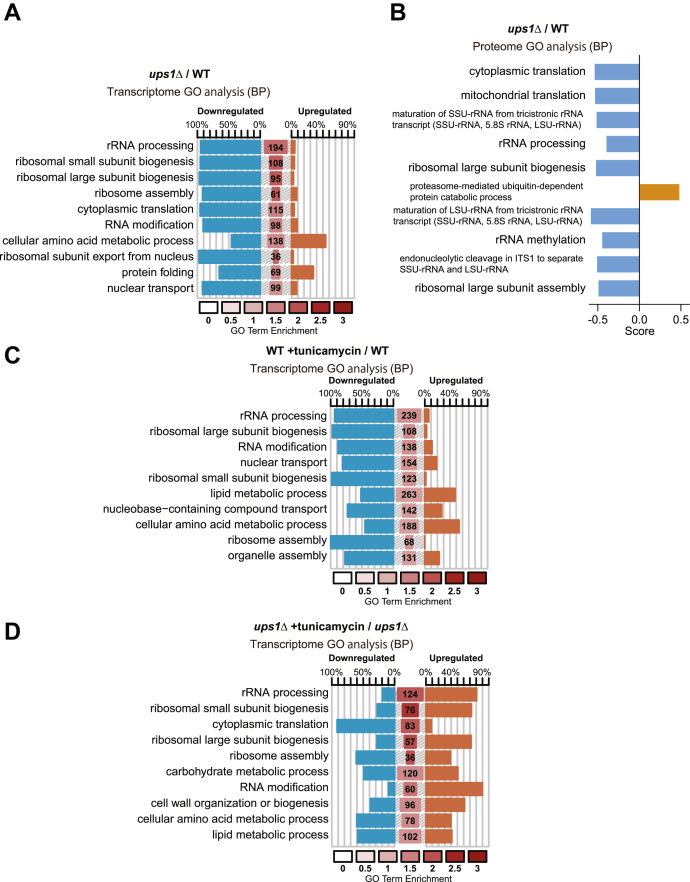
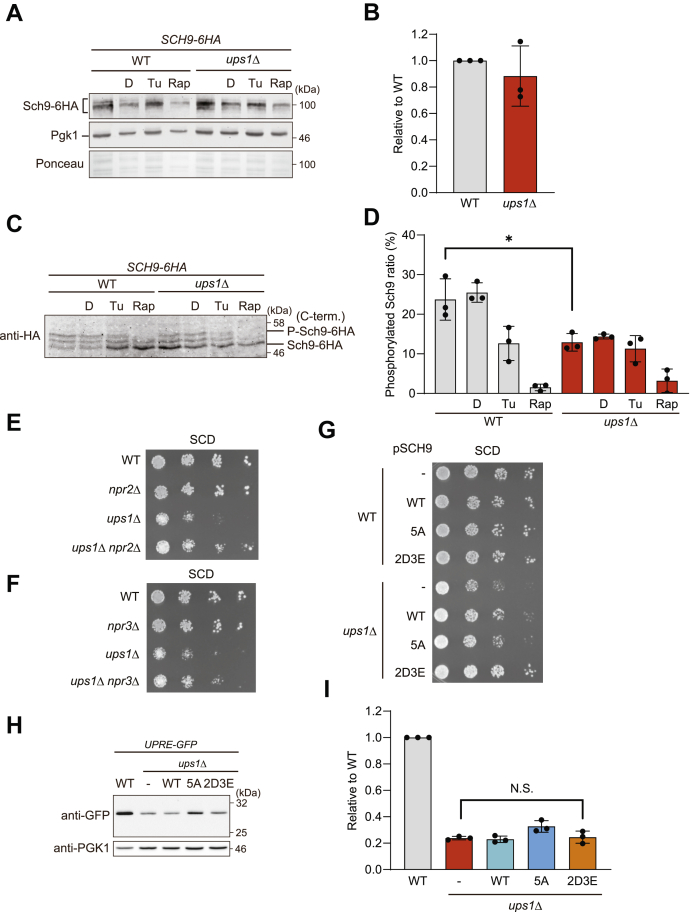
Lipid transfer proteins of the Ups1/PRELID1 family facilitate the transport of phospholipids across the intermembrane space of mitochondria in a lipid-specific manner. Heterodimeric complexes of yeast Ups1/Mdm35 or human PRELID1/TRIAP1 shuttle phosphatidic acid (PA) mainly synthesized in the endoplasmic reticulum (ER) to the inner membrane, where it is converted to cardiolipin (CL), the signature phospholipid of mitochondria. Loss of Ups1/PRELID1 proteins impairs the accumulation of CL and broadly affects mitochondrial structure and function. Unexpectedly and unlike yeast cells lacking the CL synthase Crd1, Ups1-deficient yeast cells exhibit glycolytic growth defects, pointing to functions of Ups1-mediated PA transfer beyond CL synthesis. Here, we show that the disturbed intramitochondrial transport of PA in ups1Δ cells leads to altered unfolded protein response (UPR) and mTORC1 signaling, independent of disturbances in CL synthesis. The impaired flux of PA into mitochondria is associated with the increased synthesis of phosphatidylcholine and a reduced phosphatidylethanolamine/phosphatidylcholine ratio in the ER of ups1Δ cells which suppresses the UPR. Moreover, we observed inhibition of target of rapamycin complex 1 (TORC1) signaling in these cells. Activation of either UPR by ER protein stress or of TORC1 signaling by disruption of its negative regulator, the Seh1-associated complex inhibiting TORC1 complex, increased cytosolic protein synthesis, and restored glycolytic growth of ups1Δ cells. These results demonstrate that PA influx into mitochondria is required to preserve ER membrane homeostasis and that its disturbance is associated with impaired glycolytic growth and cellular stress signaling.
Ups1/PRELID1 家族的脂质转移蛋白以脂质特异性的方式促进磷脂跨线粒体的膜间隙运输。酵母 Ups1/Mdm35 或人 PRELID1/TRIAP1 的异源二聚体复合物主要将在内质网 (ER) 中合成的磷脂酸 (PA) 穿梭到内膜,在那里它被转化为心磷脂 (CL),CL 是线粒体的标志性磷脂。Ups1/PRELID1 蛋白的缺失会损害 CL 的积累,并广泛影响线粒体的结构和功能。出乎意料的是,与缺乏 CL 合酶 Crd1 的酵母细胞不同,Ups1 缺陷酵母细胞表现出糖酵解生长缺陷,这表明 Ups1 介导的 PA 转移的功能超出了 CL 合成。在这里,我们表明 ups1Δ细胞中线粒体中 PA 的运输受到干扰会导致未折叠蛋白反应 (UPR) 和 mTORC1 信号转导的改变,而与 CL 合成的干扰无关。PA 进入线粒体的通量受损与 ups1Δ细胞中 ER 中磷脂酰胆碱的合成增加和磷脂酰乙醇胺/磷脂酰胆碱比例降低有关,这会抑制 UPR。此外,我们观察到这些细胞中雷帕霉素复合物 1 (TORC1) 信号的抑制。通过 ER 蛋白应激激活 UPR 或通过破坏其负调节剂 Seh1 相关复合物抑制 TORC1 复合物来激活 TORC1 信号,均可增加细胞质蛋白合成,并恢复 ups1Δ细胞的糖酵解生长。这些结果表明,PA 流入线粒体对于维持 ER 膜稳态是必需的,其干扰与糖酵解生长受损和细胞应激信号转导有关。