Centre de Diagnòstic Biomèdic, Department of Immunology, Hospital Clínic de Barcelona (HCB), 08036 Barcelona, Spain.
Institut D' Investigacions Biomèdiques August Pi i Sunyer (IDIBAPS), Fundació Clínic per a la Recerca Biomèdica (FCRB), 08036 Barcelona, Spain.
Int J Mol Sci. 2021 Jan 20;22(3):1026. doi: 10.3390/ijms22031026.
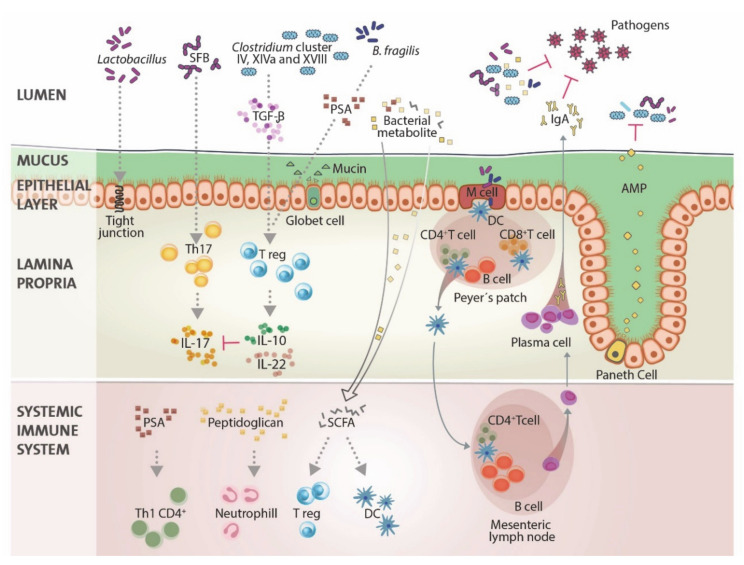
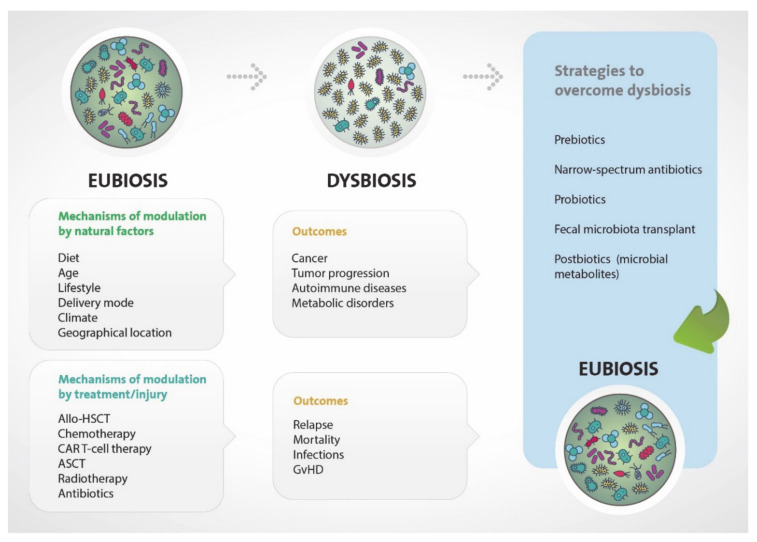
Hematological malignancies, including multiple myeloma, lymphoma, and leukemia, are a heterogeneous group of neoplasms that affect the blood, bone marrow, and lymph nodes. They originate from uncontrolled growth of hematopoietic and lymphoid cells from different stages in their maturation/differentiation and account for 6.5% of all cancers around the world. During the last decade, it has been proven that the gut microbiota, more specifically the gastrointestinal commensal bacteria, is implicated in the genesis and progression of many diseases. The immune-modulating effects of the human microbiota extend well beyond the gut, mostly through the small molecules they produce. This review aims to summarize the current knowledge of the role of the microbiota in modulating the immune system, its role in hematological malignancies, and its influence on different therapies for these diseases, including autologous and allogeneic stem cell transplantation, chemotherapy, and chimeric antigen receptor T cells.
血液系统恶性肿瘤包括多发性骨髓瘤、淋巴瘤和白血病,是一组异质性的肿瘤,影响血液、骨髓和淋巴结。它们起源于造血和淋巴样细胞在成熟/分化的不同阶段不受控制的生长,占全球所有癌症的 6.5%。在过去的十年中,已经证明肠道微生物群,更具体地说是胃肠道共生细菌,与许多疾病的发生和进展有关。人类微生物群的免疫调节作用远远超出肠道,主要通过它们产生的小分子来实现。本综述旨在总结微生物群在调节免疫系统中的作用、在血液系统恶性肿瘤中的作用及其对这些疾病的不同治疗方法的影响,包括自体和异体干细胞移植、化疗和嵌合抗原受体 T 细胞。