Harun Siti Norain, Ahmad Haslina, Lim Hong Ngee, Chia Suet Lin, Gill Martin R
Department of Chemistry, Faculty of Science, Universiti Putra Malaysia, Serdang 43400 UPM, Selangor, Malaysia.
UPM-MAKNA Cancer Research Laboratory, Institute of Bioscience, Unversiti Putra Malaysia, Serdang 43400 UPM, Selangor, Malaysia.
Pharmaceutics. 2021 Jan 24;13(2):150. doi: 10.3390/pharmaceutics13020150.
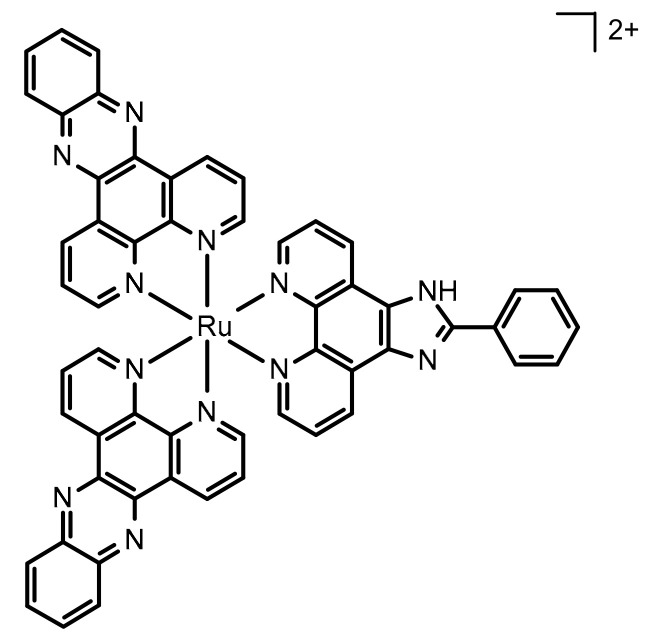
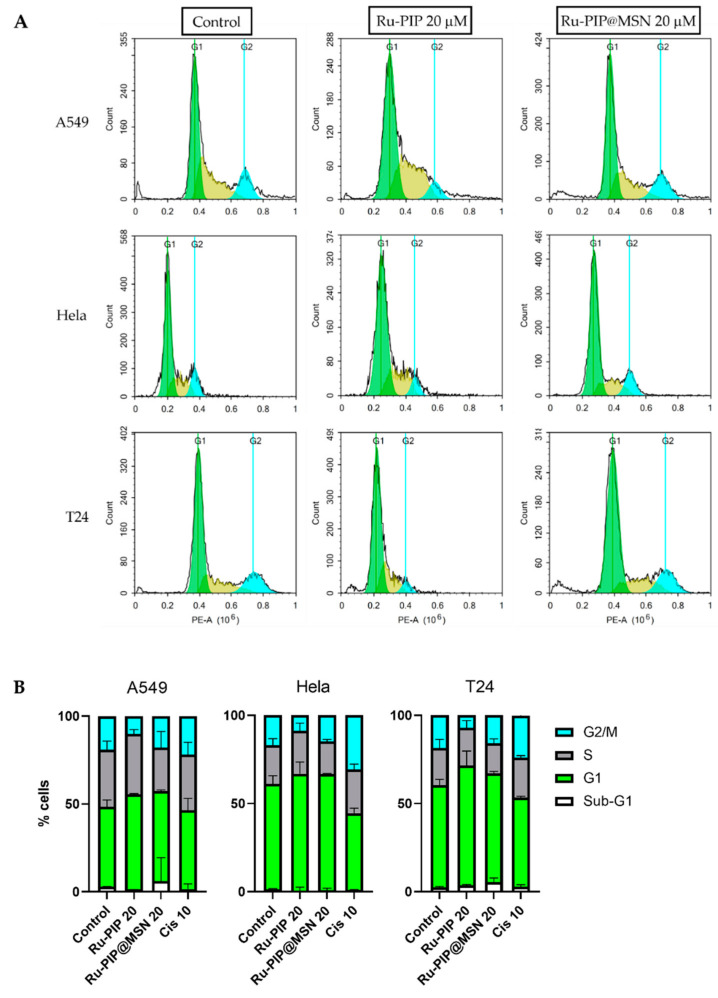
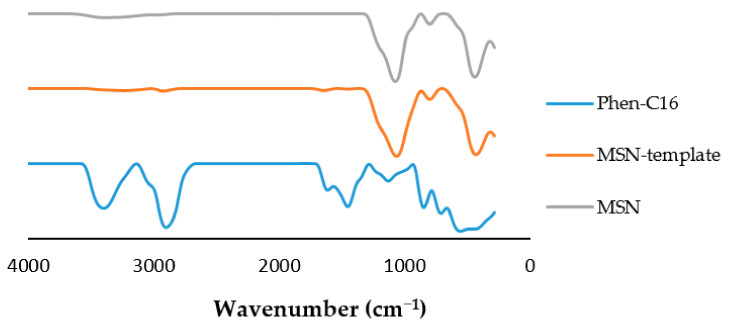
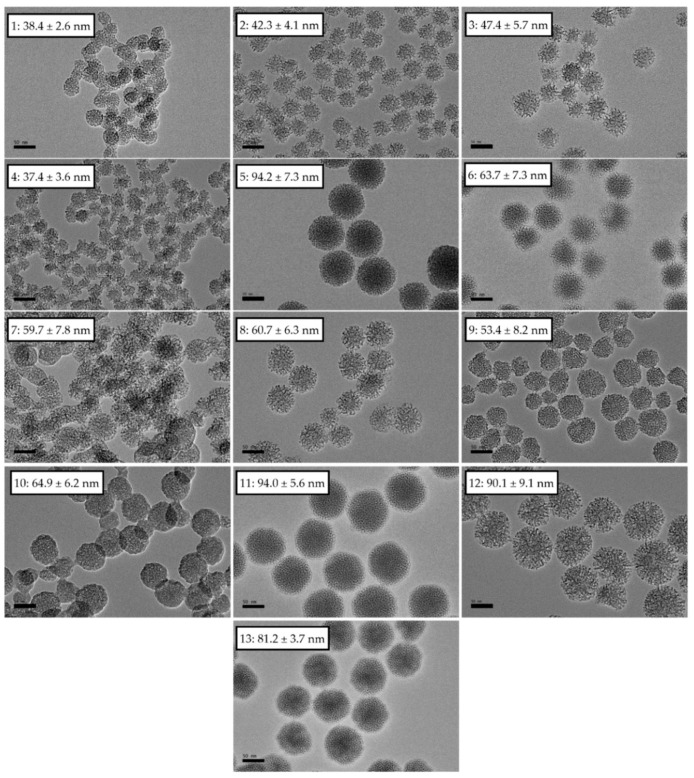
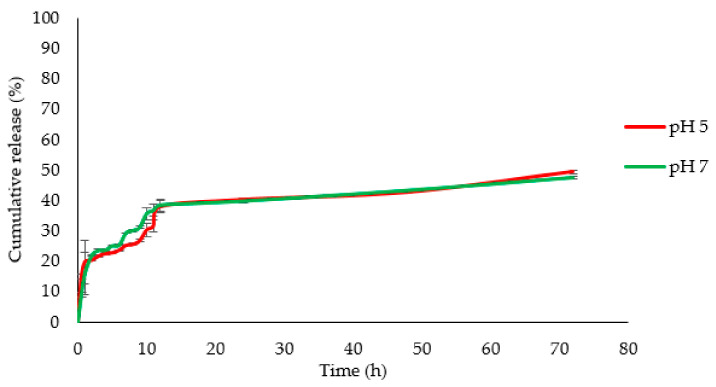
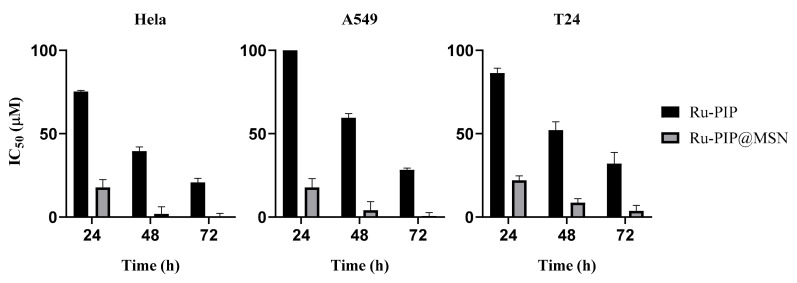
The ruthenium polypyridyl complex [Ru(dppz)PIP] (dppz: dipyridophenazine, PIP: (2-(phenyl)-imidazo[4,5-f ][1,10]phenanthroline), or Ru-PIP, is a potential anticancer drug that acts by inhibiting DNA replication. Due to the poor dissolution of Ru-PIP in aqueous media, a drug delivery agent would be a useful approach to overcome its limited bioavailability. Mesoporous silica nanoparticles (MSNs) were synthesized via a co-condensation method by using a phenanthrolinium salt with a 16 carbon length chain (Phen-C) as the template. Optimization of the synthesis conditions by Box-Behnken design (BBD) generated MSNs with high surface area response at 833.9 mg. Ru-PIP was effectively entrapped in MSNs at 18.84%. Drug release profile analysis showed that Ru-PIP is gradually released, with a cumulative release percentage of approximately 50% at 72 h. The release kinetic profile implied that Ru-PIP was released from MSN by diffusion. The in vitro cytotoxicity of Ru-PIP, both free and MSN-encapsulated, was studied in Hela, A549, and T24 cancer cell lines. While treatment of Ru-PIP alone is moderately cytotoxic, encapsulated Ru-PIP exerted significant cytotoxicity upon all the cell lines, with half maximal inhibitory concentration (IC) values determined by MTT (([3-(4,5-dimethylthiazol-2-yl)-2,5-dephenyltetrazolium bromide]) assay at 48 h exposure substantially decreasing from >30 µM to <10 µM as a result of MSN encapsulation. The mechanistic potential of cytotoxicity on cell cycle distribution showed an increase in G1/S phase populations in all three cell lines. The findings indicate that MSN is an ideal drug delivery agent, as it is able to sustainably release Ru-PIP by diffusion in a prolonged treatment period.
钌多吡啶配合物[Ru(dppz)PIP](dppz:二吡啶并菲嗪,PIP:(2-(苯基)-咪唑并[4,5-f][1,10]菲咯啉),即Ru-PIP,是一种潜在的抗癌药物,其作用机制是抑制DNA复制。由于Ru-PIP在水性介质中的溶解性较差,药物递送剂将是克服其有限生物利用度的有效方法。通过使用具有16个碳长度链的菲咯啉盐(Phen-C)作为模板,通过共缩聚法合成了介孔二氧化硅纳米颗粒(MSN)。通过Box-Behnken设计(BBD)对合成条件进行优化,得到了比表面积为833.9 mg的高响应MSN。Ru-PIP以18.84%的效率有效地包封在MSN中。药物释放曲线分析表明,Ru-PIP逐渐释放,在72小时时累积释放率约为50%。释放动力学曲线表明,Ru-PIP通过扩散从MSN中释放。研究了游离和MSN包封的Ru-PIP在Hela、A549和T24癌细胞系中的体外细胞毒性。单独使用Ru-PIP治疗具有中等细胞毒性,而包封的Ru-PIP对所有细胞系均具有显著的细胞毒性,通过MTT([3-(4,5-二甲基噻唑-2-基)-2,5-二苯基四氮唑溴盐])法在48小时暴露后测定的半数最大抑制浓度(IC)值,由于MSN包封,从>30 µM大幅降至<10 µM。细胞毒性对细胞周期分布的作用机制表明,所有三个细胞系中G1/S期群体均增加。研究结果表明,MSN是一种理想的药物递送剂,因为它能够在延长的治疗期内通过扩散持续释放Ru-PIP。