Angioni Roberta, Sánchez-Rodríguez Ricardo, Viola Antonella, Molon Barbara
Department of Biomedical Sciences, University of Padova, 35131 Padova, Italy.
Istituto di Ricerca Pediatrica IRP-Fondazione Città della Speranza, 35127 Padova, Italy.
Cancers (Basel). 2021 Jan 22;13(3):401. doi: 10.3390/cancers13030401.
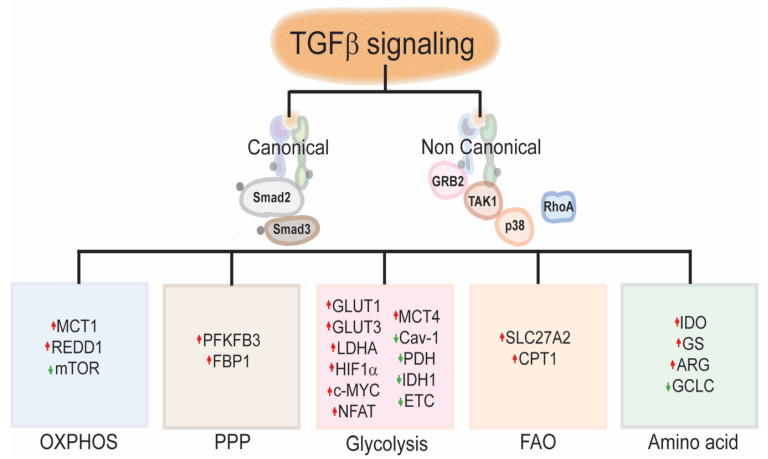
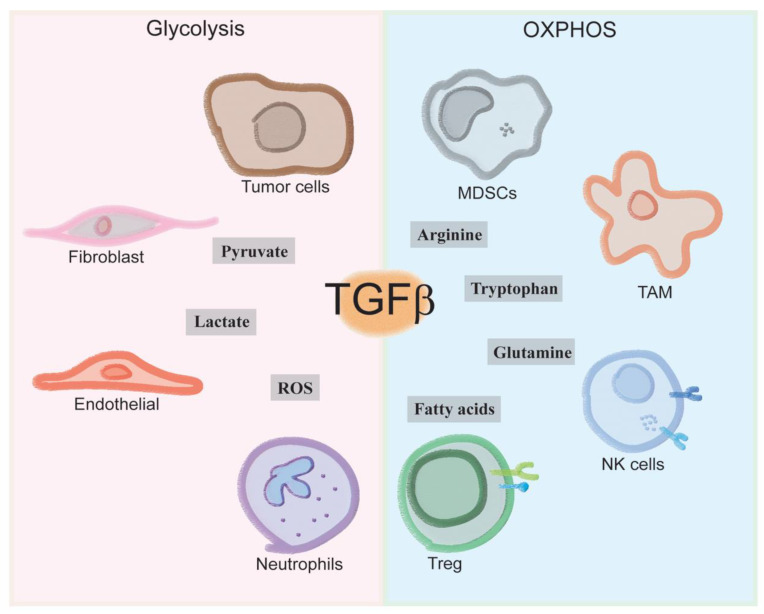
Overcoming tumor immunosuppression still represents one ambitious achievement for cancer immunotherapy. Of note, the cytokine TGF-β contributes to immune evasion in multiple cancer types, by feeding the establishment of a tolerogenic environment in the host. Indeed, it fosters the expansion and accumulation of immunosuppressive regulatory cell populations within the tumor microenvironment (TME), where it also activates resident stromal cells and enhances angiogenesis programs. More recently, TGF-β has also turned out as a key metabolic adjuster in tumors orchestrating metabolic pathways in the TME. In this review, we will scrutinize TGF-β-mediated immune and stromal cell crosstalk within the TME, with a primary focus on metabolic programs.
克服肿瘤免疫抑制仍是癌症免疫治疗的一项宏伟目标。值得注意的是,细胞因子转化生长因子-β(TGF-β)通过在宿主体内营造促耐受性环境,促使多种癌症类型发生免疫逃逸。实际上,它促进了肿瘤微环境(TME)中免疫抑制调节细胞群体的扩增和积聚,还能激活驻留的基质细胞并增强血管生成程序。最近,TGF-β还被证明是肿瘤中的关键代谢调节因子,可协调TME中的代谢途径。在本综述中,我们将详细审视TME内TGF-β介导的免疫细胞与基质细胞间的相互作用,主要聚焦于代谢程序。