Department of Gastrointestinal Surgery, Shandong Provincial Hospital Affiliated to Shandong First Medical University, Jinan, Shandong, 250021, China.
Department of Gastrointestinal Surgery, Shandong Provincial Hospital, Cheeloo College of Medicine, Shandong University, Jinan, Shandong, 250021, China.
Theranostics. 2021 Jan 1;11(5):2201-2217. doi: 10.7150/thno.52717. eCollection 2021.
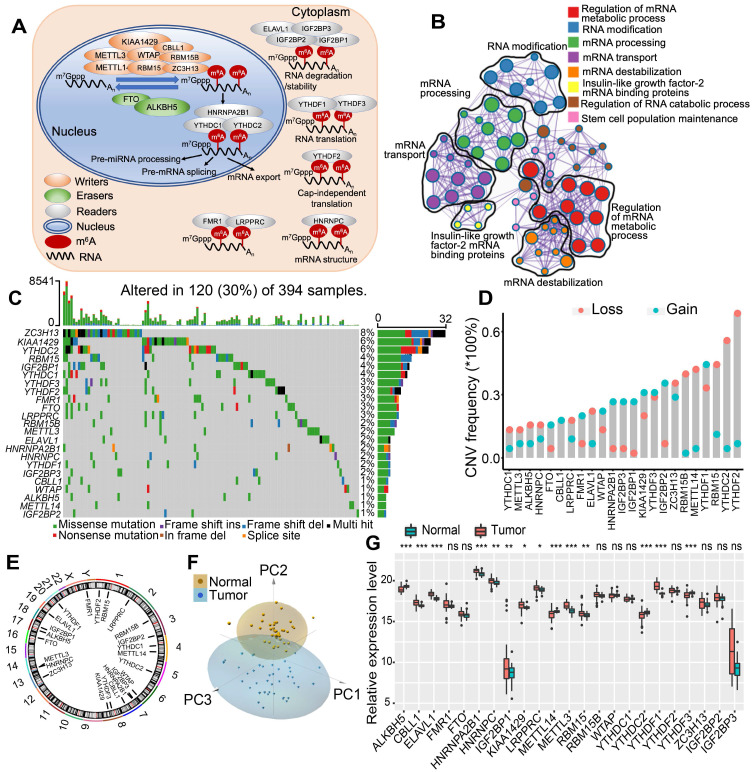
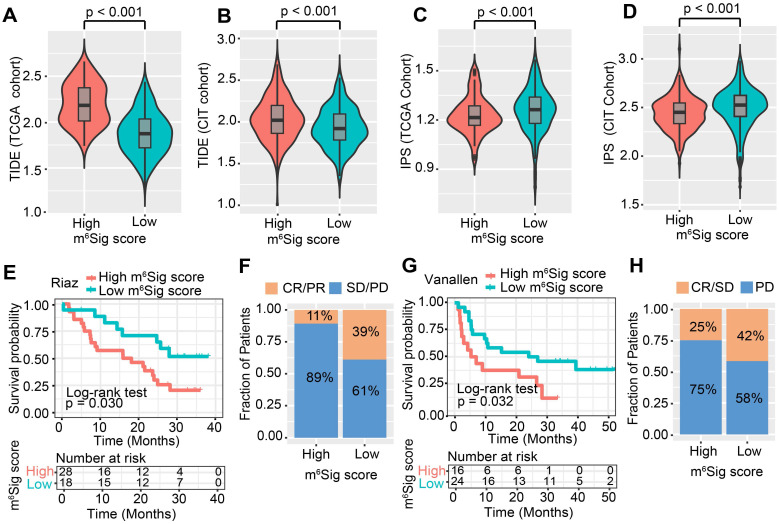
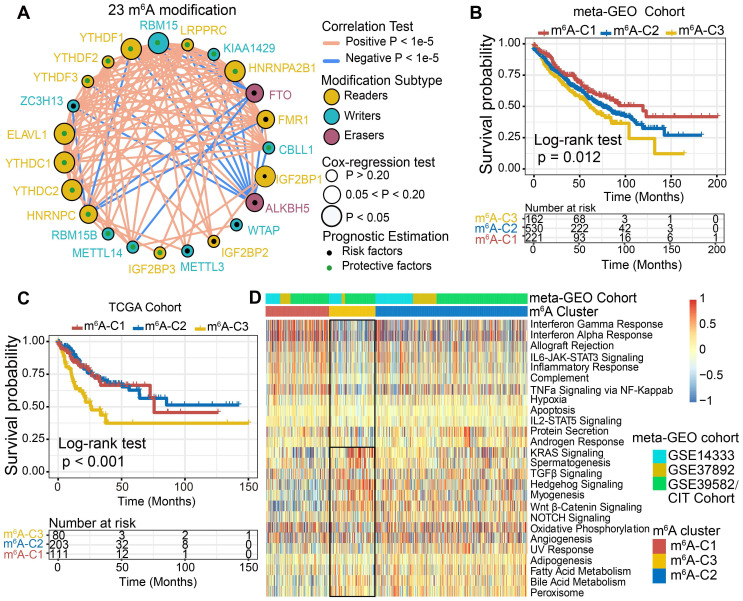
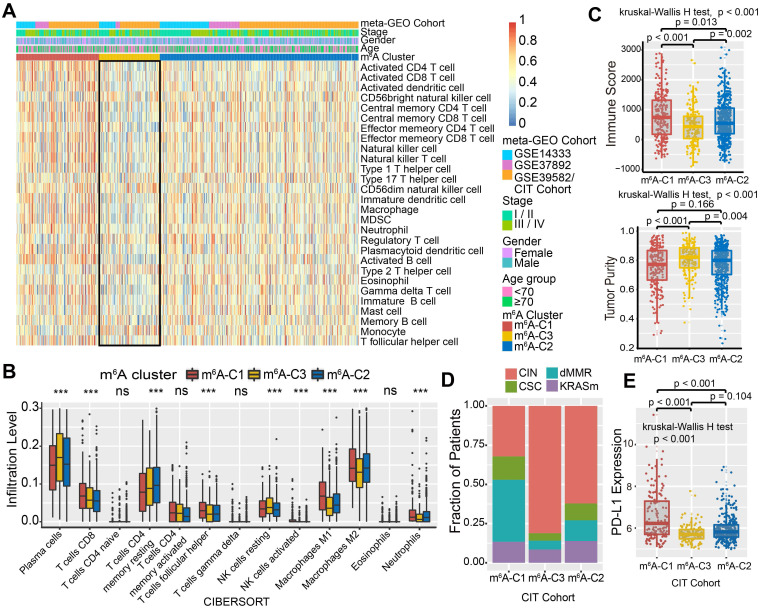
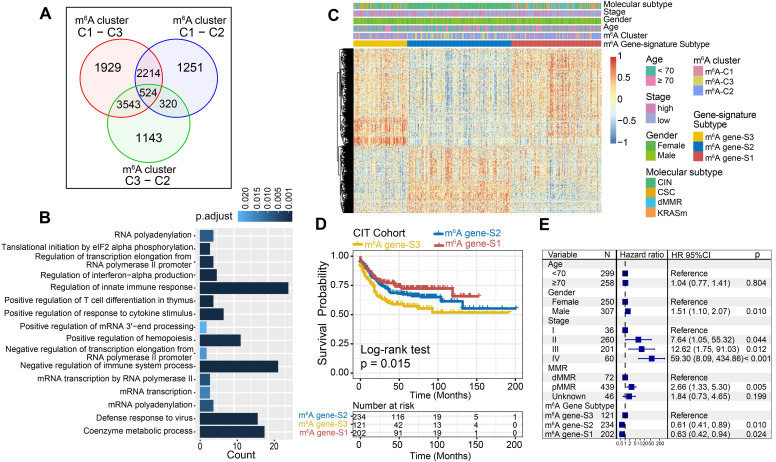
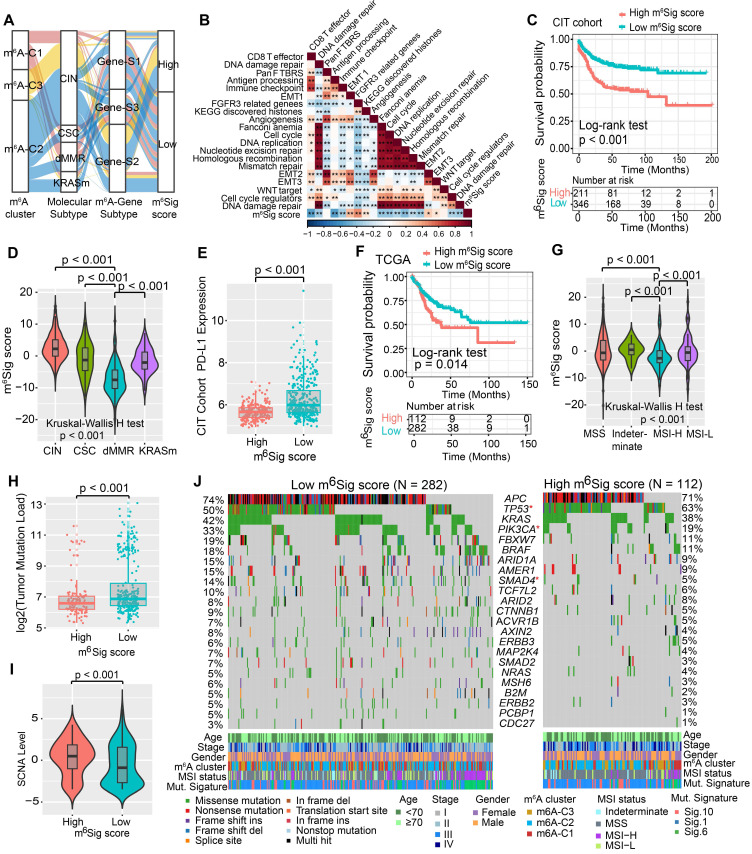
Recent studies have highlighted the biological significance of RNA N-methyladenosine (mA) modification in tumorigenicity and progression. However, it remains unclear whether mA modifications also have potential roles in immune regulation and tumor microenvironment (TME) formation. : In this study, we curated 23 mA regulators and performed consensus molecular subtyping with NMF algorithm to determine mA modification patterns and the mA-related gene signature in colon cancer (CC). The ssGSEA and CIBERSORT algorithms were employed to quantify the relative infiltration levels of various immune cell subsets. An PCA algorithm based mSig scoring scheme was used to evaluate the mA modification patterns of individual tumors with an immune response. : Three distinct m6A modification patterns were identified among 1307 CC samples, which were also associated with different clinical outcomes and biological pathways. The TME characterization revealed that the identified mA patterns were highly consistent with three known immune profiles: immune-inflamed, immune-excluded, and immune-desert, respectively. Based on the mSig score, which was extracted from the mA-related signature genes, CC patients can be divided into high and low score subgroups. Patients with lower mSig score was characterized by prolonged survival time and enhanced immune infiltration. Further analysis indicated that lower mSig score also correlated with greater tumor mutation loads, PD-L1 expression, and higher mutation rates in SMGs (e.g., and ). In addition, patients with lower mSig scores showed a better immune responses and durable clinical benefits in three independent immunotherapy cohorts. : This study highlights that mA modification is significantly associated with TME diversity and complexity. Quantitatively evaluating the mA modification patterns of individual tumors will strengthen our understanding of TME characteristics and promote more effective immunotherapy strategies.
最近的研究强调了 RNA N6-甲基腺苷(m6A)修饰在肿瘤发生和进展中的生物学意义。然而,m6A 修饰是否也在免疫调节和肿瘤微环境(TME)形成中具有潜在作用仍不清楚。
在这项研究中,我们整理了 23 个 m6A 调节剂,并使用 NMF 算法进行共识分子亚型分析,以确定结肠癌(CC)中的 m6A 修饰模式和 m6A 相关基因特征。ssGSEA 和 CIBERSORT 算法用于量化各种免疫细胞亚群的相对浸润水平。基于 PCA 算法的 mSig 评分方案用于评估具有免疫反应的个体肿瘤的 m6A 修饰模式。
在 1307 个 CC 样本中鉴定出三种不同的 m6A 修饰模式,它们也与不同的临床结局和生物学途径相关。TME 特征分析表明,鉴定出的 m6A 模式与三种已知的免疫特征高度一致,分别为免疫激活、免疫排斥和免疫荒漠。基于从 m6A 相关特征基因中提取的 mSig 评分,CC 患者可分为高和低评分亚组。mSig 评分较低的患者具有更长的生存时间和增强的免疫浸润。进一步分析表明,mSig 评分较低还与更高的肿瘤突变负荷、PD-L1 表达和 SMGs(如 和 )中的更高突变率相关。此外,mSig 评分较低的患者在三个独立的免疫治疗队列中表现出更好的免疫反应和持久的临床获益。
这项研究强调了 m6A 修饰与 TME 多样性和复杂性显著相关。定量评估个体肿瘤的 m6A 修饰模式将加强我们对 TME 特征的理解,并促进更有效的免疫治疗策略。