Brain Science Institute, Korea Institute of Science and Technology (KIST), Seoul 02792, Korea.
Division of Bio-Medical Science & Technology, KIST School, Korea University of Science and Technology, Seoul 02792, Korea.
Sensors (Basel). 2021 Jan 25;21(3):795. doi: 10.3390/s21030795.
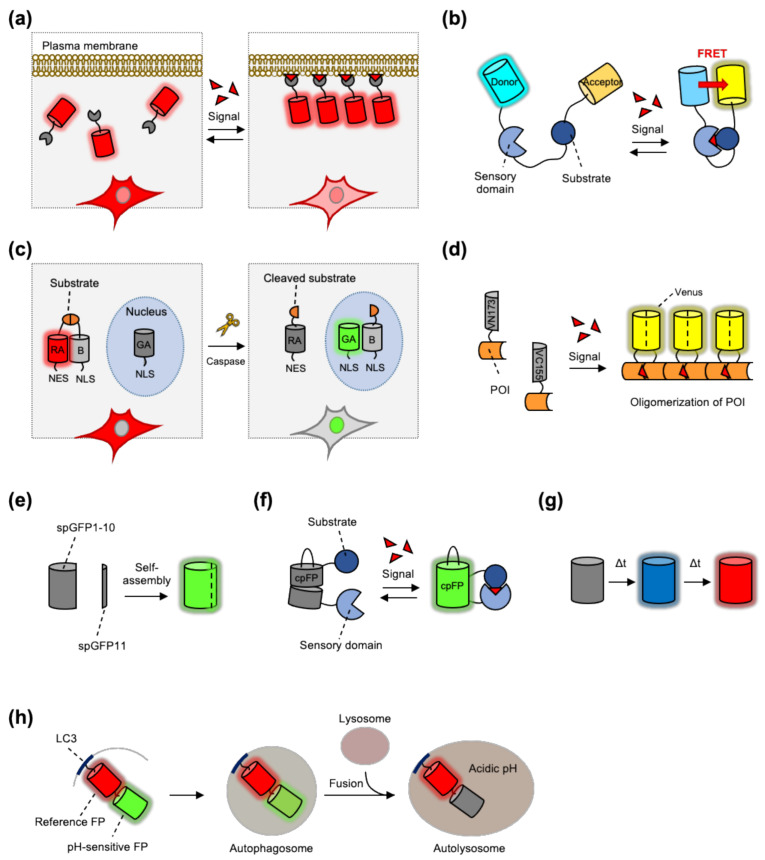
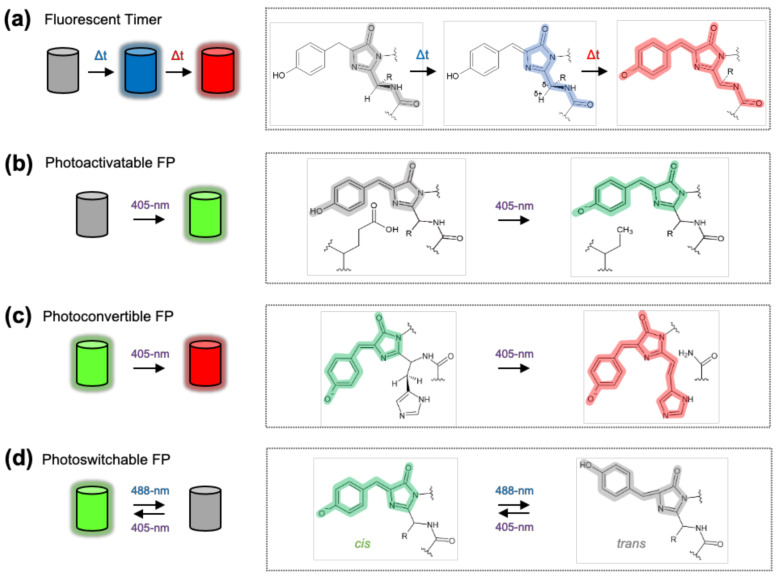
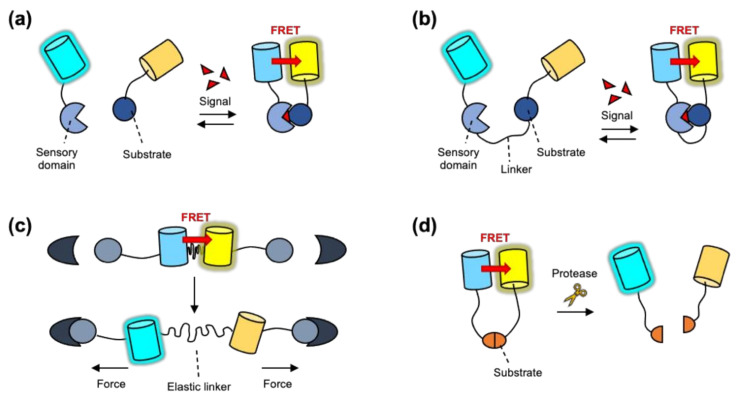
Genetically encoded biosensors based on fluorescent proteins (FPs) allow for the real-time monitoring of molecular dynamics in space and time, which are crucial for the proper functioning and regulation of complex cellular processes. Depending on the types of molecular events to be monitored, different sensing strategies need to be applied for the best design of FP-based biosensors. Here, we review genetically encoded biosensors based on FPs with various sensing strategies, for example, translocation, fluorescence resonance energy transfer (FRET), reconstitution of split FP, pH sensitivity, maturation speed, and so on. We introduce general principles of each sensing strategy and discuss critical factors to be considered if available, then provide representative examples of these FP-based biosensors. These will help in designing the best sensing strategy for the successful development of new genetically encoded biosensors based on FPs.
基于荧光蛋白(FPs)的遗传编码生物传感器可实时监测分子在空间和时间上的动态,这对于复杂细胞过程的正常功能和调控至关重要。根据要监测的分子事件的类型,需要应用不同的传感策略,以最佳设计基于 FP 的生物传感器。在这里,我们回顾了基于 FP 的具有各种传感策略的遗传编码生物传感器,例如易位、荧光共振能量转移(FRET)、分裂 FP 的重组、pH 敏感性、成熟速度等。我们介绍了每种传感策略的一般原理,并讨论了如果有的话需要考虑的关键因素,然后提供了这些基于 FP 的生物传感器的代表性示例。这些将有助于设计最佳的传感策略,以成功开发基于 FP 的新型遗传编码生物传感器。