Faculty of Medicine, Universiti Sultan Zainal Abidin, Kuala Terengganu, Terengganu, Malaysia.
Faculty of Medicine and Institute for Life Sciences, University of Southampton, Southampton, United Kingdom.
mSphere. 2021 Jan 27;6(1):e01076-20. doi: 10.1128/mSphere.01076-20.
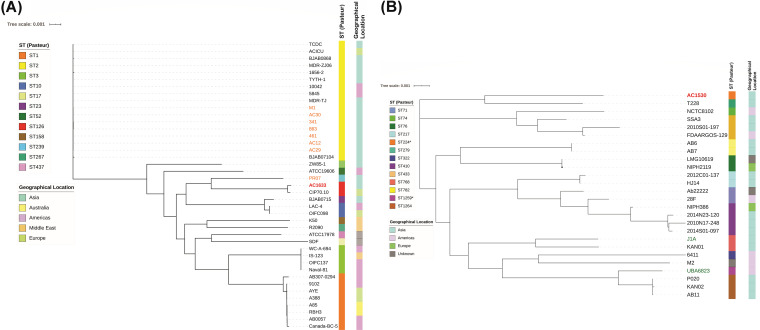
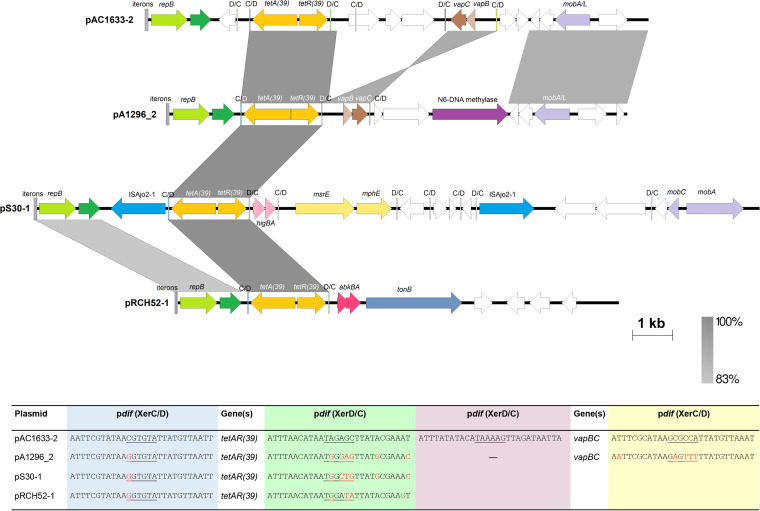
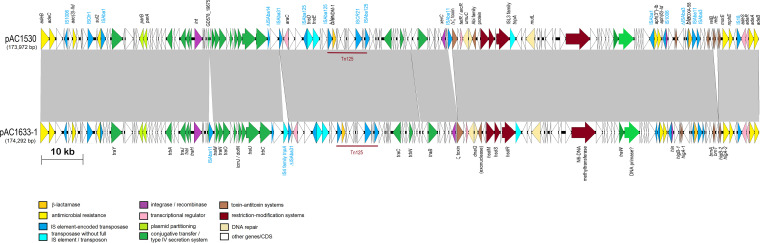
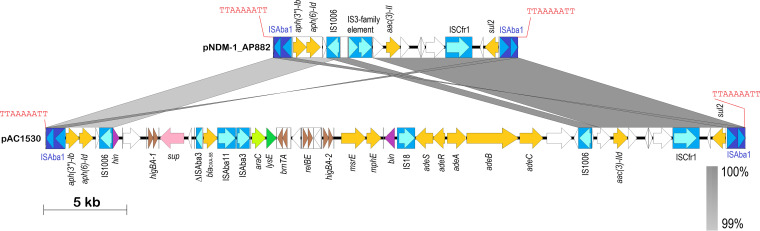
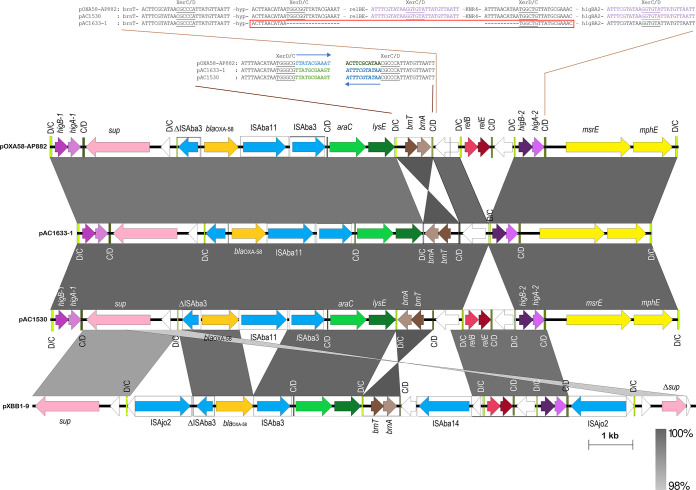
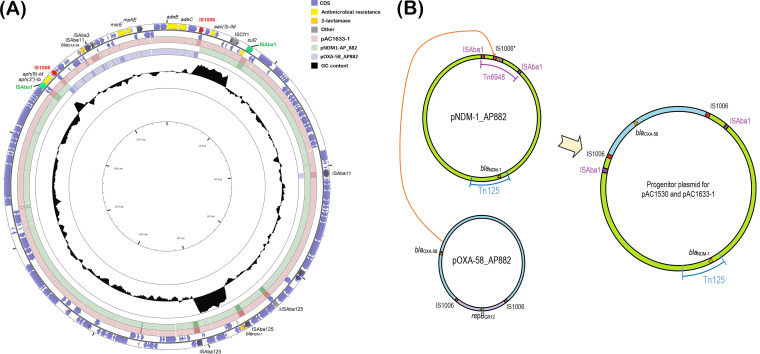
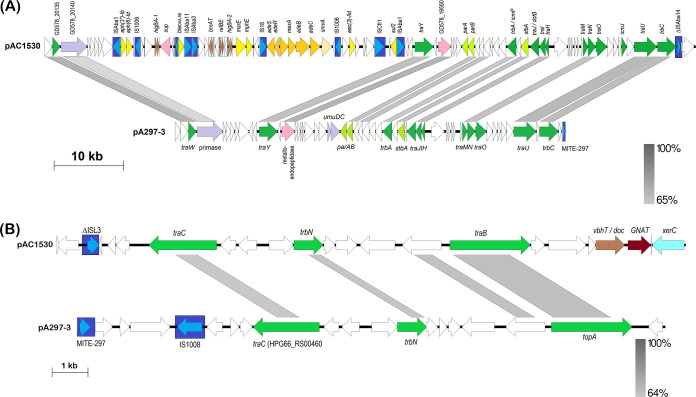
Carbapenem-resistant spp. are considered priority drug-resistant human-pathogenic bacteria. The genomes of two carbapenem-resistant spp. clinical isolates obtained from the same tertiary hospital in Terengganu, Malaysia, namely, AC1633 and AC1530, were sequenced. Both isolates were found to harbor the carbapenemase genes and in a large (ca. 170 kb) plasmid designated pAC1633-1 and pAC1530, respectively, that also encodes genes that confer resistance to aminoglycosides, sulfonamides, and macrolides. The two plasmids were almost identical except for the insertion of IS and an IS family element in pAC1633-1, and IS along with toxin-antitoxin genes flanked by inversely orientated p (XerC/XerD) recombination sites in pAC1530. The gene was encoded in a Tn composite transposon structure flanked by IS, whereas was flanked by IS and IS downstream and a partial IS element upstream within a p module. The presence of conjugative genes in plasmids pAC1633-1/pAC1530 and their discovery in two distinct species of from the same hospital are suggestive of conjugative transfer, but mating experiments failed to demonstrate transmissibility under standard laboratory conditions. Comparative sequence analysis strongly inferred that pAC1633-1/pAC1530 was derived from two separate plasmids in an IS-mediated recombination or transposition event. AC1633 also harbored three other plasmids designated pAC1633-2, pAC1633-3, and pAC1633-4. Both pAC1633-3 and pAC1633-4 are cryptic plasmids, whereas pAC1633-2 is a 12,651-bp plasmid of the GR8/GR23 Rep3-superfamily group that encodes the () tetracycline resistance determinant in a p module. Bacteria of the genus are important hospital-acquired pathogens, with carbapenem-resistant listed by the World Health Organization as the one of the top priority pathogens. Whole-genome sequencing of carbapenem-resistant AC1633 and AC1530, which were isolated from the main tertiary hospital in Terengganu, Malaysia, led to the discovery of a large, ca. 170-kb plasmid that harbored genes encoding the New Delhi metallo-β-lactamase-1 (NDM-1) and OXA-58 carbapenemases alongside genes that conferred resistance to aminoglycosides, macrolides, and sulfonamides. The plasmid was a patchwork of multiple mobile genetic elements and comparative sequence analysis indicated that it may have been derived from two separate plasmids through an IS-mediated recombination or transposition event. The presence of such a potentially transmissible plasmid encoding resistance to multiple antimicrobials warrants vigilance, as its spread to susceptible strains would lead to increasing incidences of antimicrobial resistance.
耐碳青霉烯 是被认为是具有优先性的抗药性人类病原菌。两株耐碳青霉烯 临床分离株的基因组,分别来自马来西亚登嘉楼州的同一所三级医院,即 AC1633 和 AC1530,其序列已被测定。这两个分离株都在一个大约 170kb 的质粒上发现了碳青霉烯酶基因 和 ,分别被命名为 pAC1633-1 和 pAC1530,该质粒还编码了对氨基糖苷类、磺胺类和大环内酯类药物的耐药基因。两个质粒几乎完全相同,除了 pAC1633-1 中插入了 IS 和一个 IS 家族元件,以及 pAC1530 中插入了 IS 以及与其反向取向的 p(XerC/XerD)重组位点侧翼的 毒素-抗毒素基因。 基因编码在一个 Tn 复合转座子结构中,两侧是 IS,而 基因则由 IS 和下游的 IS 以及上游的部分 IS 元件在一个 p 模块内编码。质粒 pAC1633-1/pAC1530 中存在可转移基因,并且在来自同一医院的两种不同 种中发现,这表明存在可转移现象,但交配实验未能在标准实验室条件下证明其可传递性。基于序列比较的分析强烈表明,pAC1633-1/pAC1530 是由 IS 介导的重组或转位事件中两个独立的质粒衍生而来。AC1633 还携带另外三个质粒,分别命名为 pAC1633-2、pAC1633-3 和 pAC1633-4。pAC1633-3 和 pAC1633-4 都是隐性质粒,而 pAC1633-2 是一个属于 GR8/GR23 Rep3 超家族的 12651bp 质粒,在一个 p 模块中编码()四环素耐药决定子。 属细菌是重要的医院获得性病原菌,耐碳青霉烯 被世界卫生组织列为首要关注病原体之一。对来自马来西亚登嘉楼州主要三级医院的耐碳青霉烯 AC1633 和 AC1530 进行全基因组测序,发现了一个大约 170kb 的大型质粒,该质粒编码了新德里金属β-内酰胺酶-1(NDM-1)和 OXA-58 碳青霉烯酶,同时还编码了对氨基糖苷类、大环内酯类和磺胺类药物的耐药基因。该质粒是多种移动遗传元件的拼凑物,基于序列比较分析表明,它可能是由两个独立的质粒通过 IS 介导的重组或转位事件衍生而来。这种具有潜在可转移性的质粒编码了对多种抗菌药物的耐药性,值得警惕,因为它传播到敏感菌株将导致抗菌药物耐药性的发生率不断增加。