Medical Inflammation Research, Department of Medical Biochemistry and Biophysics, Karolinska Institute, Stockholm, Sweden.
Medical Inflammation Research, Lund University, Lund, Sweden.
Nat Commun. 2021 Jan 27;12(1):610. doi: 10.1038/s41467-020-20586-2.
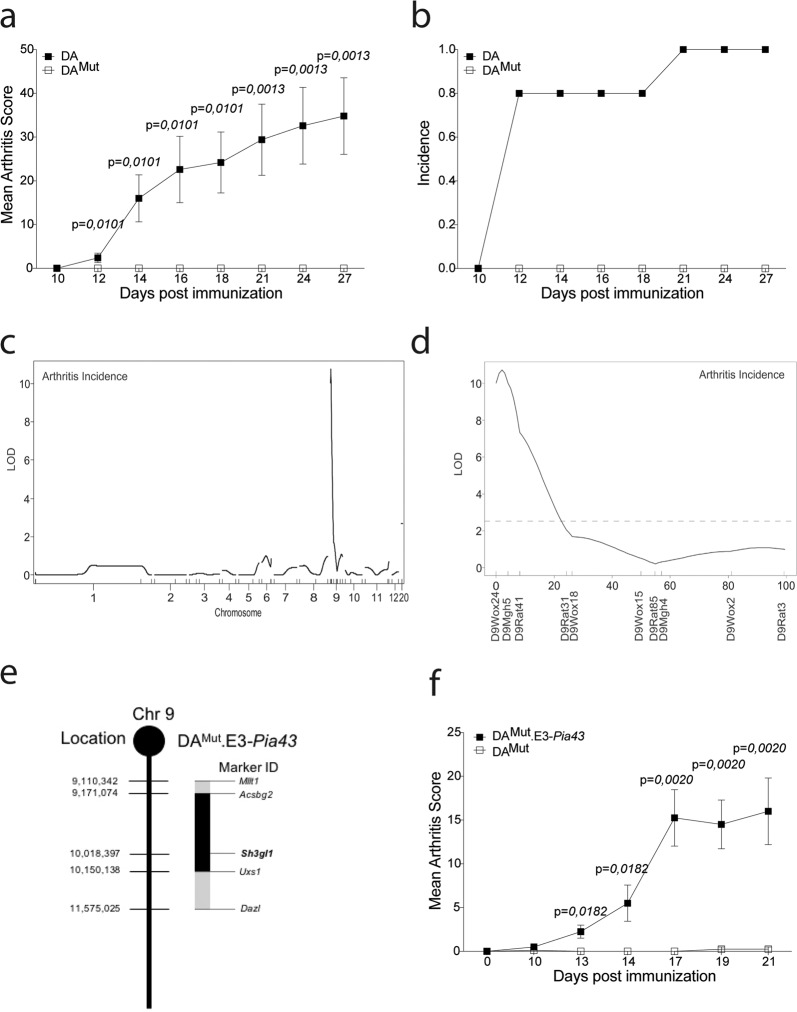
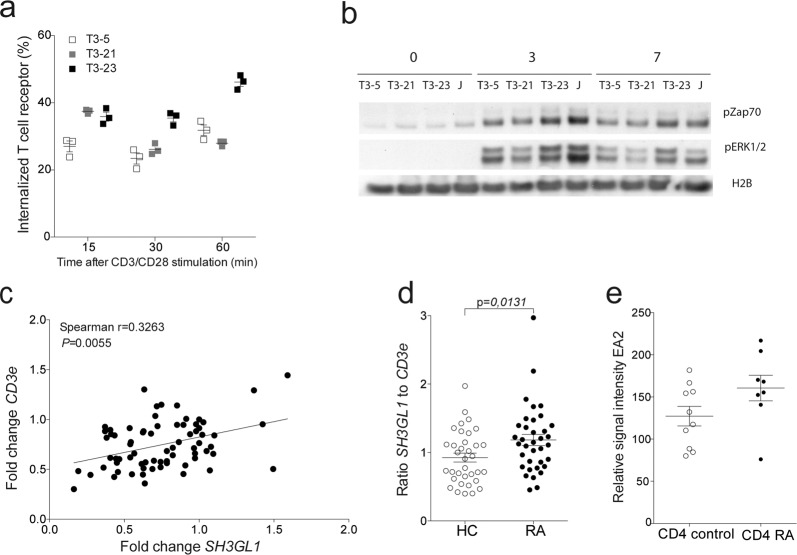
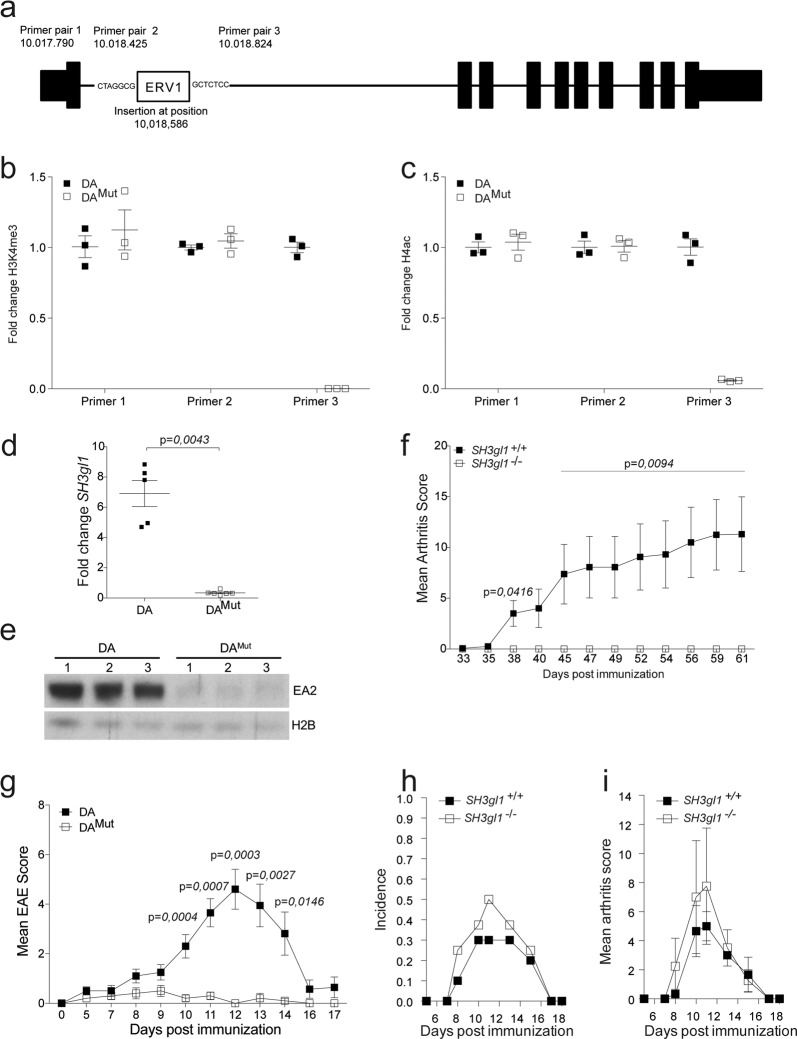
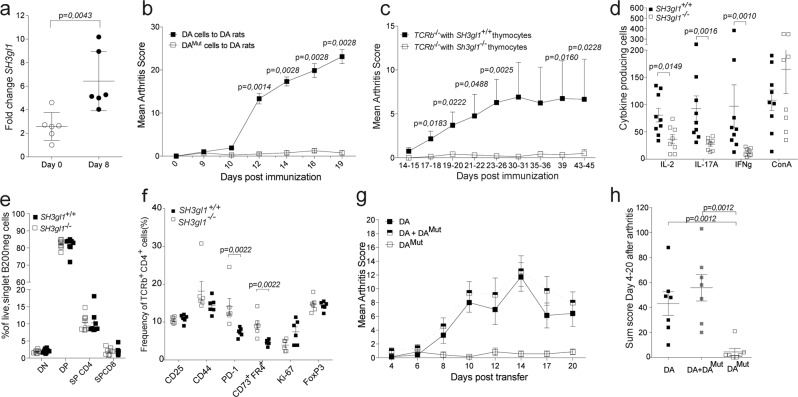
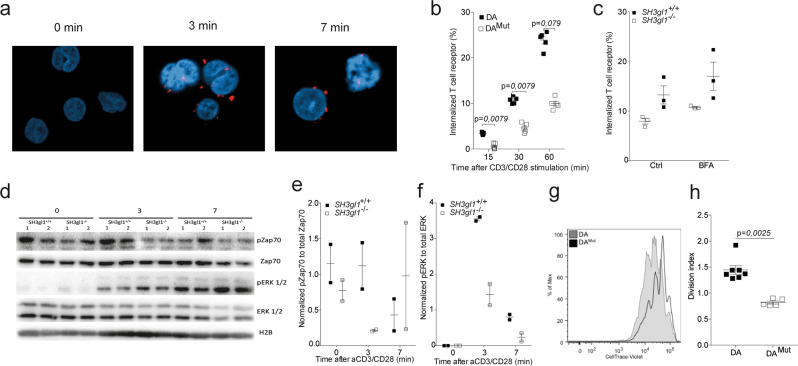
The introduction of the CTLA-4 recombinant fusion protein has demonstrated therapeutic effects by selectively modulating T-cell activation in rheumatoid arthritis. Here we show, using a forward genetic approach, that a mutation in the SH3gl1 gene encoding the endocytic protein Endophilin A2 is associated with the development of arthritis in rodents. Defective expression of SH3gl1 affects T cell effector functions and alters the activation threshold of autoreactive T cells, thereby leading to complete protection from chronic autoimmune inflammatory disease in both mice and rats. We further show that SH3GL1 regulates human T cell signaling and T cell receptor internalization, and its expression is upregulated in rheumatoid arthritis patients. Collectively our data identify SH3GL1 as a key regulator of T cell activation, and as a potential target for treatment of autoimmune diseases.
CTLA-4 重组融合蛋白的引入通过选择性调节类风湿关节炎中的 T 细胞激活显示出治疗效果。在这里,我们使用正向遗传方法表明,编码内吞蛋白 Endophilin A2 的 SH3gl1 基因中的突变与啮齿动物关节炎的发展有关。SH3gl1 的表达缺陷会影响 T 细胞效应功能并改变自身反应性 T 细胞的激活阈值,从而使小鼠和大鼠免受慢性自身免疫性炎症性疾病的完全保护。我们进一步表明,SH3GL1 调节人类 T 细胞信号转导和 T 细胞受体内化,并且其表达在类风湿关节炎患者中上调。总的来说,我们的数据将 SH3GL1 确定为 T 细胞激活的关键调节剂,并且作为治疗自身免疫性疾病的潜在靶标。