Han Jieru, Shi Guangyu, Li Wenhao, Wang Shuhui, Bai Jixiang, Sun Xutao, Xie Ying, Sui Fangyu, Chen Fei, Jiang Deyou
Department of Synopsis of the Golden Chamber, School of Basic Medical Sciences, Heilongjiang University of Chinese Medicine, Harbin 150040, China.
Department of Ultrasound Medicine, First Affiliated Hospital, Heilongjiang University of Chinese Medicine, Harbin 150040, China.
Evid Based Complement Alternat Med. 2021 Jan 6;2021:6918026. doi: 10.1155/2021/6918026. eCollection 2021.
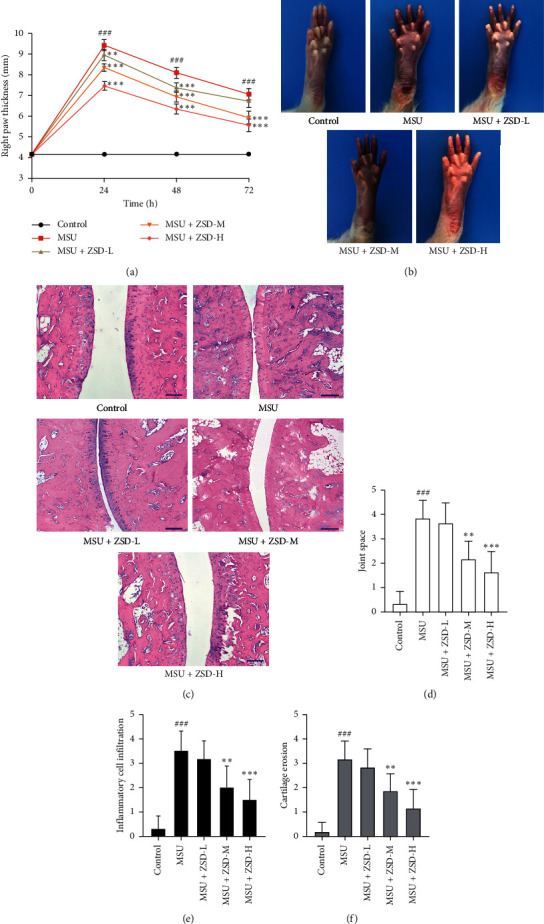
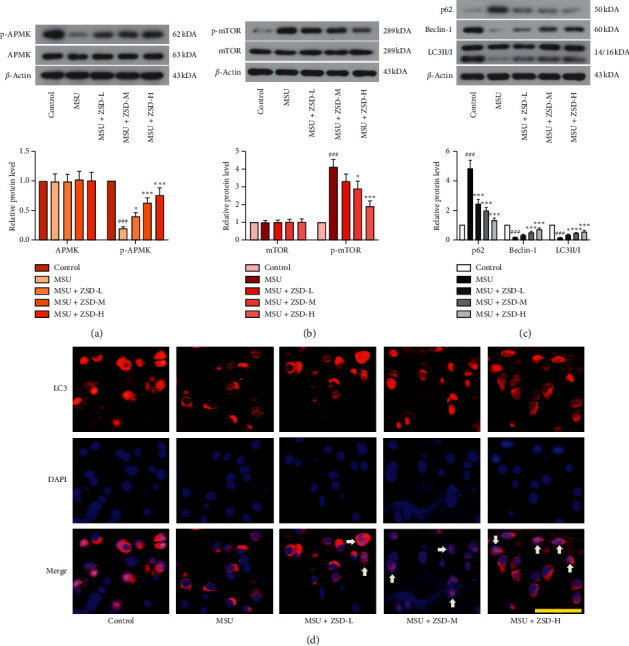
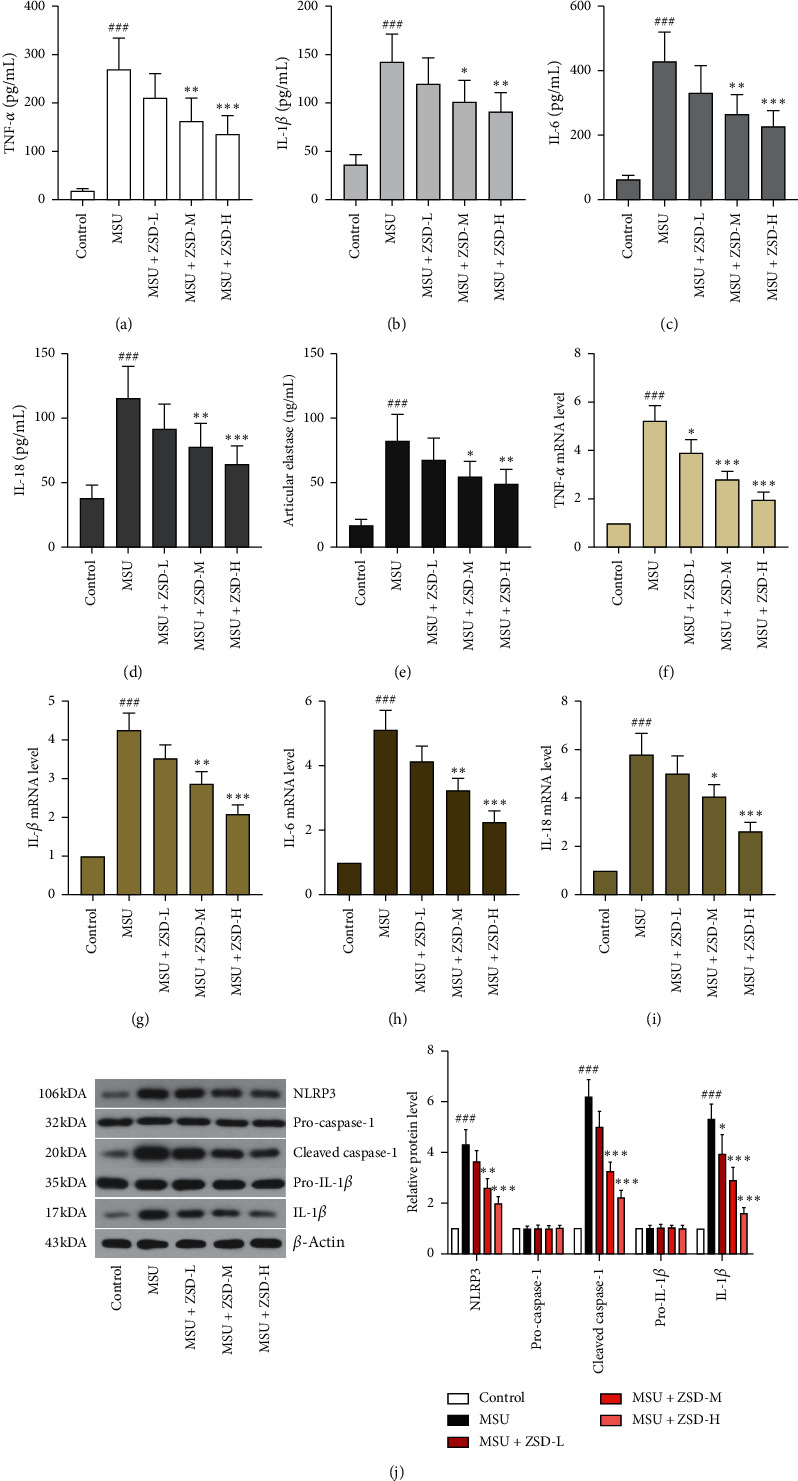
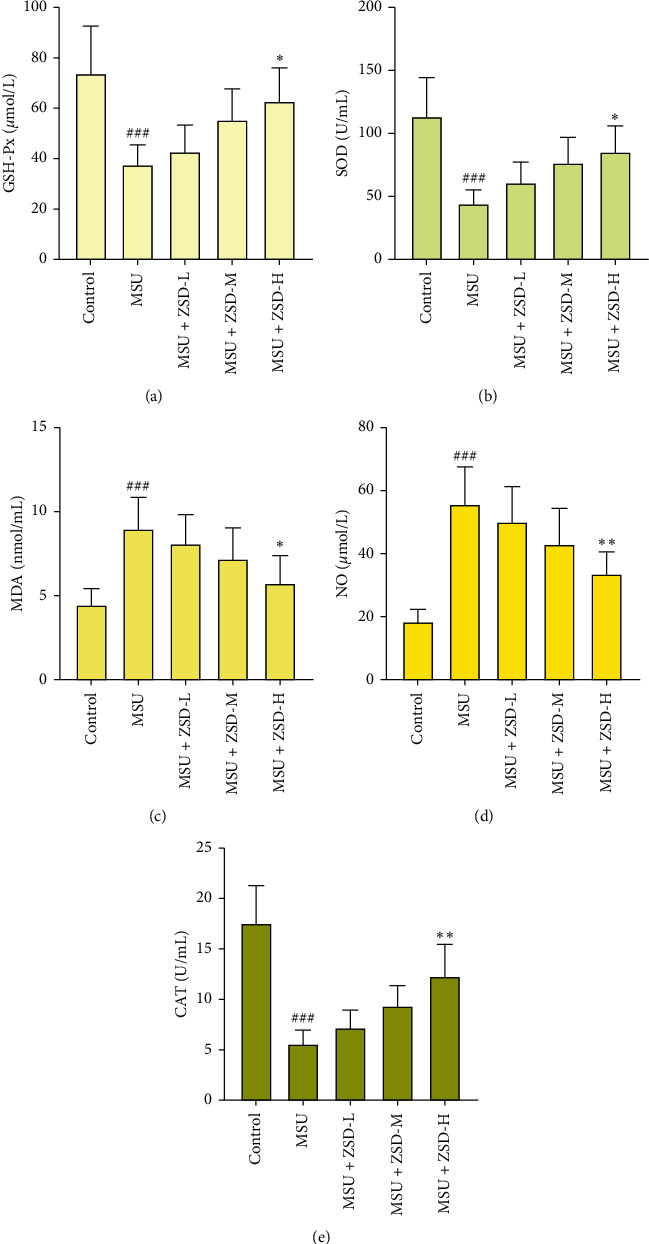
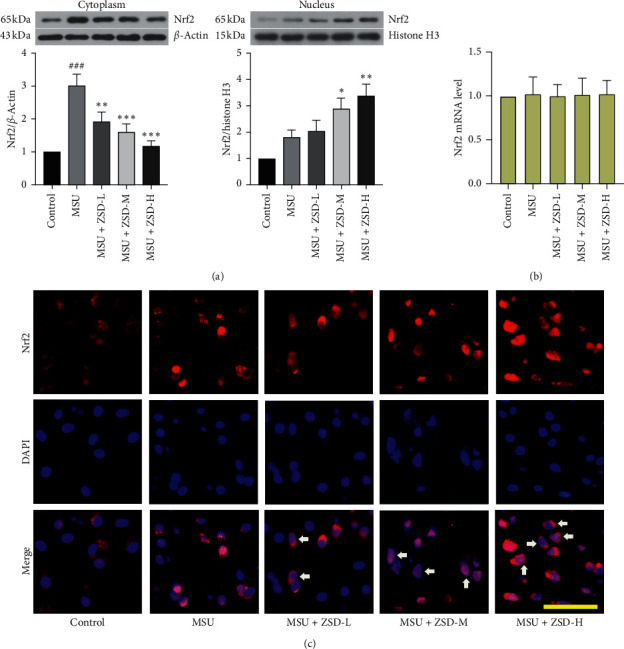
Gouty arthritis (GA) is an inflammatory disease owing to the accumulation of monosodium urate (MSU) in joints, leading to redness and burning pain. In this study, the effect of Zisheng Shenqi Decoction (ZSD) on a rat model of MSU-induced GA was investigated. ZSD obviously diminished the right paw thickness, the degree of the swelling of the paw, and the infiltration of the inflammatory cell, as well as cartilage erosion, and widened the joint space in MSU-treated rats. Besides, MSU remarkably elevated the release of tumor necrosis factor- (TNF-), interleukin-1 (IL-1), IL-6, and IL-18; however, ZSD treatment dose dependently lowered these levels and resulted in a significant decrease in articular elastase activity. Also, ZSD administration increased the activities of superoxide dismutase (SOD), glutathione peroxidase (GSH-Px), and catalase (CAT) but declined malondialdehyde (MDA) and nitrogen monoxide (NO) contents. Importantly, western blotting analysis revealed that NOD-like receptor protein 3 (NLRP3), cleaved caspase-1, IL-1, nuclear factor-E2-related factor 2 (Nrf2) in the cytoplasm, phosphorylated mammalian target of rapamyclin (p-mTOR), and p62 expressions were downregulated, whereas the levels of nuclear Nrf2, phosphorylated AMP-activated protein kinase (p-AMPK), Beclin-1, and LC3II/I were upregulated by ZSD. Immunofluorescence assay indicated that ZSD evidently promoted nuclear translocation of LC3. Taken together, ZSD inhibited inflammation and oxidative stress and facilitated autophagy through the activation of the AMPK pathway and suppression of the mTOR signaling pathway, demonstrating its potential for preventing and curing GA.
痛风性关节炎(GA)是一种由于关节中尿酸钠(MSU)积累而导致的炎症性疾病,会引起关节发红和灼痛。在本研究中,探讨了滋肾生气血汤(ZSD)对MSU诱导的GA大鼠模型的影响。ZSD明显减轻了MSU处理大鼠的右爪厚度、爪肿胀程度、炎症细胞浸润以及软骨侵蚀,并扩大了关节间隙。此外,MSU显著提高了肿瘤坏死因子-(TNF-)、白细胞介素-1(IL-1)、IL-6和IL-18的释放;然而,ZSD治疗呈剂量依赖性地降低了这些水平,并导致关节弹性蛋白酶活性显著降低。此外,ZSD给药增加了超氧化物歧化酶(SOD)、谷胱甘肽过氧化物酶(GSH-Px)和过氧化氢酶(CAT)的活性,但降低了丙二醛(MDA)和一氧化氮(NO)的含量。重要的是,蛋白质印迹分析显示,ZSD下调了细胞质中NOD样受体蛋白3(NLRP3)、裂解的半胱天冬酶-1、IL-1、核因子E2相关因子2(Nrf2)、磷酸化的雷帕霉素哺乳动物靶标(p-mTOR)和p62的表达,而上调了细胞核Nrf2、磷酸化的AMP激活蛋白激酶(p-AMPK)、Beclin-1和LC3II/I的水平。免疫荧光分析表明,ZSD明显促进了LC3的核转位。综上所述,ZSD通过激活AMPK途径和抑制mTOR信号通路来抑制炎症和氧化应激,并促进自噬,证明了其预防和治疗GA的潜力。