Department of Nephrology and Rheumatology, Puai Hospital, Tongji Medical College, Huazhong University of Science and Technology, Wuhan, Hubei, China.
Department of Rheumatology and Immunology, Tongji Hospital, Tongji Medical College, Huazhong University of Science and Technology, Wuhan, China.
Biomed Res Int. 2021 Jan 11;2021:6655185. doi: 10.1155/2021/6655185. eCollection 2021.
Since the first diagnosed case of infection with the novel coronavirus (SARS-CoV-2), there has been a rapid spread of the disease with an increasing number of cases confirmed every day, as well as a rising death toll. An association has been reported between acute kidney injury (AKI) and mortality in patients infected with SARS-CoV-2. Therefore, our study was conducted to explore possible risk factors of AKI as well as whether AKI was a risk factor for worse outcome, especially mortality among patients with coronavirus disease (COVID-19).
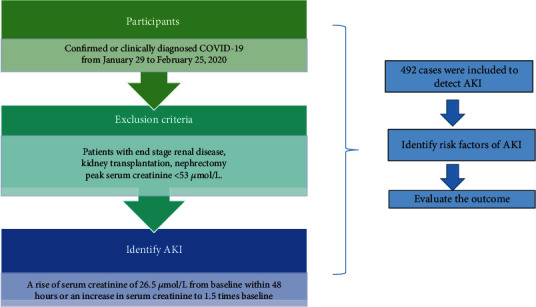
We included all hospital admissions with confirmed or clinically diagnosed COVID-19 from January 29 to February 25, 2020. We collected demographic and epidemiological information, past medical history, symptoms, laboratory tests, treatments, and outcome data from electronic medical records. A total of 492 patients with diagnosed or clinically diagnosed COVID-19 were included in this study.
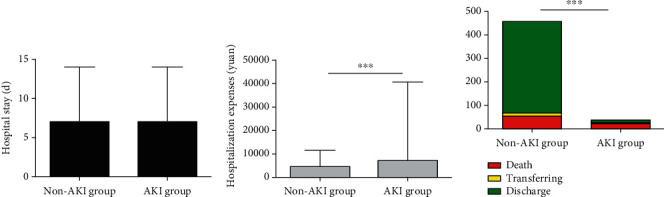
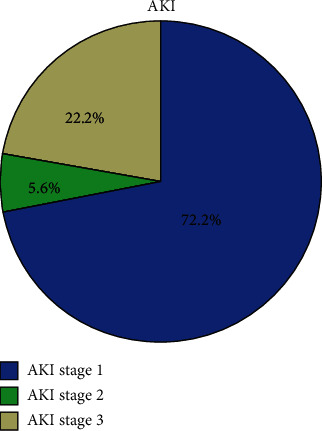
The prevalence rate of AKI was 7.32%. Among the factors associated with AKI, males versus females (aOR 2.73), chronic kidney disease (aOR 42.2), hypertension (aOR 2.82), increased leucocytes (aOR 6.08), and diuretic use (aOR 7.89) were identified as independent risk factors for AKI among patients infected by SARS-CoV-2. There was a significant difference in hospital fees and death in patients with and without AKI ( < 0.05). The mortality rate in patients with AKI was 63.9%.
AKI was widespread among patients with COVID-19. The risk factors of AKI in COVID-19 patients included sex, chronic kidney disease, hypertension, infection, and diuretic use. AKI may be associated with a worse outcome, especially mortality in COVID-19 patients.
自首例新型冠状病毒(SARS-CoV-2)感染病例确诊以来,该疾病迅速传播,每天确诊病例数不断增加,死亡人数也在上升。有报道称,急性肾损伤(AKI)与 SARS-CoV-2 感染患者的死亡率之间存在关联。因此,我们的研究旨在探讨 AKI 的可能危险因素,以及 AKI 是否是冠状病毒病(COVID-19)患者预后不良,特别是死亡率的危险因素。
我们纳入了 2020 年 1 月 29 日至 2 月 25 日期间所有确诊或临床诊断为 COVID-19 的住院患者。我们从电子病历中收集了人口统计学和流行病学信息、既往病史、症状、实验室检查、治疗和转归数据。共有 492 例确诊或临床诊断为 COVID-19 的患者纳入本研究。
AKI 的患病率为 7.32%。在与 AKI 相关的因素中,男性与女性(aOR 2.73)、慢性肾脏病(aOR 42.2)、高血压(aOR 2.82)、白细胞增多(aOR 6.08)和利尿剂使用(aOR 7.89)被确定为 SARS-CoV-2 感染患者 AKI 的独立危险因素。有和无 AKI 的患者在住院费用和死亡率方面存在显著差异(<0.05)。AKI 患者的死亡率为 63.9%。
AKI 在 COVID-19 患者中较为普遍。COVID-19 患者 AKI 的危险因素包括性别、慢性肾脏病、高血压、感染和利尿剂使用。AKI 可能与预后不良,特别是 COVID-19 患者的死亡率相关。