Prunell-Castañé Anna, Jurado María Ángeles, García-García Isabel
Department of Clinical Psychology and Psychobiology, University of Barcelona, Barcelona, Spain.
Institut de Neurociències, Universitat de Barcelona, Barcelona, Spain.
Addict Behav Rep. 2020 Dec 31;13:100337. doi: 10.1016/j.abrep.2020.100337. eCollection 2021 Jun.
Binge eating disorder (BED) is a common psychiatric diagnosis characterized by the presence of episodes of loss of control over food consumption. Understanding the neurocognitive factors associated with binge eating pathology might help to design clinical strategies aimed at preventing or treating BED. However, results in the field are notably heterogeneous. In the current study, we aimed to establish whether binge eating behaviors (both at a clinical and at a non-clinical level) are associated with executive functions.
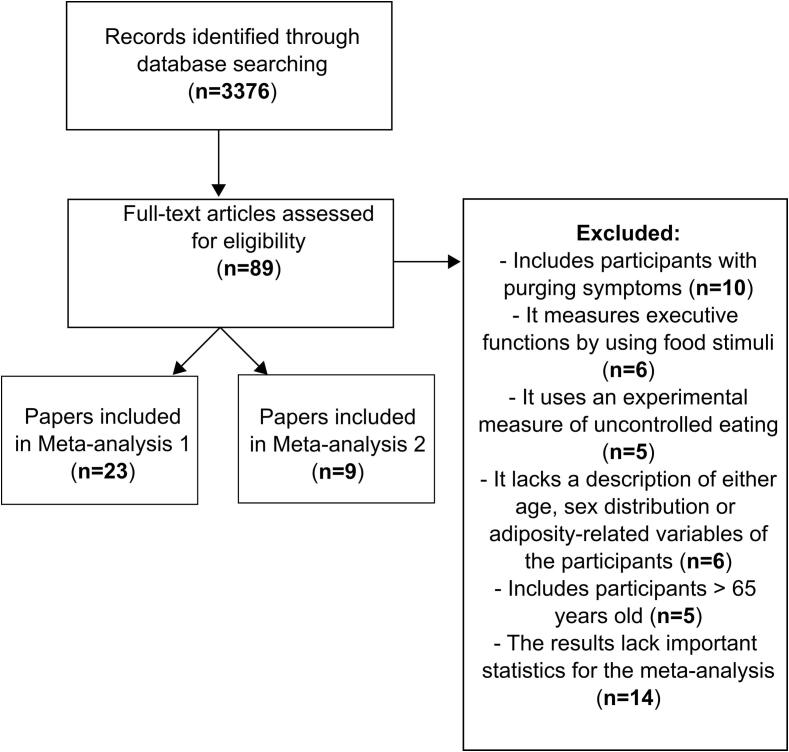
We performed a pre-registered -analysis to examine the link between executive functions, BED, and uncontrolled eating, a psychobiological construct closely associated with binge eating behaviors. Articles were searched on PubMed and the main exclusion criteria were lack of information about participants' age or sex distribution or adiposity measurements, studies performed in older populations (age > 65 years old) or studies including participants with purging symptoms.
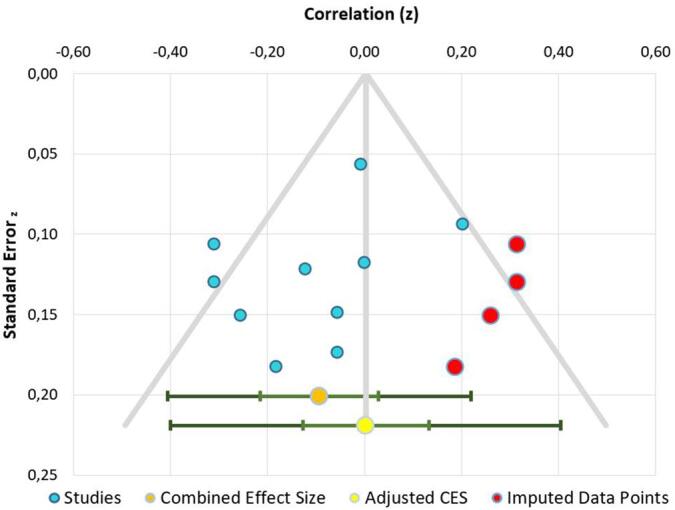
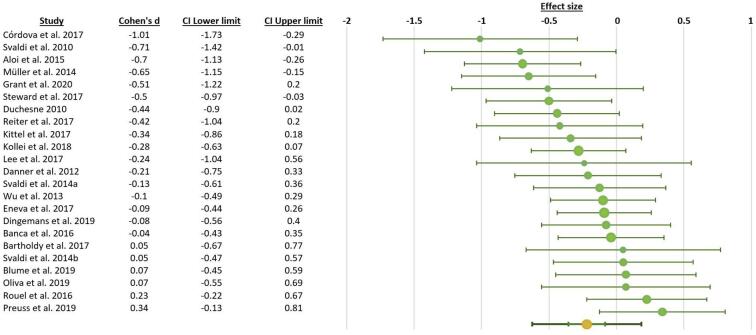
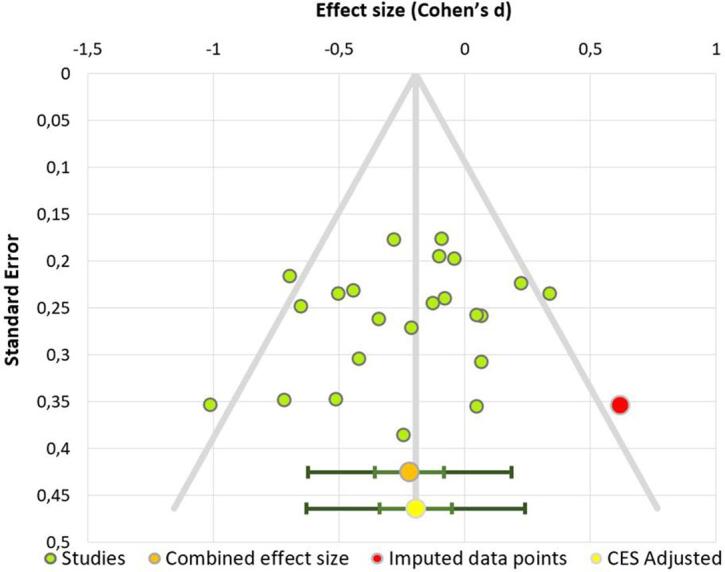
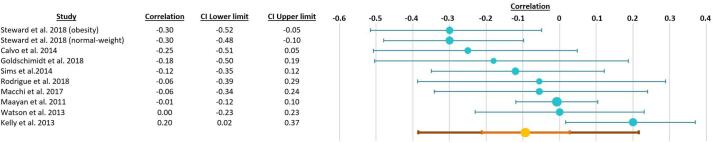
Relative to healthy controls, patients with BED showed lower performance in executive functions, with a small effect size. At the same time, uncontrolled eating patterns were not associated with differences in executive functions. Neither age nor body mass index (BMI) influenced these results.
Our findings suggest that there is no association between performance in executive functions and variations along the non-clinical spectrum of binge eating behaviors. Small deficits in executive functions, however, seem to appear in individuals showing severe binge eating symptoms, that is, individuals meeting diagnostic criteria for BED. We speculate that the close links between BED and emotional distress could partly explain these results.
暴饮暴食症(BED)是一种常见的精神疾病诊断,其特征是存在对食物摄入失去控制的发作。了解与暴饮暴食病理相关的神经认知因素可能有助于设计旨在预防或治疗BED的临床策略。然而,该领域的结果明显异质。在本研究中,我们旨在确定暴饮暴食行为(在临床和非临床层面)是否与执行功能相关。
我们进行了一项预先注册的分析,以检验执行功能、BED和无节制饮食之间的联系,无节制饮食是一种与暴饮暴食行为密切相关的心理生物学结构。在PubMed上搜索文章,主要排除标准是缺乏关于参与者年龄或性别分布或肥胖测量的信息、在老年人群(年龄>65岁)中进行的研究或包括有清除症状参与者的研究。
相对于健康对照组,BED患者在执行功能方面表现较差,效应量较小。同时,无节制的饮食模式与执行功能的差异无关。年龄和体重指数(BMI)均未影响这些结果。
我们的研究结果表明,执行功能的表现与暴饮暴食行为非临床范围内的变化之间没有关联。然而,执行功能的小缺陷似乎出现在表现出严重暴饮暴食症状的个体中,即符合BED诊断标准的个体。我们推测,BED与情绪困扰之间的密切联系可能部分解释了这些结果。