Guangzhou University of Chinese Medicine, Guangzhou, China.
Department of Oncology, Shenzhen Hospital of Guangzhou University of Chinese Medicine, Shenzhen, China.
Biosci Rep. 2021 Feb 26;41(2). doi: 10.1042/BSR20204062.
Aidi injection (ADI) is an effective Traditional Chinese medicine preparation widely used for lung cancer. However, the pharmacological mechanisms of ADI on lung cancer remain to be elucidated.
A network pharmacology (NP)-based approach and the molecular docking validation were conducted to explore underlying mechanisms of ADI on lung cancer. The compounds and target genes were screened by Traditional Chinese Medicine Systems Pharmacology (TCMSP) database and Bioinformatics Analysis Tool for Molecular mechANism of Traditional Chinese Medicine (Batman-TCM) database. The STRING database was utilized for protein interaction network construction. The R package clusterProfiler was used for bioinformatics annotation of hub target genes. The gene expression analysis and survival analysis were performed based on The Cancer Genome Atlas (TCGA) database. The Autodock Vina was used for molecular docking validation.
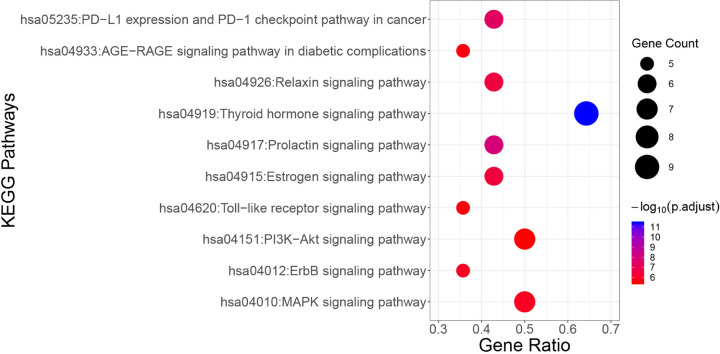
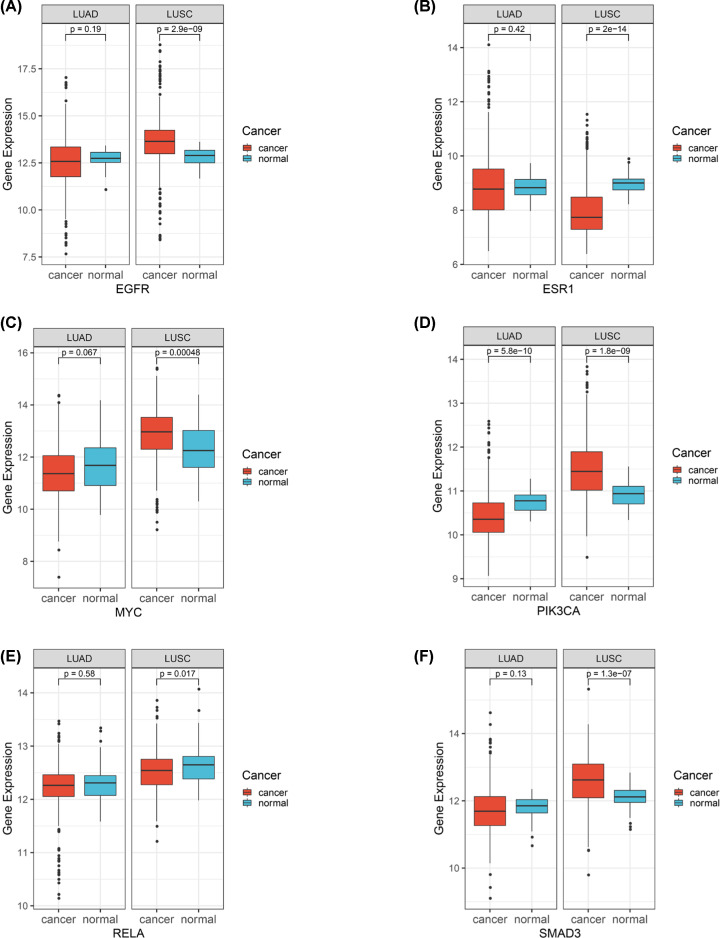
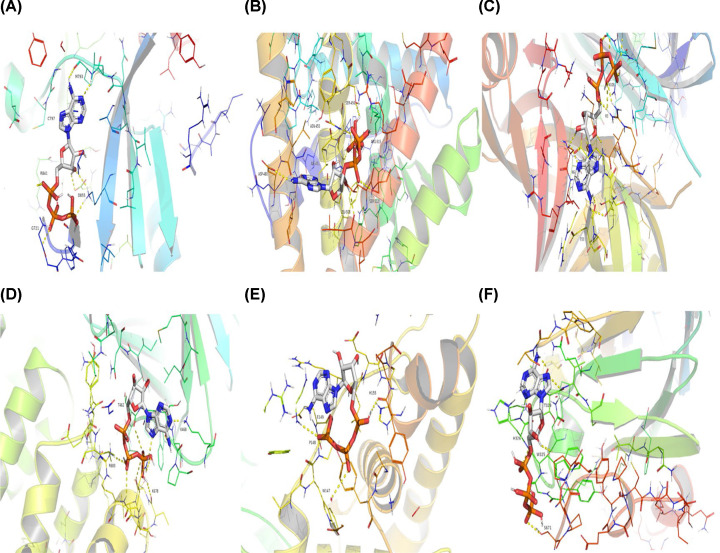
A total of five key compounds with 324 putative target genes were screened out, and 14 hub target genes were identified for treating lung cancer. Six hub genes could influence the survival of non-small cell lung cancer (NSCLC) patients. Of these hub genes, the expression pattern of EGFR, MYC, PIK3CA, and SMAD3 were significantly higher in the LUSC, while PIK3CA and RELA expressed lower in the LUAD group and LUSC group, respectively. These six hub genes had good docking affinity with the key compounds of ADI. Kyoto Encyclopedia of Genes and Genomes (KEGG) pathway analysis showed that ADI may exert therapeutic effects on lung cancer by regulating critical pathways including the thyroid hormone signaling pathway, MAPK signaling pathway, and PI3K-Akt signaling pathway.
The present study explored the potential pharmacological mechanisms of ADI on lung cancer, promoting the clinical application of ADI in treating lung cancer, and providing references for advanced researches.
艾迪注射液(ADI)是一种广泛用于治疗肺癌的有效中药制剂。然而,ADI 治疗肺癌的药理机制仍有待阐明。
采用网络药理学(NP)方法和分子对接验证,探讨 ADI 治疗肺癌的潜在机制。通过中药系统药理学数据库(TCMSP)和生物信息学分析工具用于中药分子机制(Batman-TCM)数据库筛选化合物和靶基因。利用 STRING 数据库构建蛋白质相互作用网络。使用 R 包 clusterProfiler 对关键靶基因进行生物信息学注释。基于癌症基因组图谱(TCGA)数据库进行基因表达分析和生存分析。采用 Autodock Vina 进行分子对接验证。
筛选出 5 种关键化合物,共 324 个潜在靶基因,鉴定出 14 个治疗肺癌的关键靶基因。其中 6 个关键基因可以影响非小细胞肺癌(NSCLC)患者的生存。在这些关键基因中,EGFR、MYC、PIK3CA 和 SMAD3 在 LUSC 中的表达模式较高,而 PIK3CA 和 RELA 在 LUAD 组和 LUSC 组中的表达水平较低。这 6 个关键基因与 ADI 的关键化合物具有良好的对接亲和力。京都基因与基因组百科全书(KEGG)通路分析表明,ADI 通过调节甲状腺激素信号通路、MAPK 信号通路和 PI3K-Akt 信号通路等关键通路,可能对肺癌发挥治疗作用。
本研究探讨了 ADI 治疗肺癌的潜在药理机制,促进了 ADI 在肺癌治疗中的临床应用,并为进一步研究提供了参考。