Flatiron Institute, Simons Foundation, New York, New York, United States of America.
Joint Department of Biomedical Engineering, University of North Carolina at Chapel Hill and North Carolina State University; and UNC Neuroscience Center, University of North Carolina at Chapel Hill, Chapel Hill, North Carolina, United States of America.
PLoS Comput Biol. 2021 Jan 28;17(1):e1008565. doi: 10.1371/journal.pcbi.1008565. eCollection 2021 Jan.
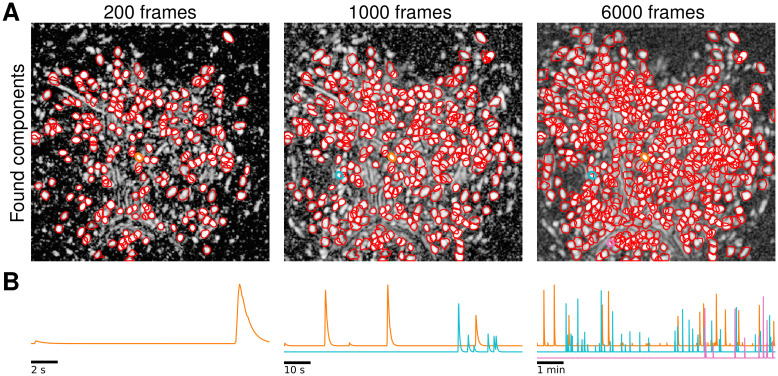
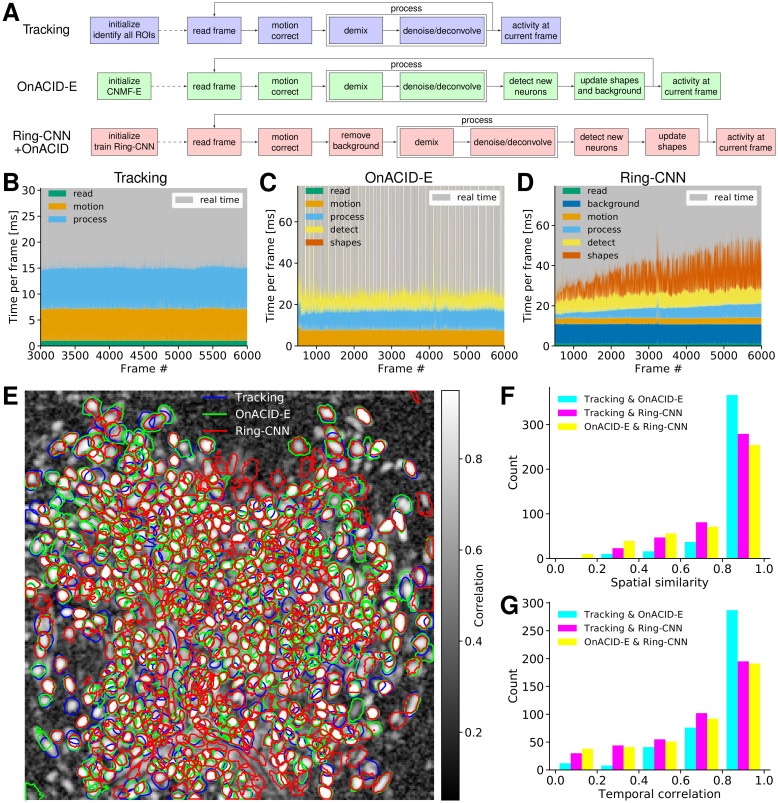
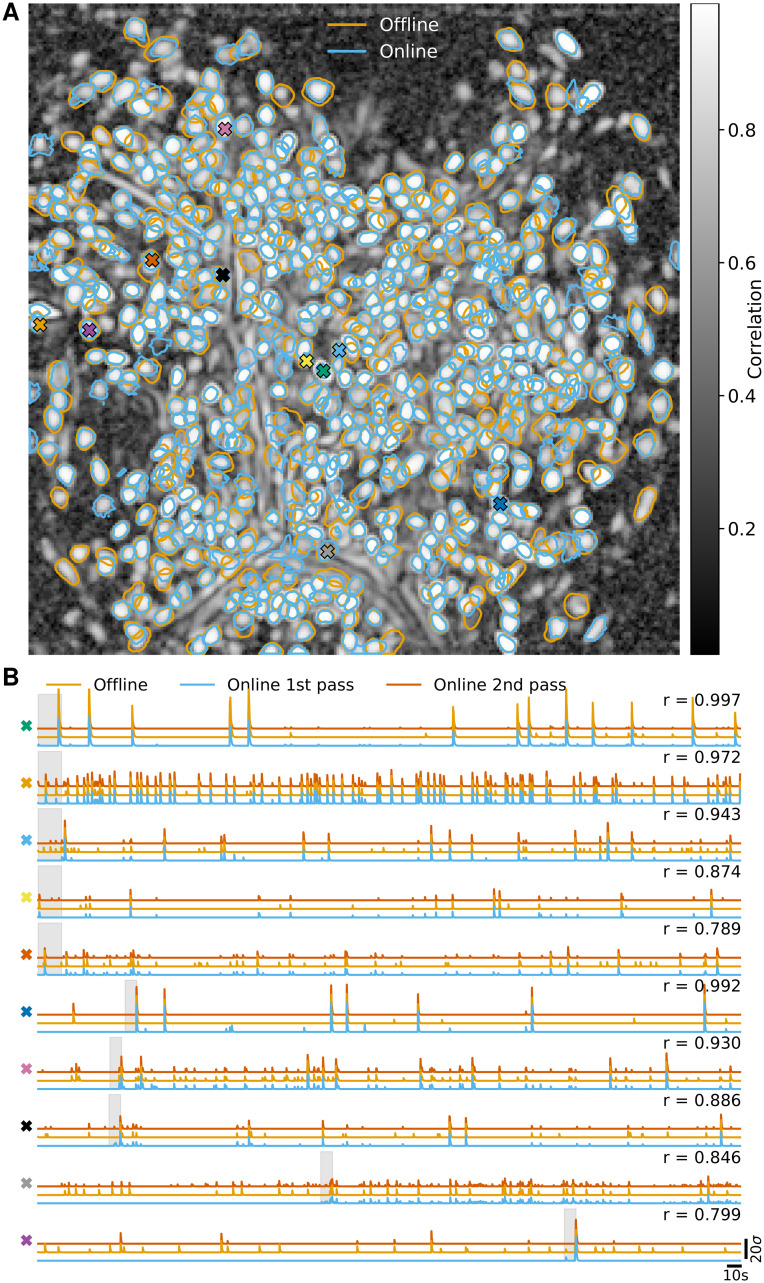
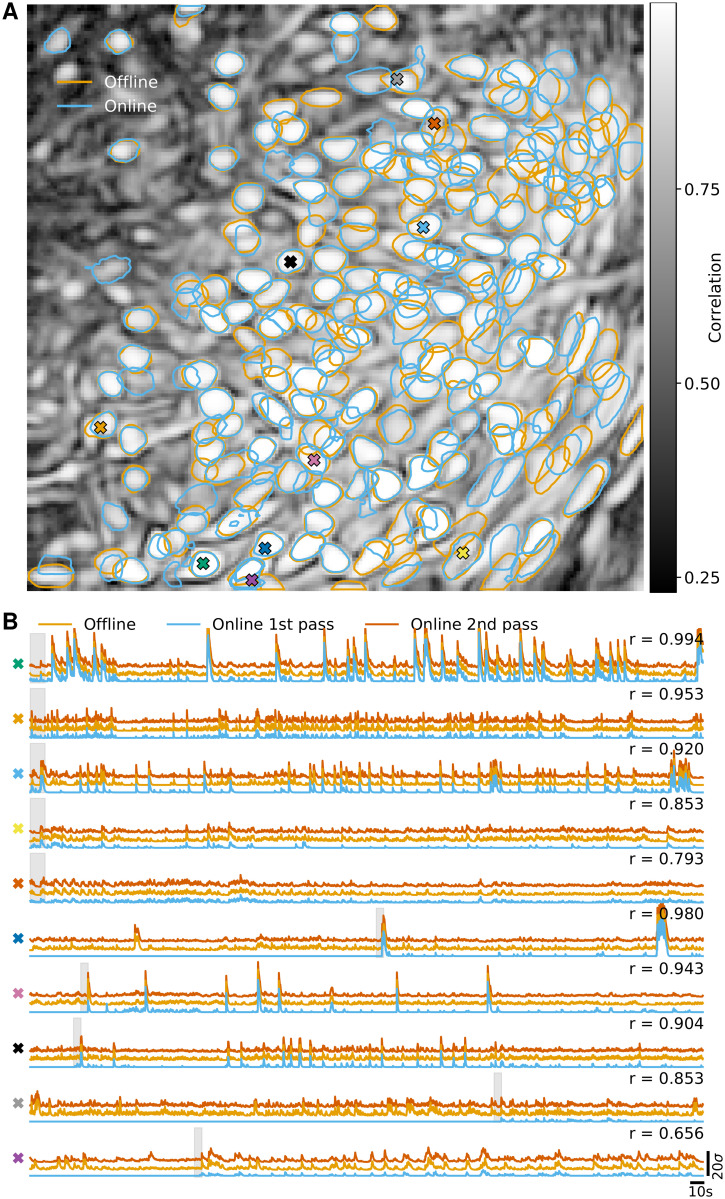
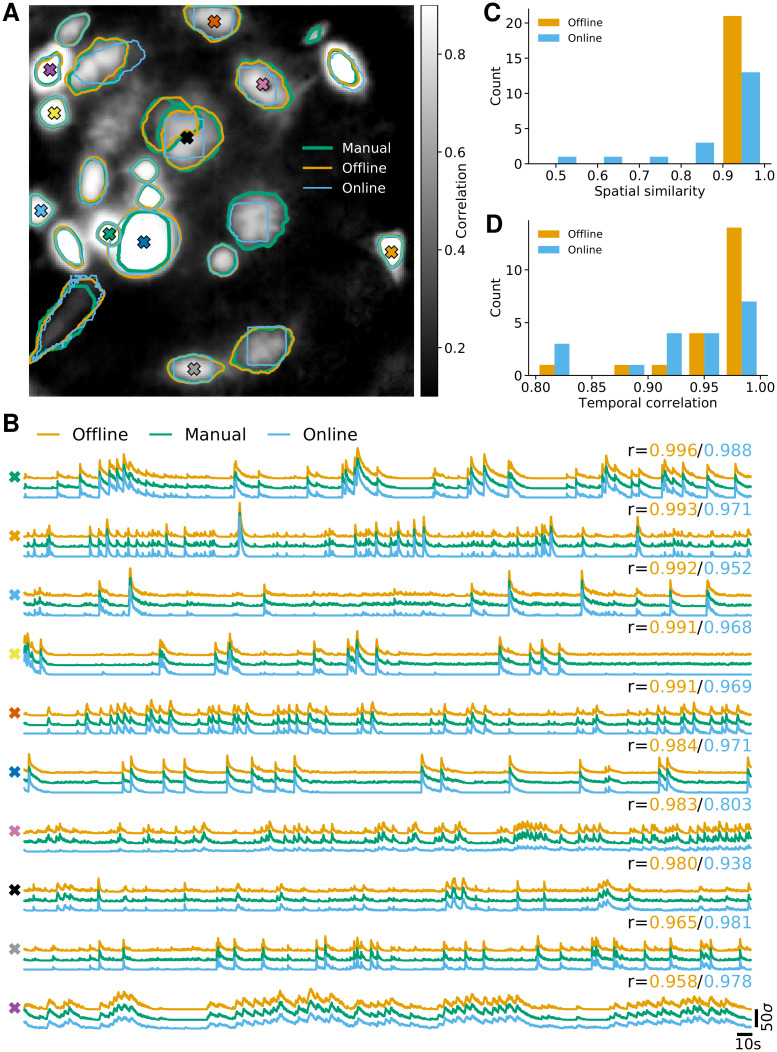
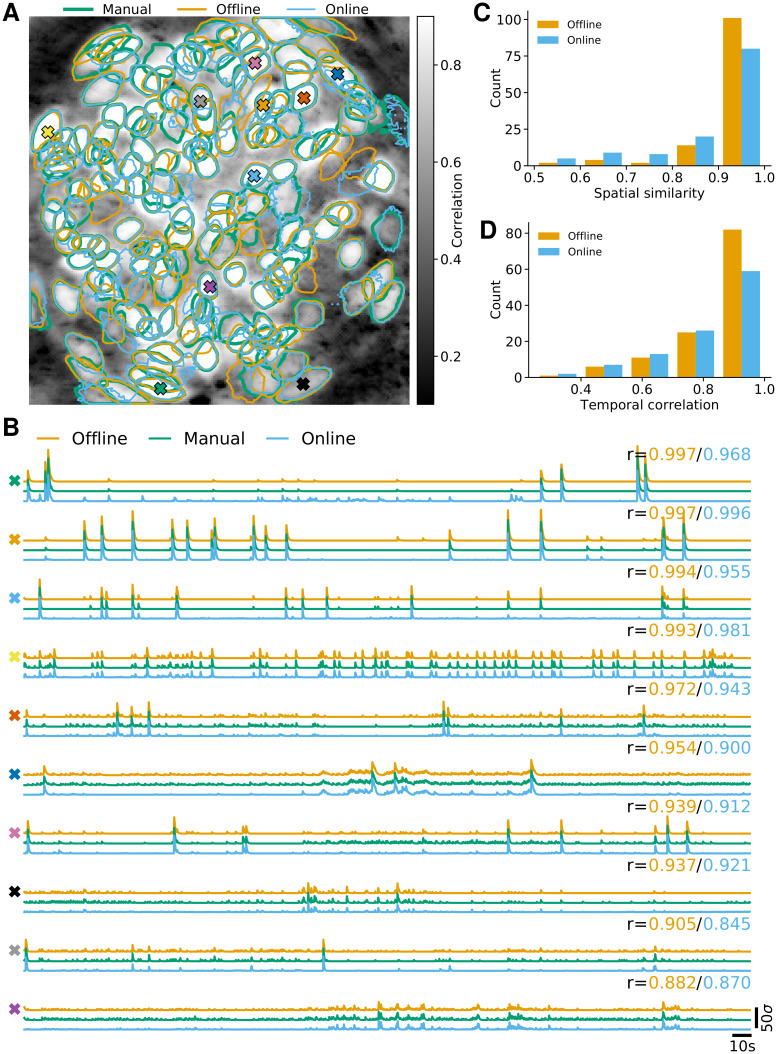
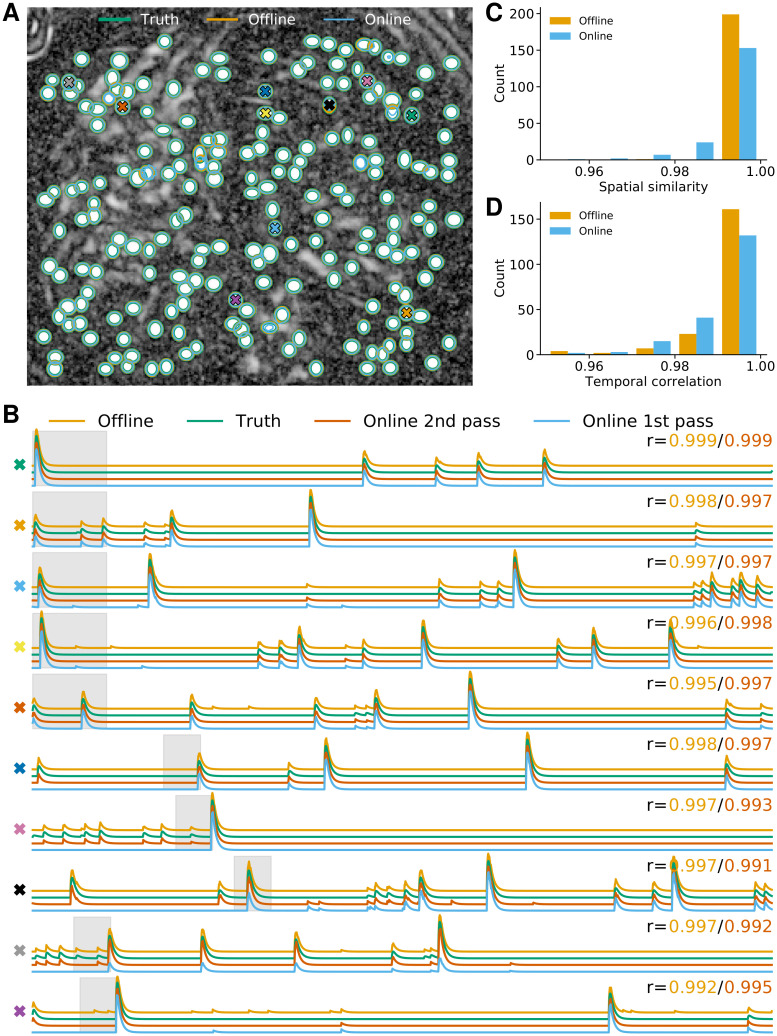
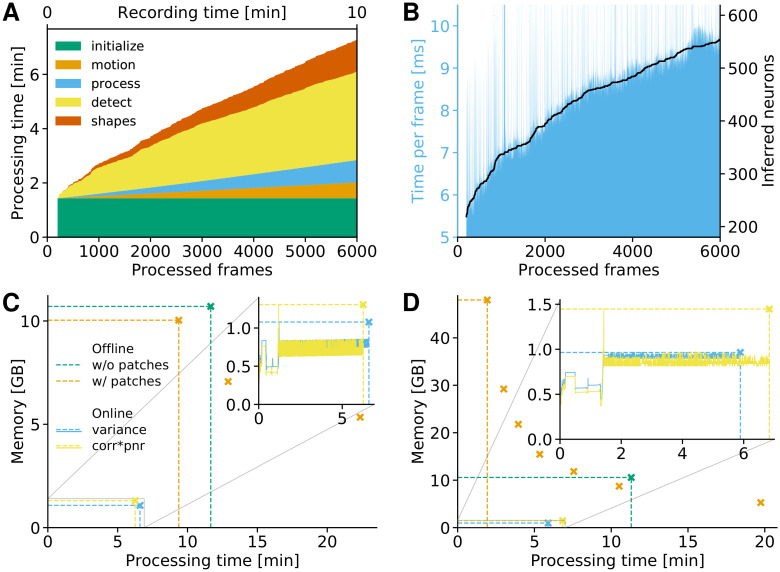
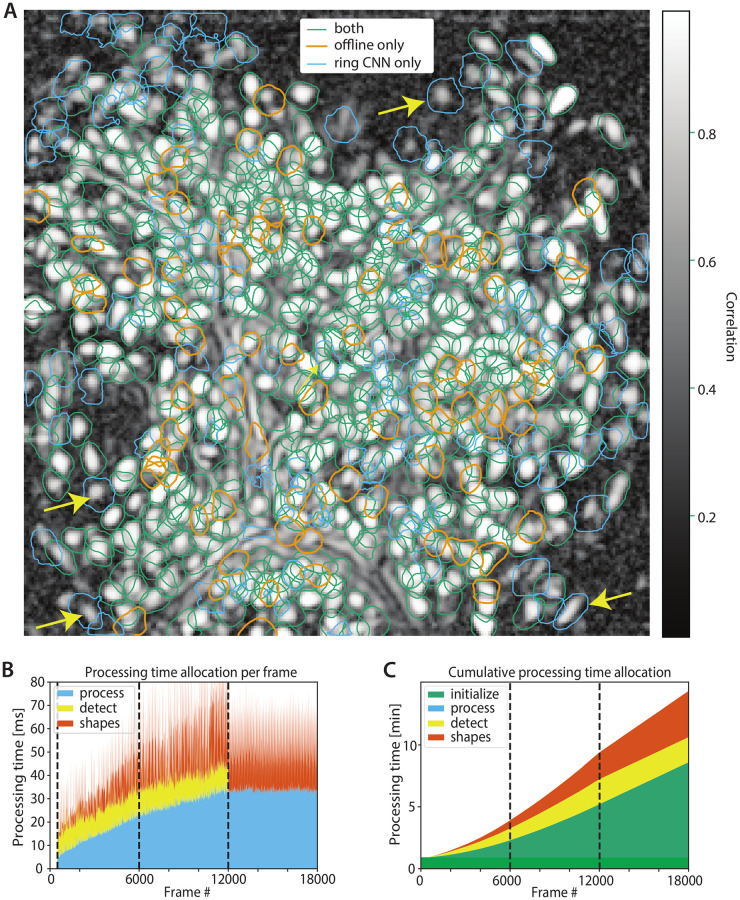
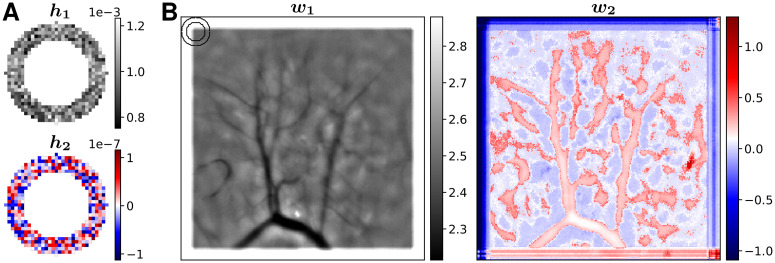
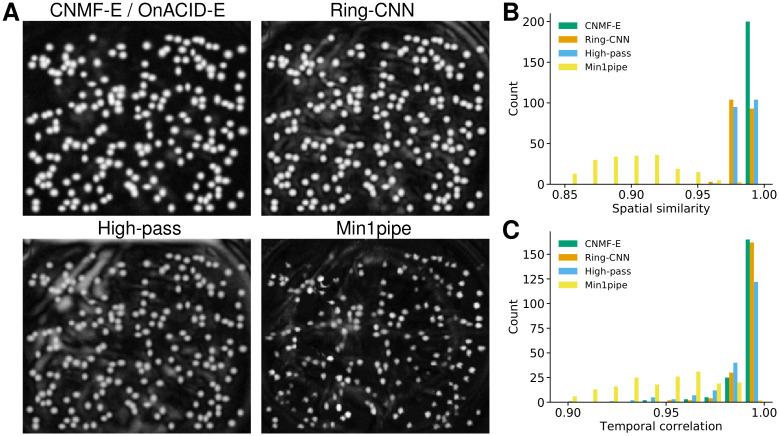
In vivo calcium imaging through microendoscopic lenses enables imaging of neuronal populations deep within the brains of freely moving animals. Previously, a constrained matrix factorization approach (CNMF-E) has been suggested to extract single-neuronal activity from microendoscopic data. However, this approach relies on offline batch processing of the entire video data and is demanding both in terms of computing and memory requirements. These drawbacks prevent its applicability to the analysis of large datasets and closed-loop experimental settings. Here we address both issues by introducing two different online algorithms for extracting neuronal activity from streaming microendoscopic data. Our first algorithm, OnACID-E, presents an online adaptation of the CNMF-E algorithm, which dramatically reduces its memory and computation requirements. Our second algorithm proposes a convolution-based background model for microendoscopic data that enables even faster (real time) processing. Our approach is modular and can be combined with existing online motion artifact correction and activity deconvolution methods to provide a highly scalable pipeline for microendoscopic data analysis. We apply our algorithms on four previously published typical experimental datasets and show that they yield similar high-quality results as the popular offline approach, but outperform it with regard to computing time and memory requirements. They can be used instead of CNMF-E to process pre-recorded data with boosted speeds and dramatically reduced memory requirements. Further, they newly enable online analysis of live-streaming data even on a laptop.
通过微内窥镜镜头进行体内钙成像,能够对自由活动动物大脑深处的神经元群体进行成像。此前,已经提出了一种受限矩阵分解方法(CNMF-E),用于从微内窥镜数据中提取单个神经元的活动。然而,这种方法依赖于对整个视频数据的离线批量处理,无论是在计算还是内存需求方面都要求很高。这些缺点使其无法适用于大型数据集和闭环实验设置的分析。在这里,我们通过引入两种不同的在线算法来解决这两个问题,这些算法可从流式微内窥镜数据中提取神经元活动。我们的第一个算法 OnACID-E 是 CNMF-E 算法的在线自适应,它大大降低了其内存和计算要求。我们的第二个算法为微内窥镜数据提出了基于卷积的背景模型,从而实现了更快的(实时)处理。我们的方法是模块化的,可以与现有的在线运动伪影校正和活动反卷积方法相结合,为微内窥镜数据分析提供高度可扩展的流水线。我们将我们的算法应用于四个以前发布的典型实验数据集,并表明它们可以获得与流行的离线方法相似的高质量结果,但在计算时间和内存需求方面表现更好。它们可以代替 CNMF-E 来处理预录制的数据,从而提高速度并大大降低内存需求。此外,即使在笔记本电脑上,它们也可以新实现对实时数据流的在线分析。