Department of Cell and Molecular Biology, Karolinska Institutet, Stockholm, Sweden.
Autophagy. 2021 Nov;17(11):3461-3474. doi: 10.1080/15548627.2021.1874660. Epub 2021 Jan 28.
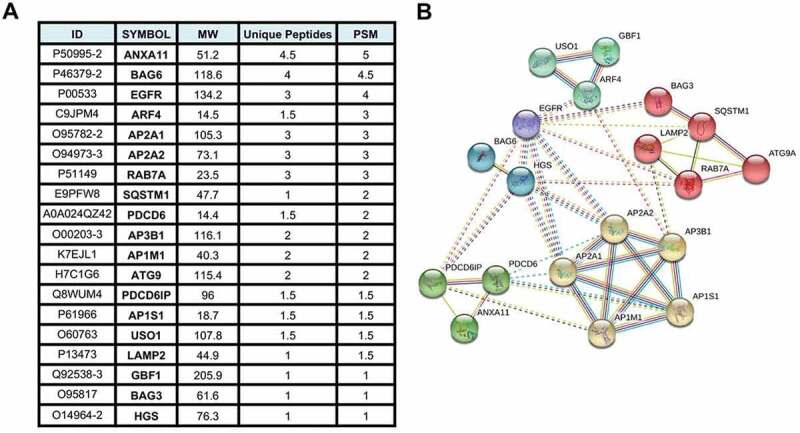
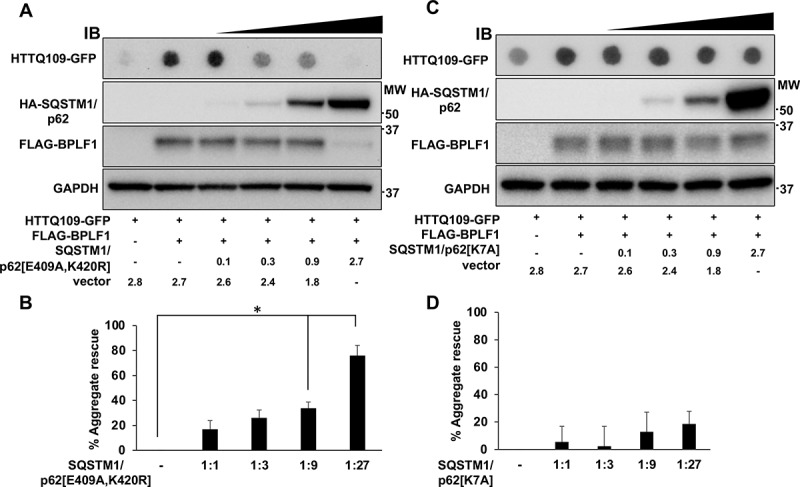
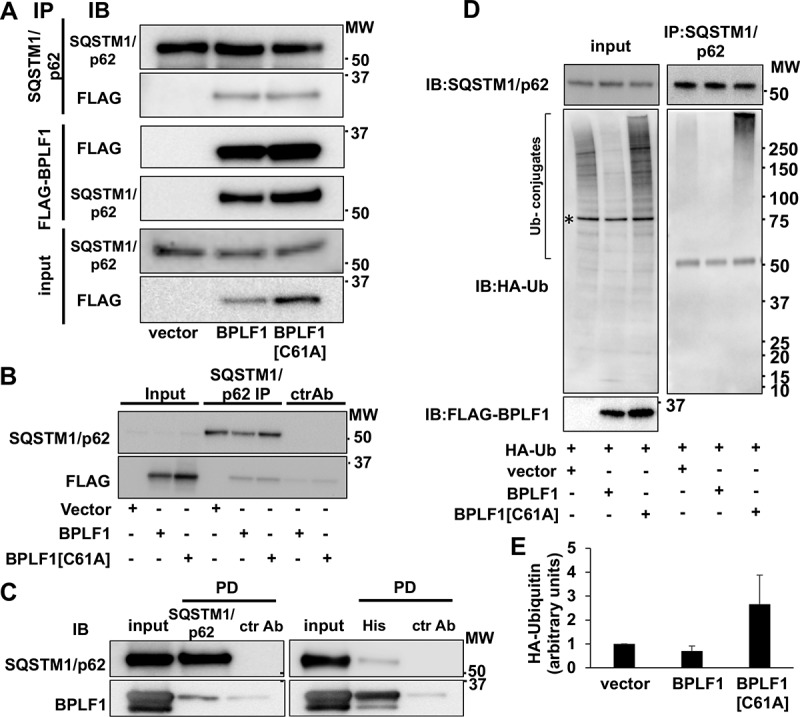
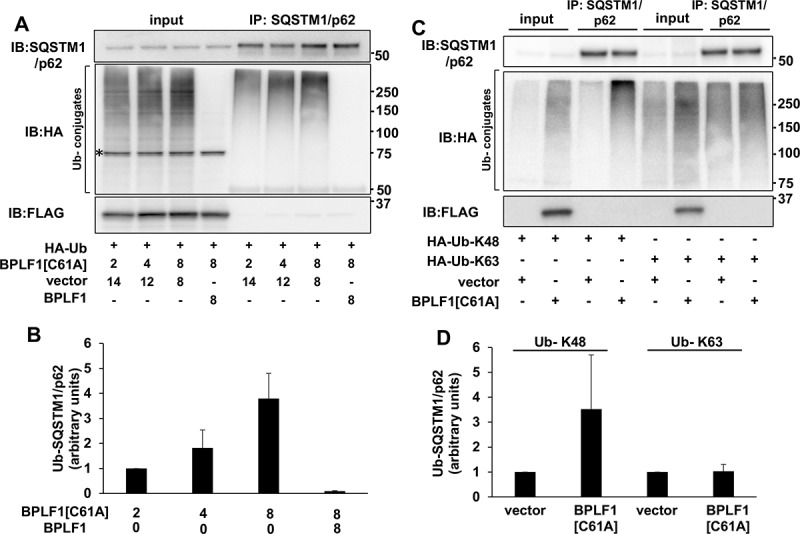
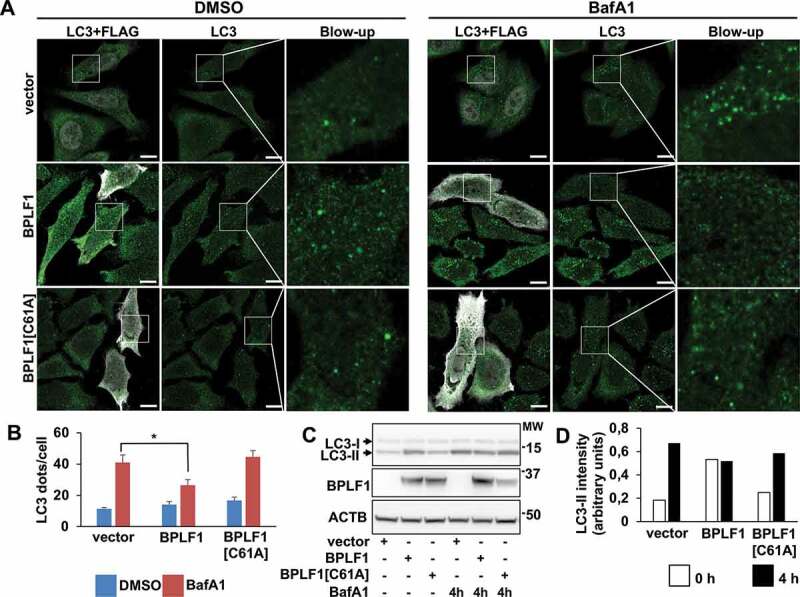
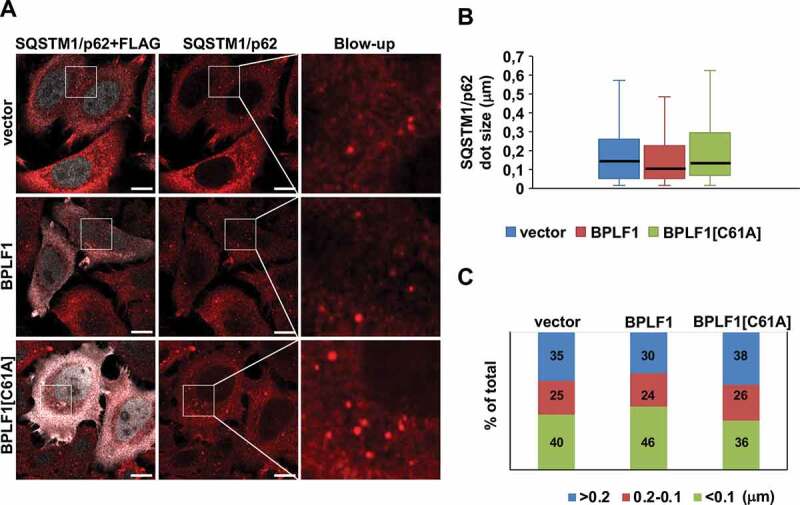
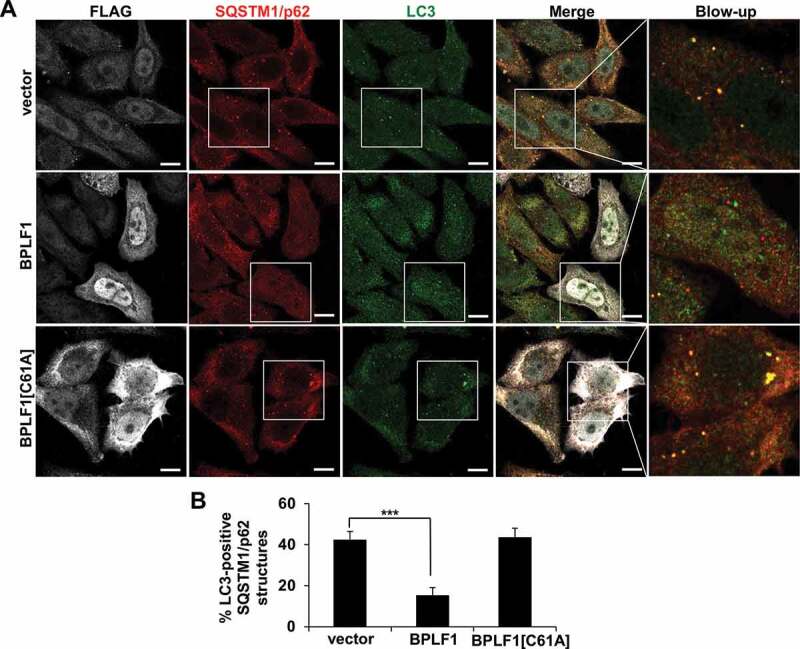
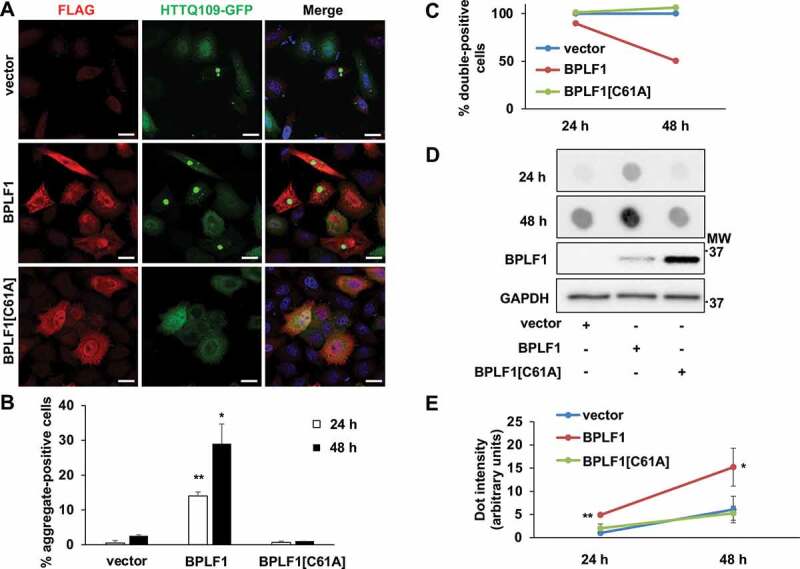
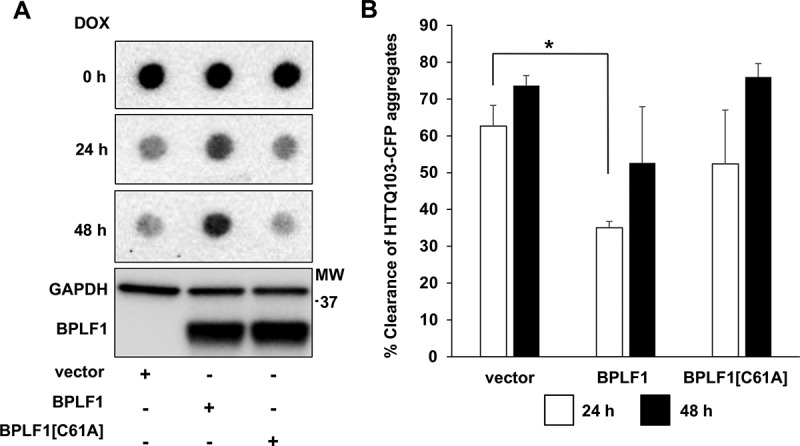
Macroautophagy/autophagy plays an important role in the control of viral infections and viruses have evolved multiple strategies to interfere with autophagy to avoid destruction and promote their own replication and spread. Here we report that the deubiquitinase encoded in the N-terminal domain of the Epstein-Barr virus (EBV) large tegument protein, BPLF1, regulates selective autophagy. Mass spectrometry analysis identified several vesicular traffic and autophagy related proteins as BPLF1 interactors and potential substrates, suggesting that the viral protein targets this cellular defense during productive infection. Direct binding of BPLF1 to the autophagy receptor SQSTM1/p62 (sequestosome 1) was confirmed by co-immunoprecipitation of transfected BPLF1 and by affinity isolation of bacterially expressed proteins. Expression of the catalytically active BPLF1 was associated with decreased SQSTM1/p62 ubiquitination and failure to recruit LC3 to SQSTM1/p62-positive aggregates. Selective autophagy was inhibited as illustrated by the accumulation of large protein aggregates in BPLF1-positive cells co-transfected with an aggregate-prone HTT (huntingtin)-Q109 construct, and by a slower autophagy-dependent clearance of protein aggregates upon transfection of BPLF1 in cells expressing a tetracycline-regulated HTT-Q103. The inhibition of aggregate clearance was restored by overexpression of a SQSTM1/p62[E409A,K420R] mutant that does not require ubiquitination of Lys420 for cargo loading. These findings highlight a previously unrecognized role of the viral deubiquitinase in the regulation of selective autophagy, which may promote infection and the production of infectious virus. BPLF1, BamH1 fragment left open reading frame-1; EBV, Epstein-Barr virus; GFP, green fluorescent protein; HTT, huntingtin; MAP1LC3/LC3, microtubule associated protein 1 light chain 3; PB1, Phox and Bem1 domain; PE, phosphatidylethanolamine; SQSTM1/p62, sequestosome 1; UBA, ubiquitin-associated domain.
自噬在控制病毒感染中起着重要作用,病毒已经进化出多种策略来干扰自噬,以避免被破坏并促进自身复制和传播。在这里,我们报告 EBV 大衣壳蛋白 N 端结构域编码的去泛素化酶 BPLF1 调节选择性自噬。质谱分析鉴定了几种囊泡运输和自噬相关蛋白作为 BPLF1 的相互作用蛋白和潜在底物,表明该病毒蛋白在产毒感染过程中靶向这种细胞防御。转染的 BPLF1 共免疫沉淀和细菌表达蛋白的亲和分离证实了 BPLF1 与自噬受体 SQSTM1/p62(自噬体 1)的直接结合。催化活性的 BPLF1 的表达与 SQSTM1/p62 的泛素化减少和 LC3 未能募集到 SQSTM1/p62 阳性聚集体有关。通过共转染易聚集 HTT(亨廷顿病)-Q109 构建体的 BPLF1 阳性细胞中大量蛋白聚集体的积累,以及 BPLF1 转染后在表达四环素调控 HTT-Q103 的细胞中自噬依赖性蛋白聚集体清除速度较慢,表明选择性自噬受到抑制。通过过表达不需要赖氨酸 420 泛素化进行货物加载的 SQSTM1/p62[E409A,K420R]突变体,恢复了聚集体清除的抑制作用。这些发现突出了病毒去泛素化酶在调节选择性自噬中的先前未被认识的作用,这可能促进感染和产生感染性病毒。BPLF1,BamH1 片段左开放阅读框-1;EBV,爱泼斯坦-巴尔病毒;GFP,绿色荧光蛋白;HTT,亨廷顿病;MAP1LC3/LC3,微管相关蛋白 1 轻链 3;PB1,Phox 和 Bem1 结构域;PE,磷脂酰乙醇胺;SQSTM1/p62,自噬体 1;UBA,泛素相关结构域。