Bruno Mariolina, Dewi Intan M W, Matzaraki Vicky, Ter Horst Rob, Pekmezovic Marina, Rösler Berenice, Groh Laszlo, Röring Rutger J, Kumar Vinod, Li Yang, Carvalho Agostinho, Netea Mihai G, Latgé Jean-Paul, Gresnigt Mark S, van de Veerdonk Frank L
Department of Internal Medicine and Radboudumc Center for Infectious Diseases (RCI), Radboud University Medical Center, Nijmegen, The Netherlands.
Department of Microbial Pathogenicity Mechanisms, Leibniz Institute for Natural Product Research and Infection Biology - Hans Knöll Institute, Beutenbergstraße 11a 07745, Jena, Germany.
Comput Struct Biotechnol J. 2020 Dec 26;19:647-663. doi: 10.1016/j.csbj.2020.12.036. eCollection 2021.
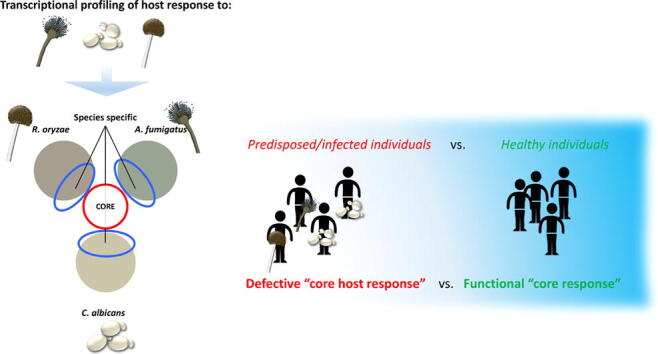
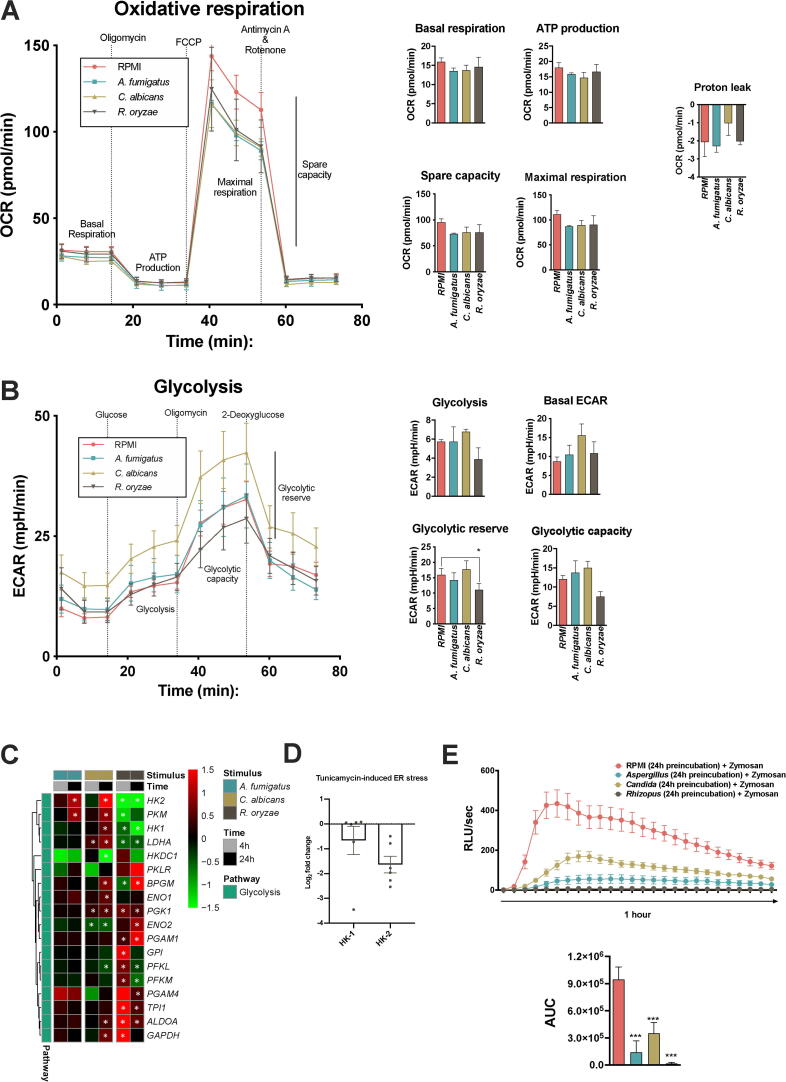
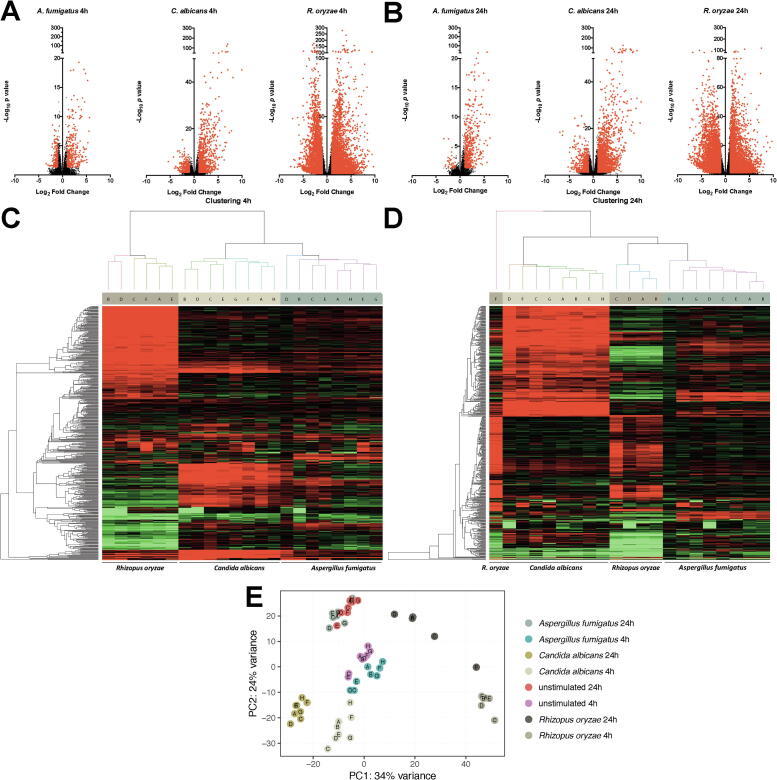
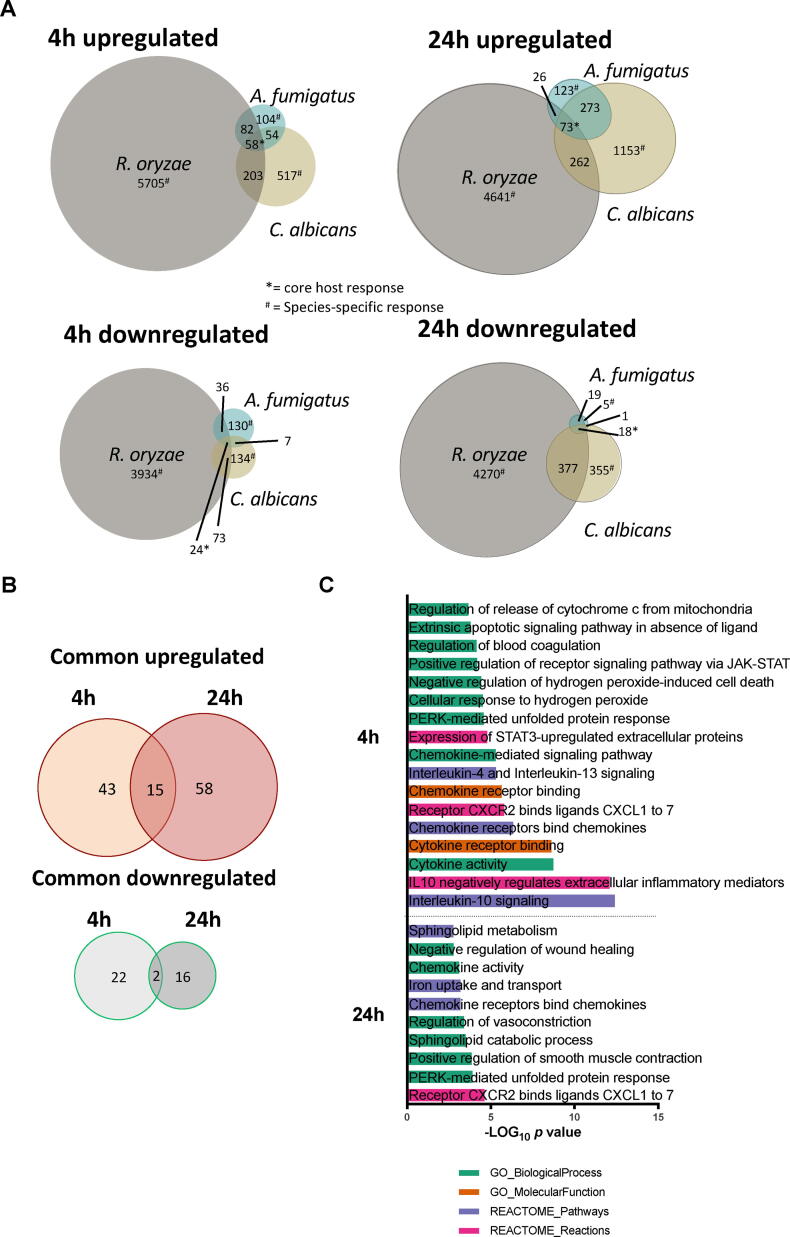
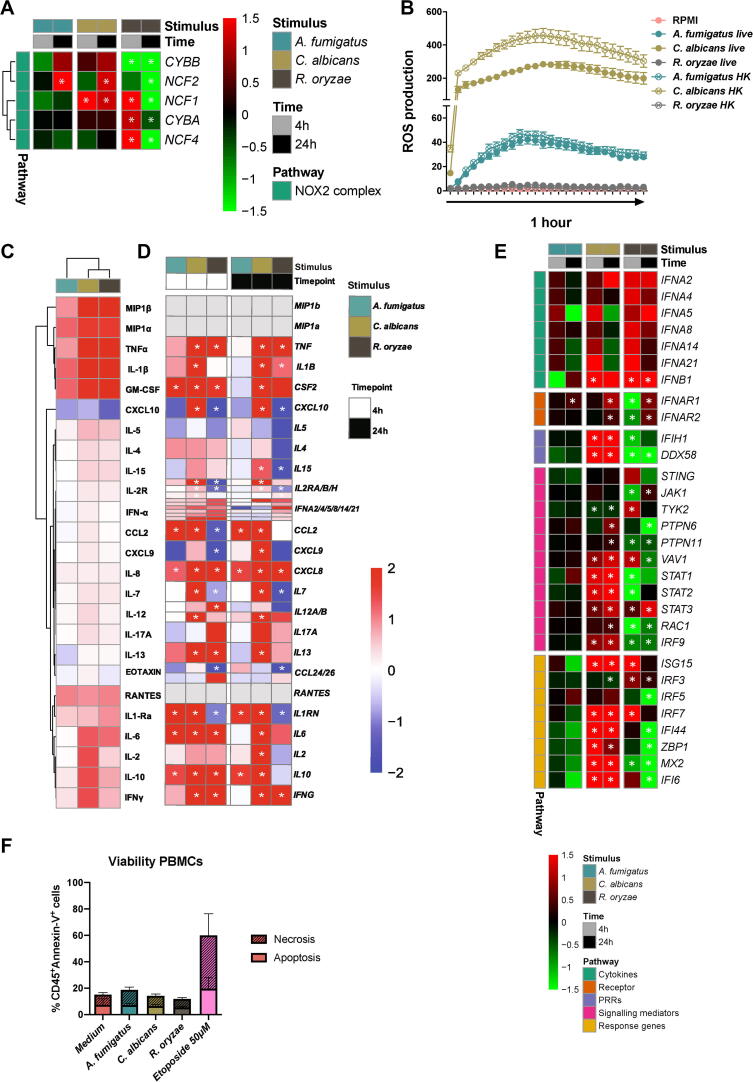
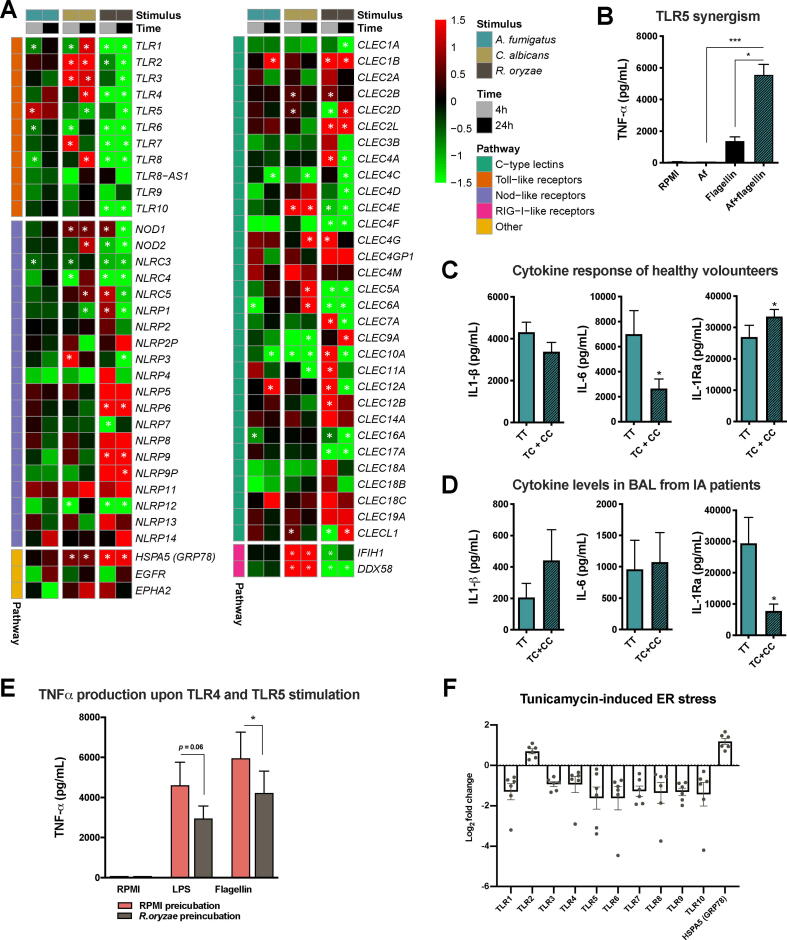
Candidiasis, aspergillosis, and mucormycosis cause the majority of nosocomial fungal infections in immunocompromised patients. Using an unbiased transcriptional profiling in PBMCs exposed to the fungal species causing these infections, we found a core host response in healthy individuals that may govern effective fungal clearance: it consists of 156 transcripts, involving canonical and non-canonical immune pathways. Systematic investigation of key steps in antifungal host defense revealed fungal-specific signatures. As previously demonstrated, induced type I and Type II interferon-related pathways. In contrast, central pattern recognition receptor, reactive oxygen species production, and host glycolytic pathways were down-regulated in response to , which was associated with an ER-stress response. was identified to be uniquely regulated by and to control cytokine release in response to this fungus. In conclusion, our data reveals the transcriptional profiles induced by , and describes both the common and specific antifungal host responses that could be exploited for novel therapeutic strategies.
念珠菌病、曲霉病和毛霉病是免疫功能低下患者医院获得性真菌感染的主要病因。通过对暴露于引发这些感染的真菌物种的外周血单核细胞进行无偏转录谱分析,我们在健康个体中发现了一种可能控制有效真菌清除的核心宿主反应:它由156个转录本组成,涉及经典和非经典免疫途径。对抗真菌宿主防御关键步骤的系统研究揭示了真菌特异性特征。如先前所示,诱导了I型和II型干扰素相关途径。相比之下,中央模式识别受体、活性氧产生和宿主糖酵解途径在对的反应中下调,这与内质网应激反应相关。被确定为由独特调控,并控制对这种真菌的细胞因子释放。总之,我们的数据揭示了由诱导的转录谱,并描述了可用于新治疗策略的常见和特异性抗真菌宿主反应。