The Department of Orthopedic Surgery, Yongchuan Hospital, Chongqing Medical University, 439 Xuanhua Road, Yongchuan, Chongqing, China.
Arch Orthop Trauma Surg. 2021 Aug;141(8):1361-1372. doi: 10.1007/s00402-021-03790-7. Epub 2021 Jan 29.
Since the optimal surgery for isolated medial knee osteoarthritis (OA) is unclear, this study aimed at comparing the effectiveness of unicondylar knee replacement (UKR) with total knee replacement (TKR) for simple medial knee OA.
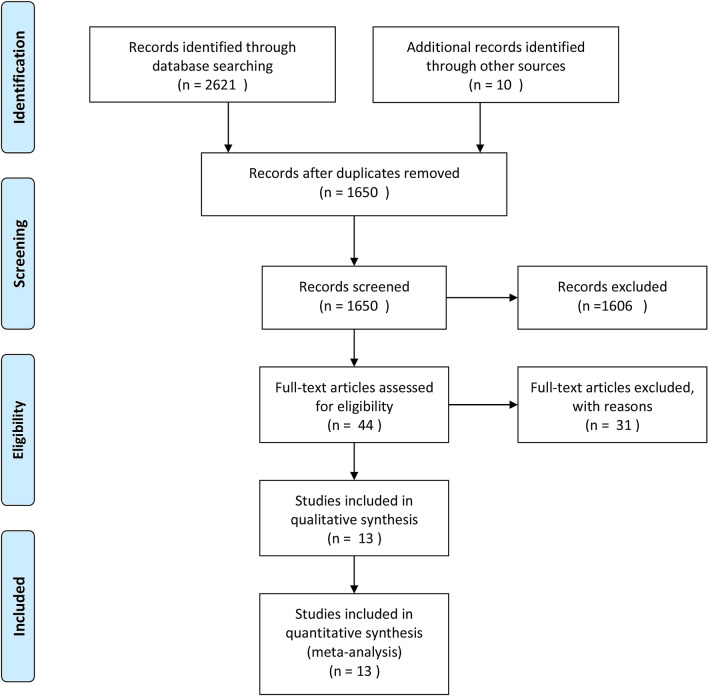
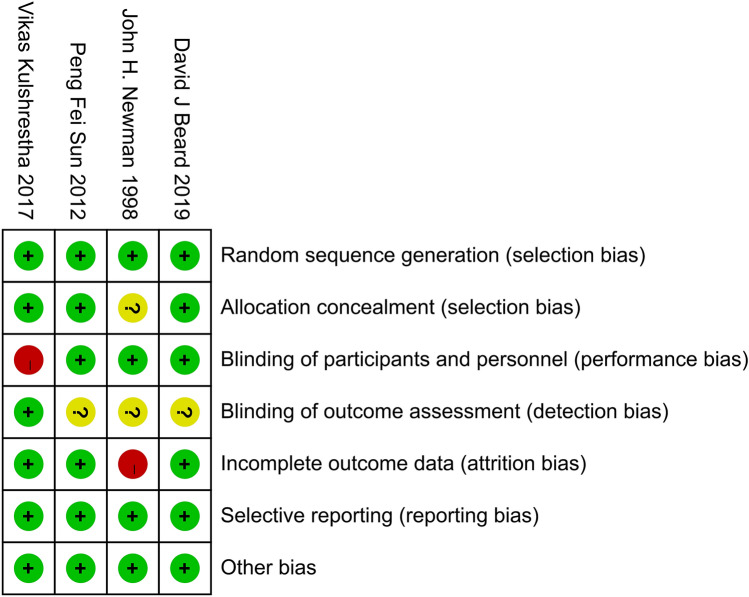
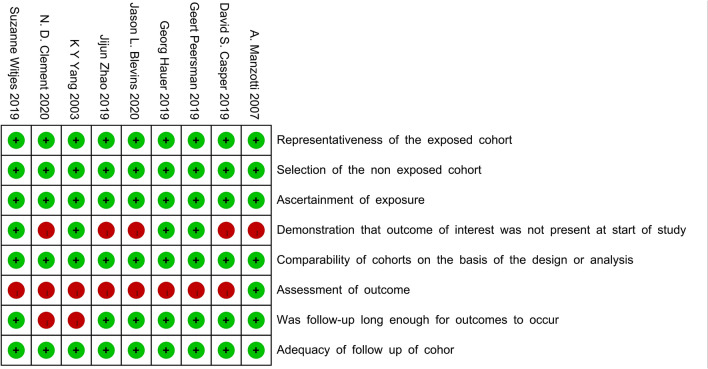
Literature searches of PubMed, Embase, Web of Science, and the Cochrane Library were searched up to 1th April 2020. Only studies comparing UKR with TKR for isolated medial knee OA were included. Data collection and extraction, quality assessment, and data analyses were performed according to the Cochrane standards.
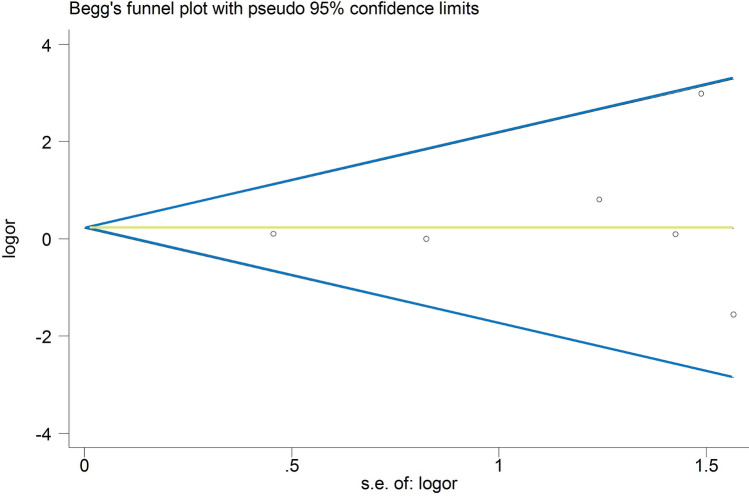
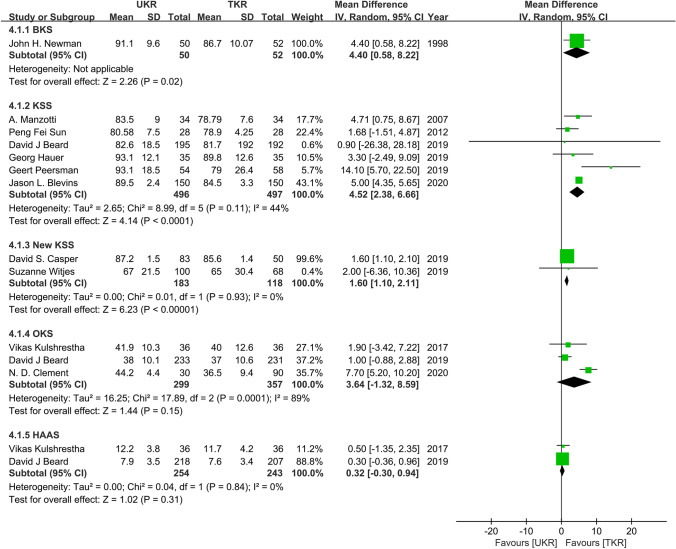
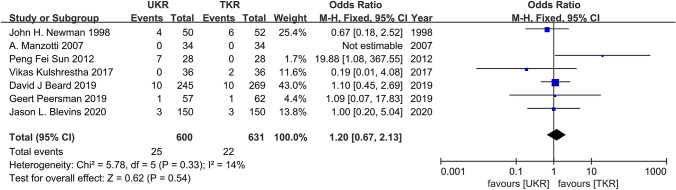
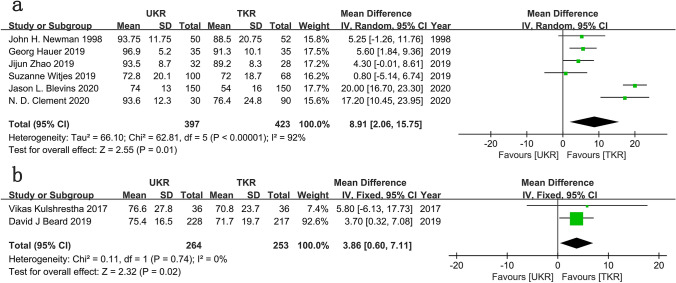
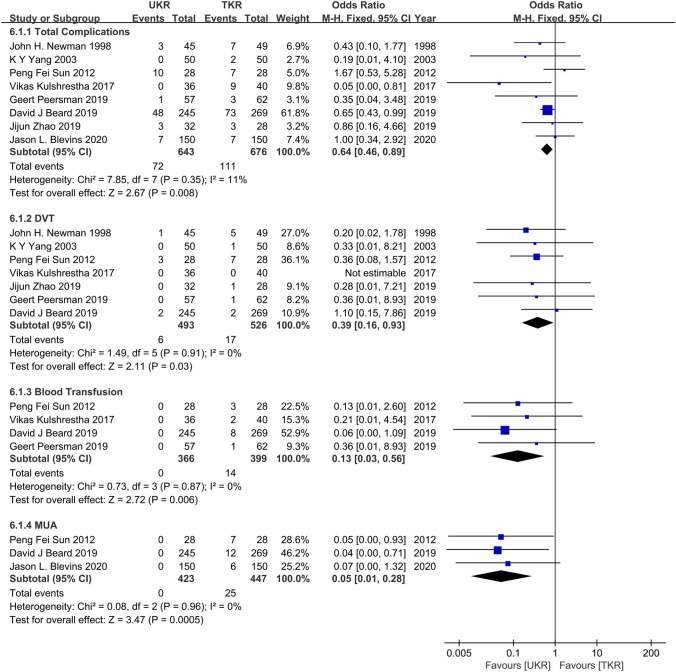
A total of 13 articles with 1888 patients were included, among which, 944 and 944 underwent UKR and TKR, respectively. The analyzed postoperative outcomes were mostly within 5 years of follow-up. The meta-analysis showed that UKR improved knee general function (P < 0.00001) and health (P = 0.02), moreover, reduced post-operative pain (P = 0.01) and complications (P < 0.05) more than TKR. There were no significant differences in postoperative revision (P = 0.252), high-activity arthroplasty score (HAAS) (P = 0.307) and Oxford knee score (OKS) (P = 0.15) between the two techniques.
The patients of UKR could achieve better clinical results than that of TKR, moreover, there were negligible differences between the two techniques in postoperative revision in the early and mid-term follow-up and surgeons should be aware of the important reasons for revision of UKR. Thus, UKR instead of TKR should be performed in patients with late-stage isolated medial knee OA.
由于单纯性内侧膝关节骨关节炎(OA)的最佳手术方法尚不清楚,本研究旨在比较单髁膝关节置换术(UKR)与全膝关节置换术(TKR)治疗单纯性内侧膝关节 OA 的疗效。
检索 PubMed、Embase、Web of Science 和 Cochrane 图书馆,检索时间截至 2020 年 4 月 1 日。仅纳入比较 UKR 与 TKR 治疗单纯性内侧膝关节 OA 的研究。根据 Cochrane 标准进行数据收集和提取、质量评估和数据分析。
共纳入 13 篇文章,1888 例患者,其中 944 例患者接受 UKR,944 例患者接受 TKR。分析的术后结局大多在随访 5 年内。荟萃分析显示,UKR 改善膝关节总体功能(P<0.00001)和健康状况(P=0.02),且术后疼痛(P=0.01)和并发症(P<0.05)减少更明显。两种技术在术后翻修(P=0.252)、高活动度关节置换评分(HAAS)(P=0.307)和牛津膝关节评分(OKS)(P=0.15)方面无显著差异。
UKR 患者的临床结果优于 TKR 患者,在早期和中期随访中,两种技术在术后翻修方面差异较小,外科医生应了解 UKR 翻修的重要原因。因此,对于晚期单纯性内侧膝关节 OA 患者,应行 UKR 而非 TKR。