Department of Radiology, George Washington University, Washington, DC, USA.
George Washington University School of Medicine & Health Sciences, Washington, DC, USA.
Mol Imaging Biol. 2021 Aug;23(4):469-480. doi: 10.1007/s11307-020-01576-8. Epub 2021 Jan 29.
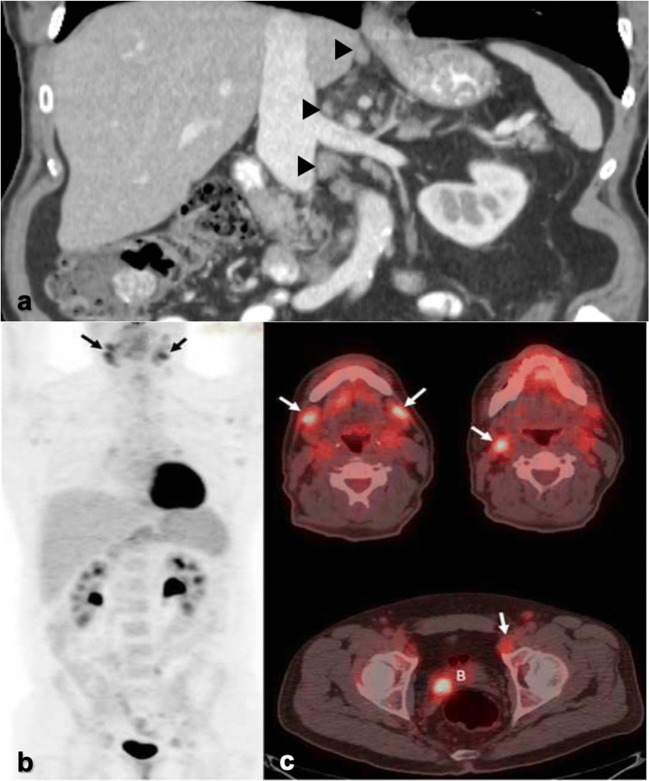
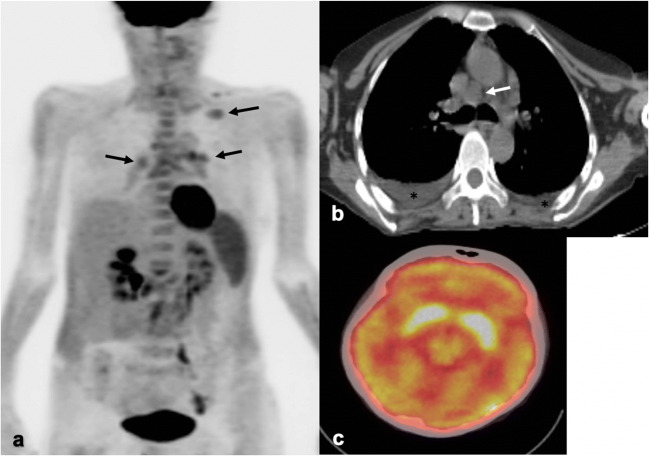
Diffuse lymphadenopathy has a long differential diagnosis that includes both malignant and benign causes. As part of the lymphadenopathy work-up, many patients undergo [F]FDG-PET/CT for purposes of ruling out malignancy. FDG-avid lymph nodes, however, are not specific for malignancy. This review will illustrate the spectrum of nodal findings on FDG-PET/CT with correlation to other cross-sectional imaging and clinical history in patients with representative infectious, inflammatory, and benign lymphoproliferative disorders. These findings are important for the nuclear medicine radiologist to understand, as they can represent common pitfalls in the work-up of lymphadenopathy. While FDG-PET/CT may be limited in ascertaining a definitive diagnosis in a disease process as the cause of lymphadenopathy, it can help to narrow this differential and rule out certain diseases in the correct clinical context.
弥漫性淋巴结病的鉴别诊断范围很广,包括恶性和良性病因。在淋巴结病的检查过程中,许多患者为了排除恶性肿瘤而进行 [F]FDG-PET/CT。然而,FDG 摄取的淋巴结并不能特异性地提示恶性肿瘤。本综述将通过与其他影像学检查和临床病史的相关性,展示 FDG-PET/CT 上淋巴结的各种表现,包括具有代表性的感染性、炎症性和良性淋巴增生性疾病。对于核医学放射科医生来说,了解这些表现非常重要,因为它们可能是淋巴结病检查中的常见陷阱。虽然 FDG-PET/CT 可能在确定淋巴结病病因的特定疾病过程中的明确诊断方面存在局限性,但它有助于在正确的临床背景下缩小鉴别诊断范围并排除某些疾病。