Radical Simplicity Lab, College of Health Solutions, Arizona State University, 550 N 3rd Street, Phoenix, AZ 85004, USA.
Int J Environ Res Public Health. 2021 Jan 27;18(3):1104. doi: 10.3390/ijerph18031104.
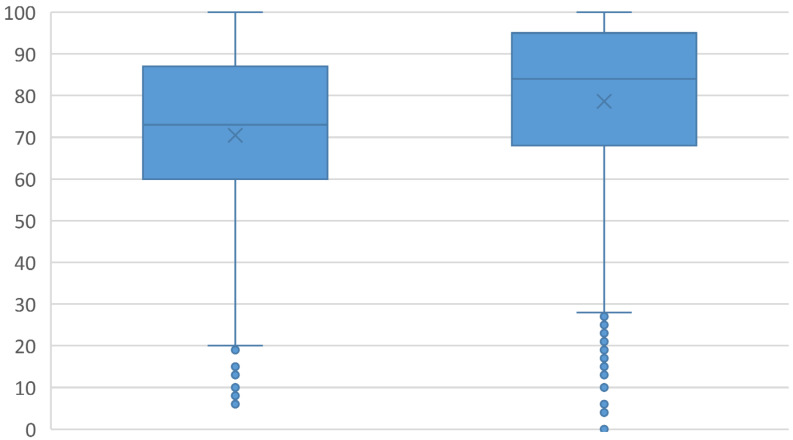
Food waste contributes to adverse environmental and economic outcomes, and substantial food waste occurs at the household level in the US. This study explored perceived household food waste changes during the COVID-19 pandemic and related factors. A total of 946 survey responses from primary household food purchasers were analyzed. Demographic, COVID-19-related household change, and household food waste data were collected in October 2020. Wilcoxon signed-rank was used to assess differences in perceived food waste. A hierarchical binomial logistic regression analysis was conducted to examine whether COVID-19-related lifestyle disruptions and food-related behavior changes increased the likelihood of household food waste. A binomial logistic regression was conducted to explore the contribution of different food groups to the likelihood of increased food waste. Perceived food waste, assessed as the estimated percent of food wasted, decreased significantly during the pandemic ( = -7.47, < 0.001). Food stockpiling was identified as a predictor of increased overall food waste during the pandemic, and wasting fresh vegetables and frozen foods increased the odds of increased food waste. The results indicate the need to provide education and resources related to food stockpiling and the management of specific food groups during periods of disruption to reduce food waste.
食物浪费对环境和经济都有不利影响,而美国家庭层面也存在大量的食物浪费现象。本研究探讨了 COVID-19 大流行期间家庭食物浪费感知的变化及其相关因素。共分析了 946 名主要家庭食物购买者的调查回复。于 2020 年 10 月收集了人口统计学、与 COVID-19 相关的家庭变化和家庭食物浪费数据。采用 Wilcoxon 符号秩检验评估对食物浪费的感知差异。采用分层二项逻辑回归分析检验 COVID-19 相关的生活方式中断和与食物相关的行为变化是否增加家庭食物浪费的可能性。进行二项逻辑回归分析以探索不同食物组对增加食物浪费可能性的贡献。在大流行期间,感知到的食物浪费(估计的浪费食物百分比)显著减少( = -7.47, < 0.001)。食物囤积被确定为大流行期间整体食物浪费增加的预测因素,而浪费新鲜蔬菜和冷冻食品会增加食物浪费增加的几率。研究结果表明,需要在中断期间提供与食物囤积和特定食物组管理相关的教育和资源,以减少食物浪费。