Department of Integrative Biology, University of California, Berkeley, CA 94720, USA.
Syst Biol. 2021 Aug 11;70(5):1015-1032. doi: 10.1093/sysbio/syab004.
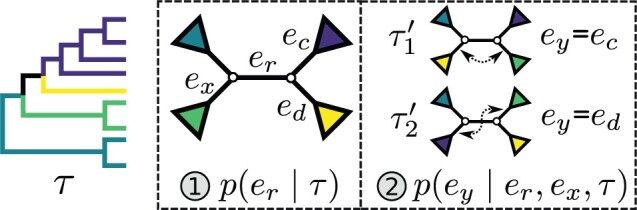
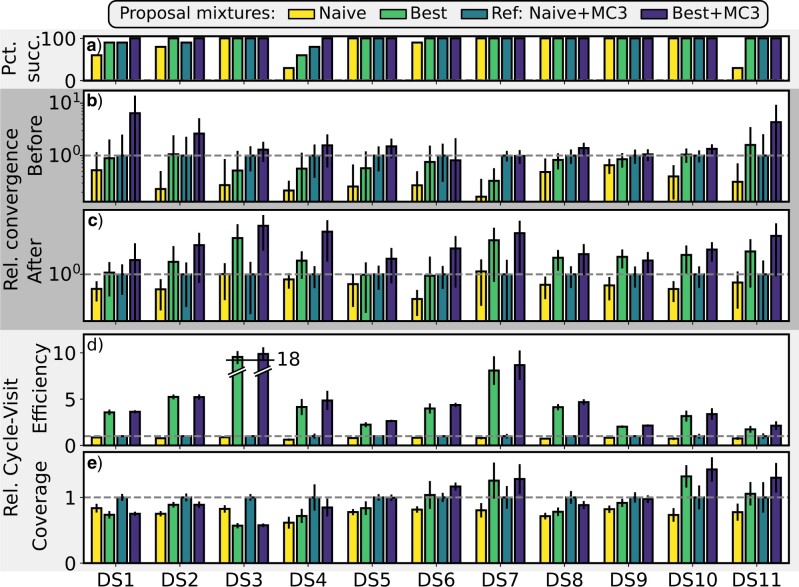
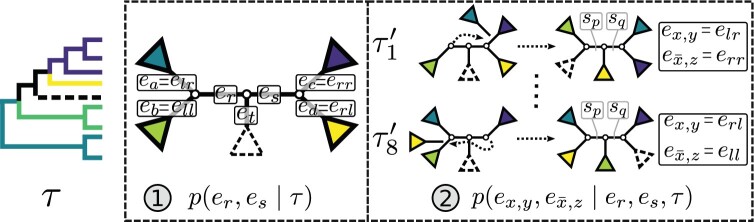
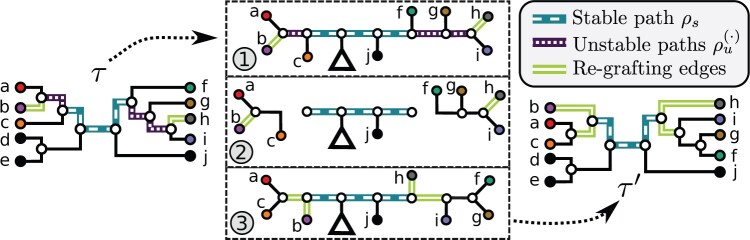
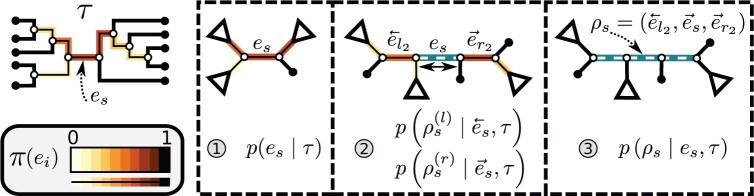
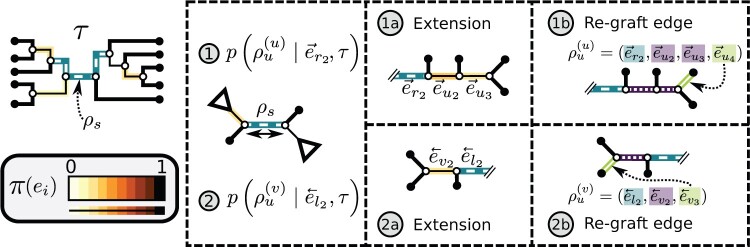
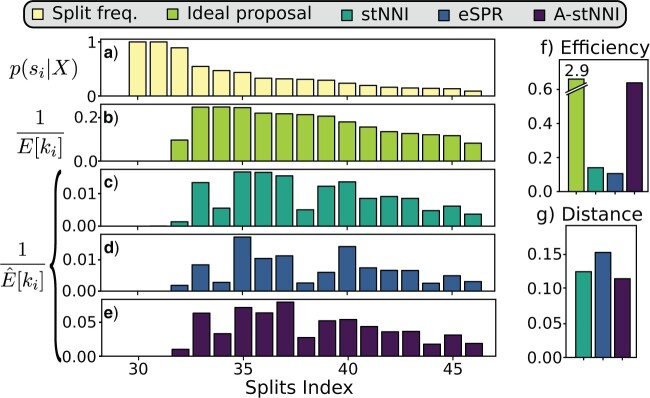
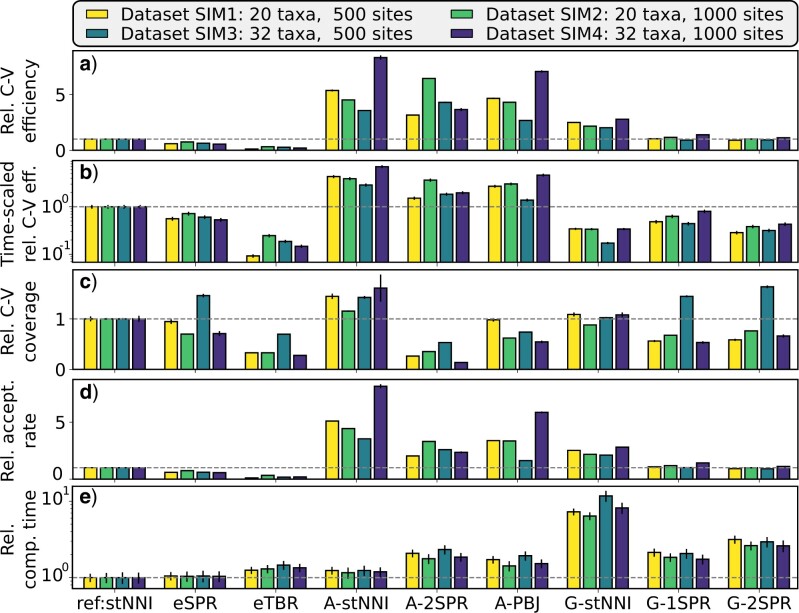
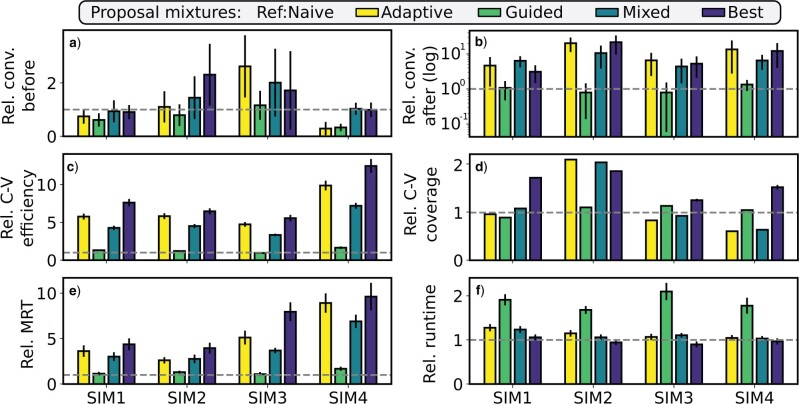
Bayesian inference of phylogeny with Markov chain Monte Carlo plays a key role in the study of evolution. Yet, this method still suffers from a practical challenge identified more than two decades ago: designing tree topology proposals that efficiently sample tree spaces. In this article, I introduce the concept of adaptive tree proposals for unrooted topologies, that is, tree proposals adapting to the posterior distribution as it is estimated. I use this concept to elaborate two adaptive variants of existing proposals and an adaptive proposal based on a novel design philosophy in which the structure of the proposal is informed by the posterior distribution of trees. I investigate the performance of these proposals by first presenting a metric that captures the performance of each proposal within a mixture of proposals. Using this metric, I compare the performance of the adaptive proposals to the performance of standard and parsimony-guided proposals on 11 empirical data sets. Using adaptive proposals led to consistent performance gains and resulted in up to 18-fold increases in mixing efficiency and 6-fold increases in convergence rate without increasing the computational cost of these analyses. [Bayesian phylogenetic inference; Markov chain Monte Carlo; posterior probability distribution; tree proposals.].
贝叶斯系统发育推断与马尔可夫链蒙特卡罗在进化研究中起着关键作用。然而,这种方法仍然存在二十多年前提出的一个实际挑战:设计有效地在树空间中采样的树拓扑结构提案。在本文中,我介绍了无根拓扑的自适应树提案的概念,即适应后验分布的树提案。我使用这个概念详细阐述了两种现有的自适应变体和一种基于新设计理念的自适应提案,其中提案的结构由树的后验分布提供信息。我通过首先提出一个度量标准来研究这些提案的性能,该度量标准可以捕获在提案混合物中的每个提案的性能。使用这个度量标准,我将自适应提案的性能与标准和简约引导提案的性能在 11 个经验数据集上进行了比较。使用自适应提案可以带来一致的性能提升,并且在不增加这些分析的计算成本的情况下,将混合效率提高了 18 倍,收敛速度提高了 6 倍。