Hussein R K, Elkhair H M
Imam Mohammad Ibn Saud Islamic University (IMSIU), College of Science, Physics department, P.O. Box 90950, Riyadh 11623, Saudi Arabia.
Department of Physics, Al Neelain University, P. O. Box 12702, Khartoum 11121, Sudan.
J Mol Struct. 2021 May 5;1231:129979. doi: 10.1016/j.molstruc.2021.129979. Epub 2021 Jan 25.
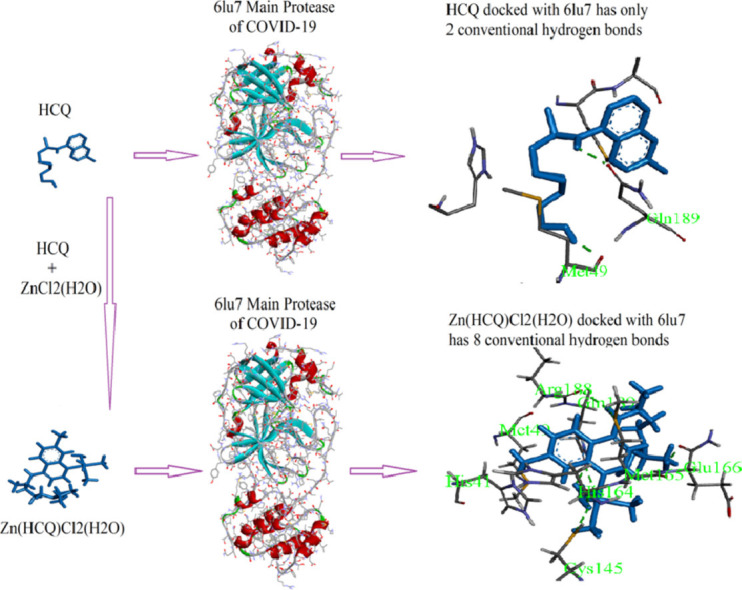
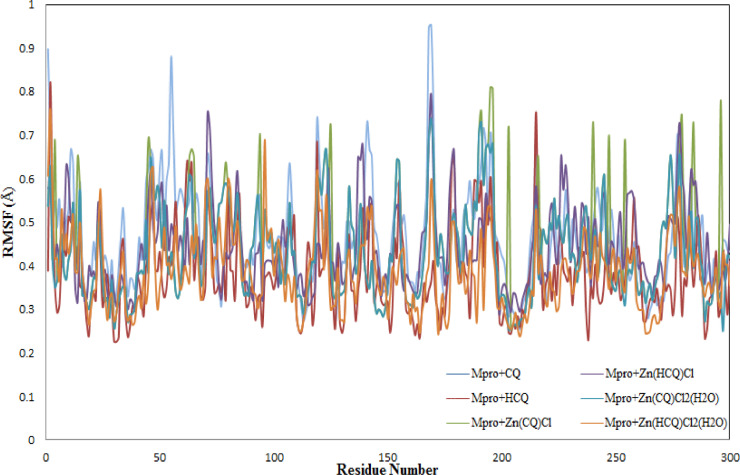
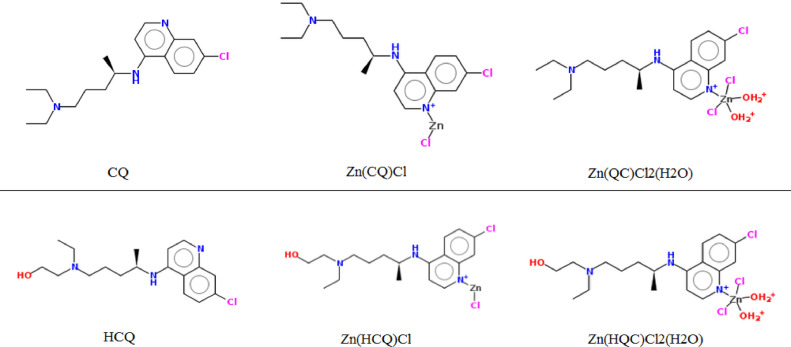
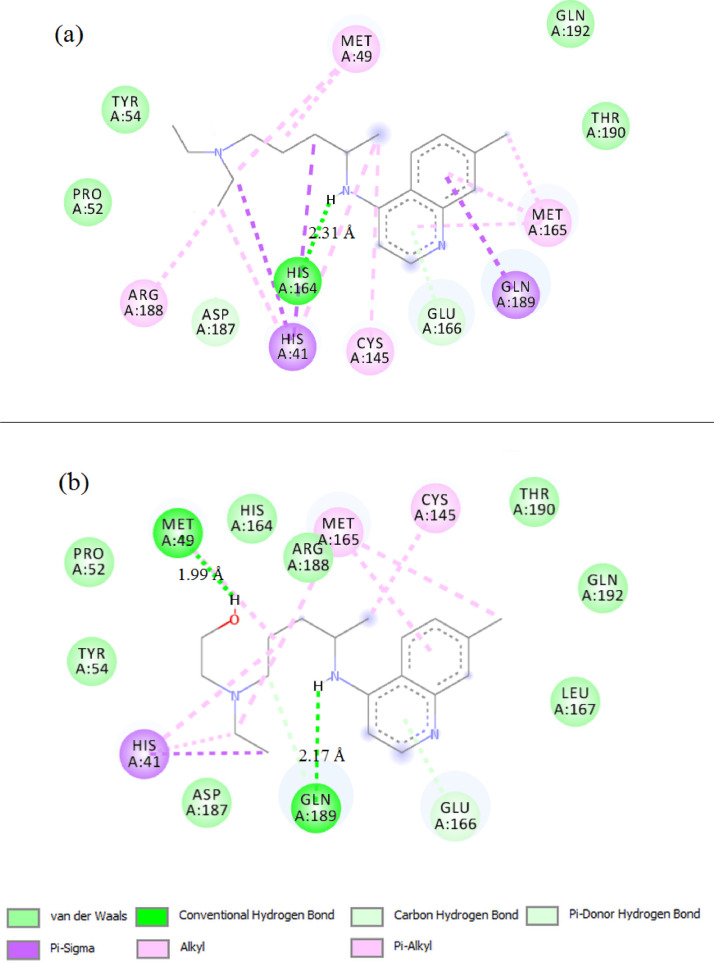
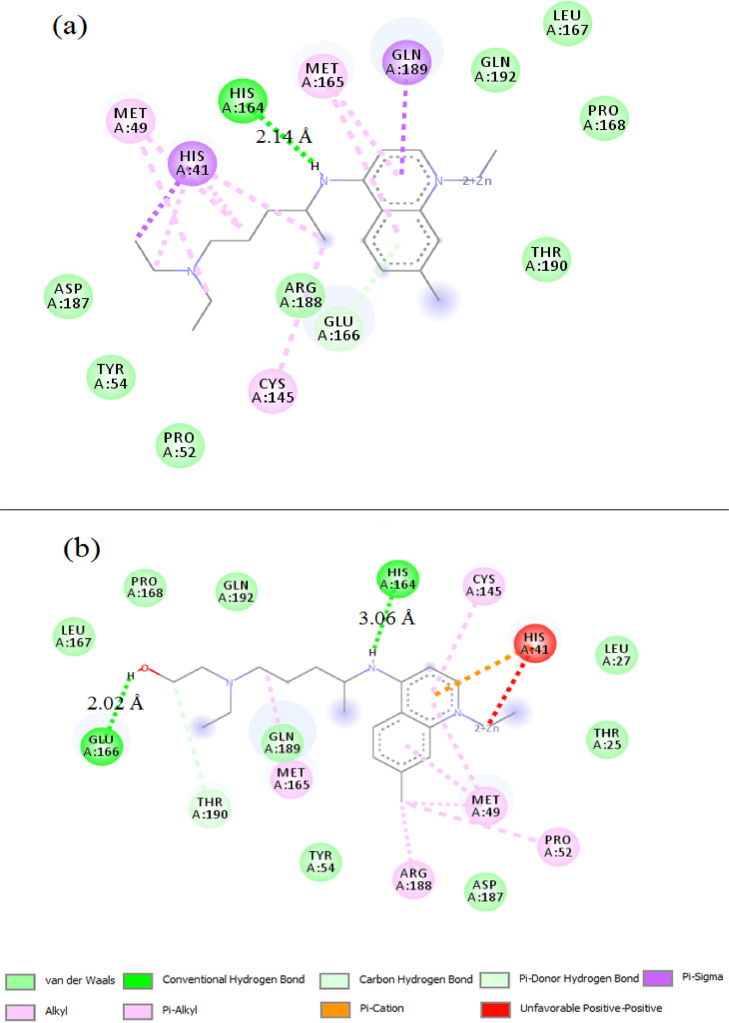
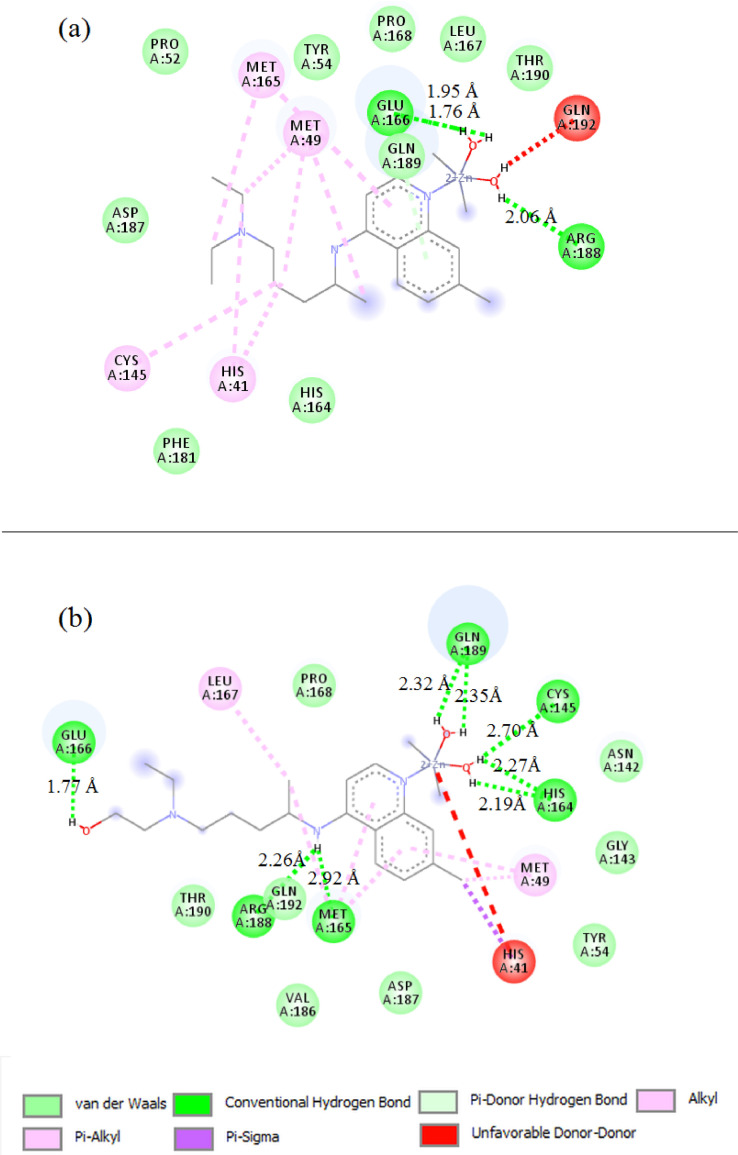
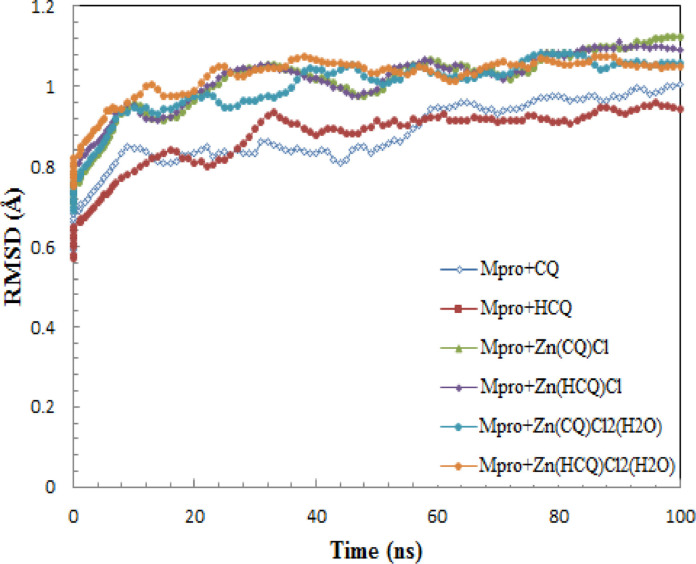
Vast amount of research has been recently conducted to discover drugs for efficacious treatment of corona virus disease 2019 (COVID-19). The ambiguity about using Chloroquine/ Hydroxychloroquine to treat this illness was a springboard towards new methods for improving the adequacy of these drugs. The effective treatment of COVID-19 using Zinc complexes as add-on to Chloroquine/ Hydroxychloroquine has received major attention in this context. The current studies have shed a light on molecular docking and molecular dynamics methodologies as powerful techniques in establishing therapeutic strategies to combat COVID-19 pandemic. We are proposing some zinc compounds coordination to Chloroquine/ Hydroxychloroquine in order to enhance their activity. The molecular docking calculations showed that Zn(QC)Cl2(H2O) has the least binding energy -7.70 Kcal /mol then Zn(HQC)Cl2(H2O) -7.54 Kcal /mol. The recorded hydrogen bonds were recognized in the strongest range of H Bond category distances. Identification of binding site interactions revealed that the interaction of Zn(QC)Cl2(H2O)with the protease of COVID-19 results in three hydrogen bonds, while Zn(HQC)Cl2(H2O) exhibited a strong binding to the main protease receptor by forming eight hydrogen bonds. The dynamic behavior of the proposed complexes was revealed by molecular dynamics simulations. The outcomes obtained from Molecular dynamics calculations approved the stability of Mpro-Zn(CQ/HCQ)Cl2H2O systems. These findings recommend Zn (CQ) Cl2H2O and Zn (HCQ) Cl2H2O as potential inhibitors for COVID-19 Mpro.
最近进行了大量研究以发现有效治疗2019冠状病毒病(COVID-19)的药物。关于使用氯喹/羟氯喹治疗该疾病的不确定性成为了改进这些药物有效性新方法的跳板。在这种背景下,将锌配合物作为氯喹/羟氯喹的附加剂用于有效治疗COVID-19受到了主要关注。当前的研究揭示了分子对接和分子动力学方法是建立对抗COVID-19大流行治疗策略的有力技术。我们提出一些锌化合物与氯喹/羟氯喹配位以增强其活性。分子对接计算表明,Zn(QC)Cl2(H2O)的结合能最低,为-7.70千卡/摩尔,其次是Zn(HQC)Cl2(H2O),为-7.54千卡/摩尔。记录的氢键在氢键类别距离的最强范围内被识别。结合位点相互作用的鉴定表明,Zn(QC)Cl2(H2O)与COVID-19蛋白酶的相互作用产生三个氢键,而Zn(HQC)Cl2(H2O)通过形成八个氢键与主要蛋白酶受体表现出强结合。分子动力学模拟揭示了所提出配合物的动态行为。分子动力学计算得到的结果证实了Mpro-Zn(CQ/HCQ)Cl2H2O系统的稳定性。这些发现推荐Zn (CQ) Cl2H2O和Zn (HCQ) Cl2H2O作为COVID-19 Mpro的潜在抑制剂。