Visentin Marco, Reis Rosana Silveira, Cappiello Giuseppe, Casoli Debora
University of Bologna, Via Capo di Luca, 34, Bologna, Italy.
ISG - Paris, 147 - Avenue Victor Hugo, Paris, France.
Int J Hosp Manag. 2021 Apr;94:102820. doi: 10.1016/j.ijhm.2020.102820. Epub 2020 Dec 19.
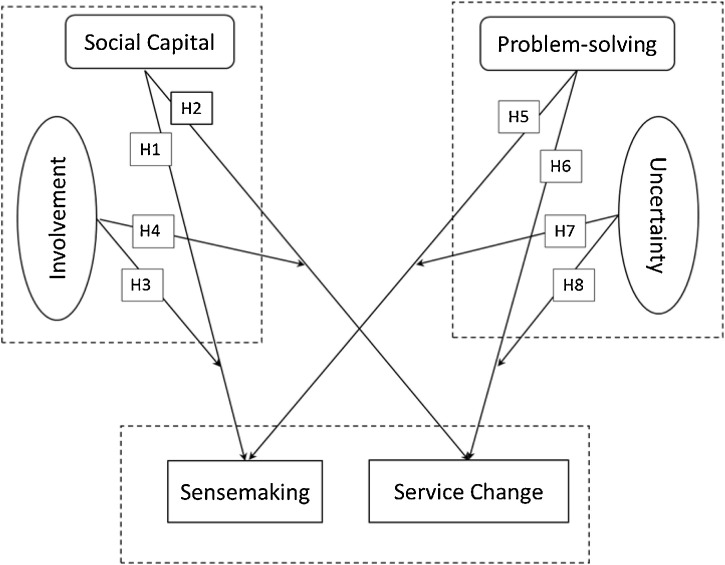
In this study, we propose a broad conceptual model that incorporates social capital dimensions and problem-solving routines to understand the determinants behind hotel managements' perception of and ability to cope with the COVID-19 pandemic-and thus, to innovate their service offering. We provide empirical support for the notion that, due to uncertainty about reopening after lockdown, the hospitality sector has found existing problem-solving routines to be of little use. Although the local community has been unable to form a shared vision around the pandemic, hoteliers have nevertheless relied on their network of relationships to sense the crisis and find their own ways to adapt. Interestingly, we find that overreliance on trustworthy relationships can diminish the ability to sense a crisis objectively. Our results not only shed light on sensemaking in the hotel industry, but also grapple with the theoretical nature of sensemaking as a socially constructed process.
在本研究中,我们提出了一个广泛的概念模型,该模型纳入了社会资本维度和问题解决流程,以理解酒店管理层对新冠疫情的认知背后的决定因素以及应对疫情的能力,从而创新其服务产品。我们为以下观点提供了实证支持:由于封锁后重新开业存在不确定性,酒店业发现现有的问题解决流程用处不大。尽管当地社区未能围绕疫情形成共同愿景,但酒店经营者仍依靠他们的关系网络来感知危机并找到自己的适应方式。有趣的是,我们发现过度依赖可信赖的关系会削弱客观感知危机的能力。我们的研究结果不仅揭示了酒店业的意义建构,还探讨了意义建构作为一个社会建构过程的理论本质。