Álvarez J, Lallena S, Bernal M
Servicio de Endocrinología y Nutrición, Hospital Universitario Príncipe de Asturias, Alcalá de Henares, Madrid, España.
Departamento de Medicina y Especialidades Médicas, Universidad de Alcalá, Alcalá de Henares, Madrid, España.
Medicine (Madr). 2020 Dec;13(23):1311-1321. doi: 10.1016/j.med.2020.12.013. Epub 2020 Dec 24.
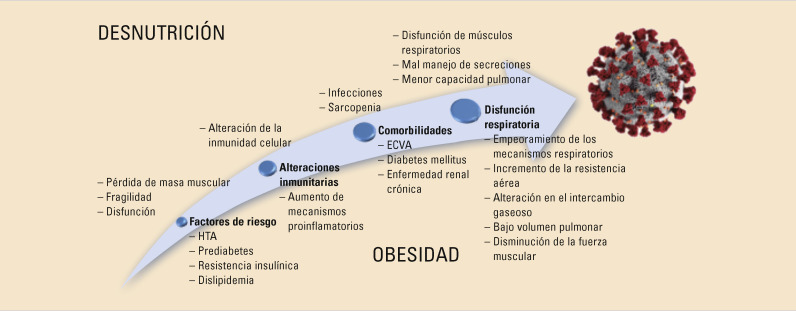
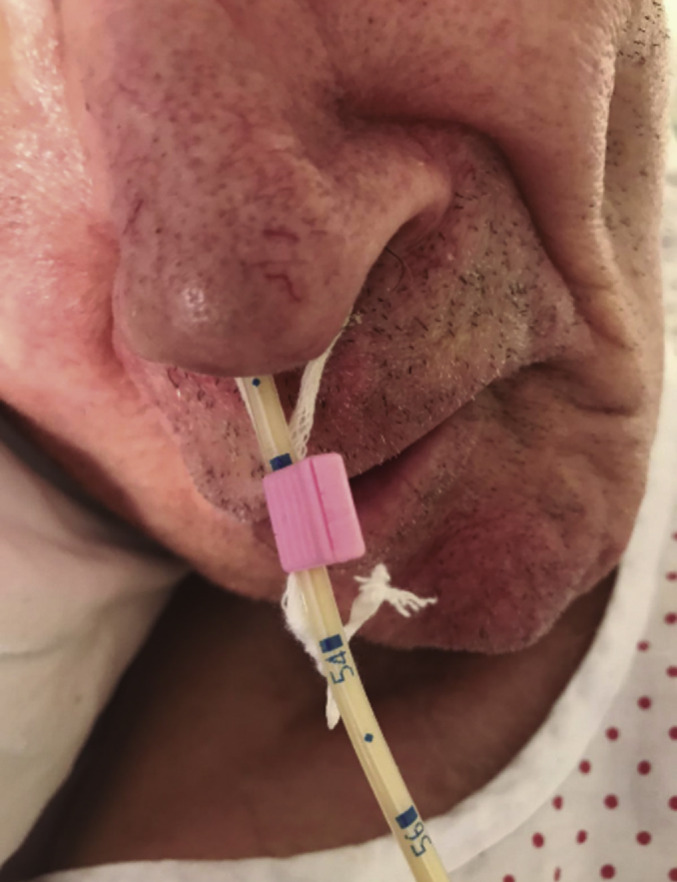
The COVID-19 pandemic has posed a significant challenge to public health systems worldwide. Obesity and malnutrition, two silent pandemics that were present before the emergence of SARS-CoV-2 infection, condition risk of the disease worsening in infected patients. Patients with this illness present with a high risk of disease-related malnutrition (DRM) and sarcopenia due to symptoms arising from the infection itself, acute inflammation, prolonged bed rest, and the supportive therapies used. Nowadays, along with respiratory support, nutritional support is essential to healthcare for patients with coronavirus infection throughout their progress. The nutritional approach is a dynamic process that includes strengthening the normal diet and specialized nutritional treatment (SNT) with the use of oral supplements, enteral nutrition, or parenteral nutrition according to each patient's requirements and needs. In this update, we review aspects regarding the close relationship between diet, nutrition, and immunity; their impact on the progress of SARS-CoV-2 infection; and the therapeutic strategies proposed by the consensus of experts of scientific societies.
新冠疫情给全球公共卫生系统带来了巨大挑战。肥胖和营养不良这两种在严重急性呼吸综合征冠状病毒2(SARS-CoV-2)感染出现之前就已存在的隐性流行病,会使感染患者病情恶化的风险增加。由于感染本身、急性炎症、长期卧床休息以及所采用的支持性治疗引发的症状,患有这种疾病的患者存在疾病相关营养不良(DRM)和肌肉减少症的高风险。如今,除了呼吸支持外,营养支持对于冠状病毒感染患者治疗全程的医疗保健至关重要。营养方法是一个动态过程,包括根据每位患者的需求,通过使用口服补充剂、肠内营养或肠外营养来强化正常饮食和进行特殊营养治疗(SNT)。在本综述中,我们回顾了饮食、营养与免疫之间的密切关系;它们对SARS-CoV-2感染进程的影响;以及科学协会专家共识提出的治疗策略。