Krawiec Paulina, Pac-Kożuchowska Elżbieta
Department of Pediatrics and Gastroenterology, Medical University of Lublin, Lublin, Poland.
J Inflamm Res. 2021 Jan 22;14:163-174. doi: 10.2147/JIR.S288742. eCollection 2021.
Cathelicidin is a multifunctional host defense peptide which may also exert pro-inflammatory signals and contribute to the development of autoimmune disorders. We aimed to assess serum concentration of cathelicidin in children with inflammatory bowel disease (IBD) compared to healthy controls and to evaluate its relationship with disease activity and phenotype.
The study group included 68 children with IBD. The control group comprised 20 children with functional abdominal pain. All patients and controls were tested for complete blood count, C-reactive protein, erythrocyte sedimentation rate and cathelicidin. Stool samples were collected to assess calprotectin.
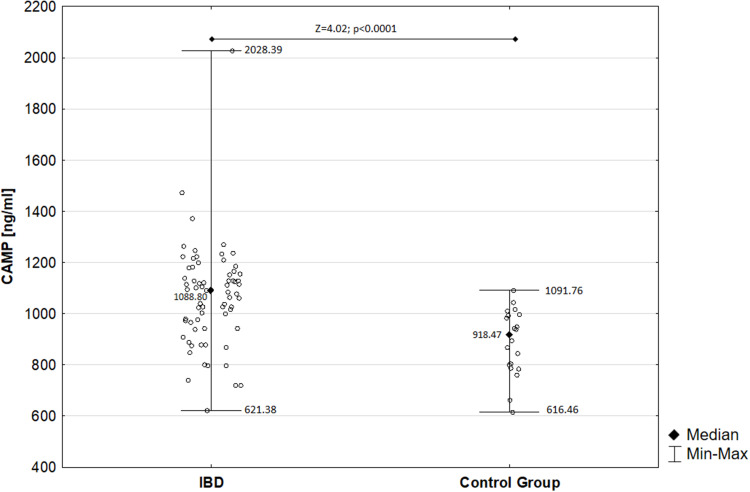
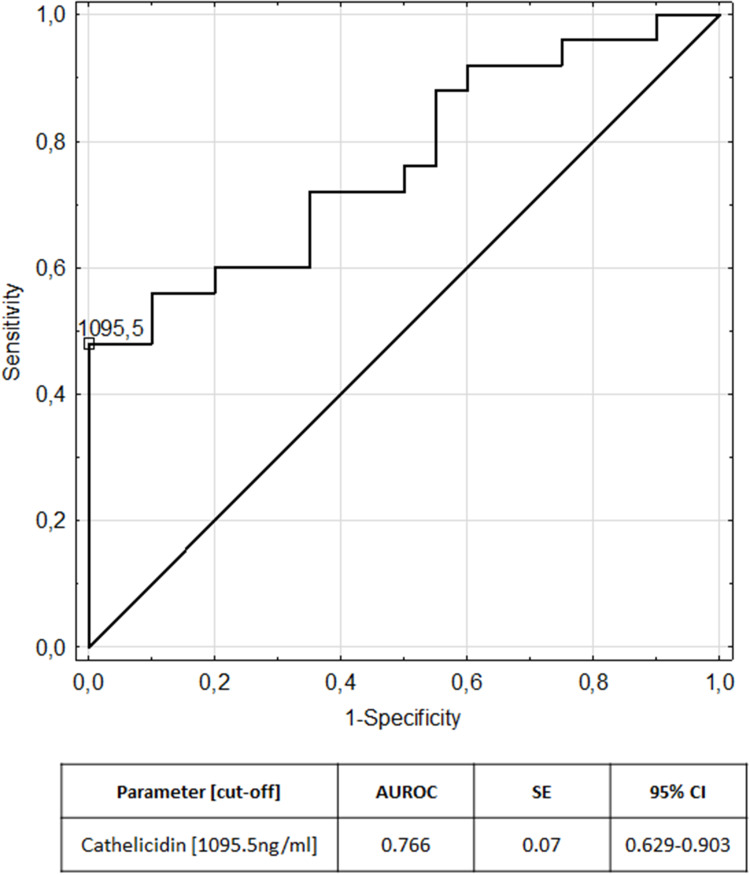
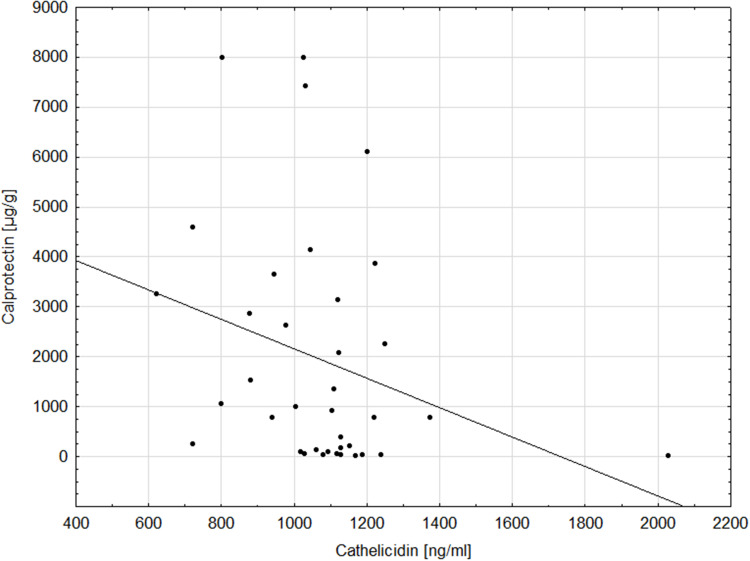
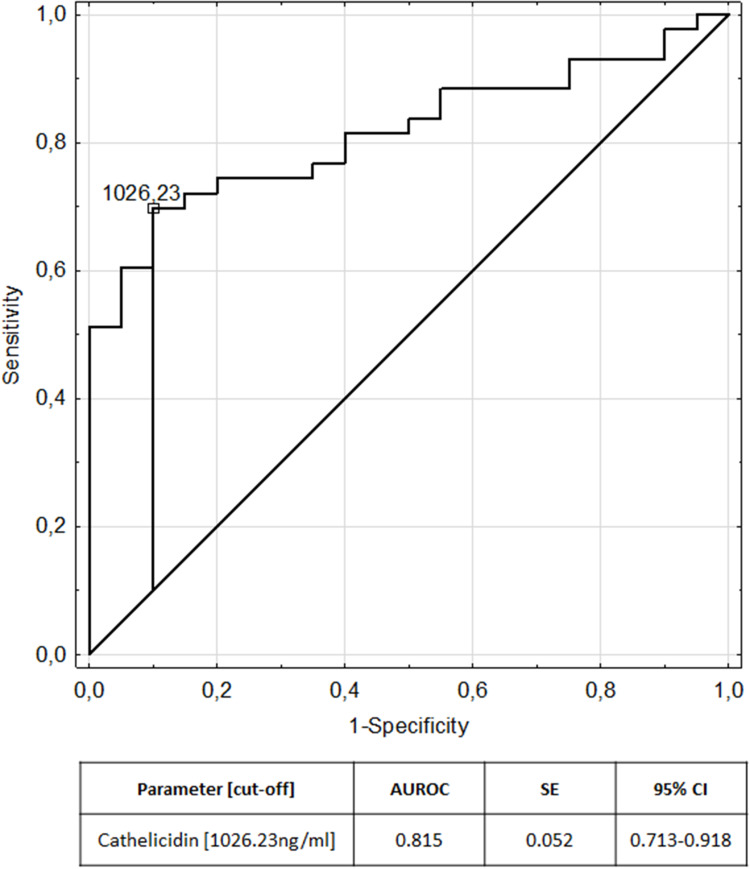
Cathelicidin was significantly increased in patients with ulcerative colitis (1073.39±214.52 ng/mL) and Crohn's disease (1057.63±176.03 ng/mL) patients compared to controls (890.56±129.37 ng/mL) (H=16.28; =0.0003). Cathelicidin was significantly elevated in children with active IBD (1044.90±176.17 ng/mL) and IBD remission (1098.10±227.87 ng/mL) compared to controls (Z=3.21; =0.001; Z=-4.12; <0.0001, respectively). Negative correlation between cathelicidin and calprotectin in children with ulcerative colitis was found (R=-0.39; =0.02). Cathelicidin exhibited AUC of 0.815 for differentiation children with ulcerative colitis from the control group.
Serum cathelicidin is increased in children with Crohn's disease and ulcerative colitis regardless of clinical activity of the disease suggesting that it may be a potential biomarker of IBD. Inverse correlation between cathelicidin and fecal calprotectin may imply a disparate role of these molecules in the pathophysiology of pediatric ulcerative colitis.
cathelicidin是一种多功能宿主防御肽,它也可能发出促炎信号并促进自身免疫性疾病的发展。我们旨在评估炎症性肠病(IBD)患儿与健康对照者血清中cathelicidin的浓度,并评估其与疾病活动度和表型的关系。
研究组包括68例IBD患儿。对照组由20例功能性腹痛患儿组成。对所有患者和对照者进行全血细胞计数、C反应蛋白、红细胞沉降率和cathelicidin检测。收集粪便样本以评估钙卫蛋白。
与对照组(890.56±129.37 ng/mL)相比,溃疡性结肠炎患者(1073.39±214.52 ng/mL)和克罗恩病患者(1057.63±176.03 ng/mL)的cathelicidin显著升高(H=16.28;P=0.0003)。与对照组相比,活动期IBD患儿(1044.90±176.17 ng/mL)和IBD缓解期患儿(1098.10±227.87 ng/mL)的cathelicidin显著升高(Z=3.21;P=0.001;Z=-4.12;P<0.0001)。发现溃疡性结肠炎患儿中cathelicidin与钙卫蛋白呈负相关(R=-0.39;P=0.02)。cathelicidin区分溃疡性结肠炎患儿与对照组的曲线下面积(AUC)为0.815。
克罗恩病和溃疡性结肠炎患儿血清cathelicidin升高,与疾病的临床活动度无关,提示其可能是IBD的潜在生物标志物。cathelicidin与粪便钙卫蛋白之间的负相关可能意味着这些分子在儿童溃疡性结肠炎病理生理学中发挥不同作用。