Li Jun, Liu Hao, Yang Zhenzhong, Yu Qingqing, Zhao Lu, Wang Yi
Pharmaceutical Informatics Institute, College of Pharmaceutical Sciences, Zhejiang University, Hangzhou, China.
The Department of Medicine, Chiatai Qingchunbao Pharmaceutical Co., Ltd., Hangzhou, China.
Front Pharmacol. 2021 Jan 14;11:622787. doi: 10.3389/fphar.2020.622787. eCollection 2020.
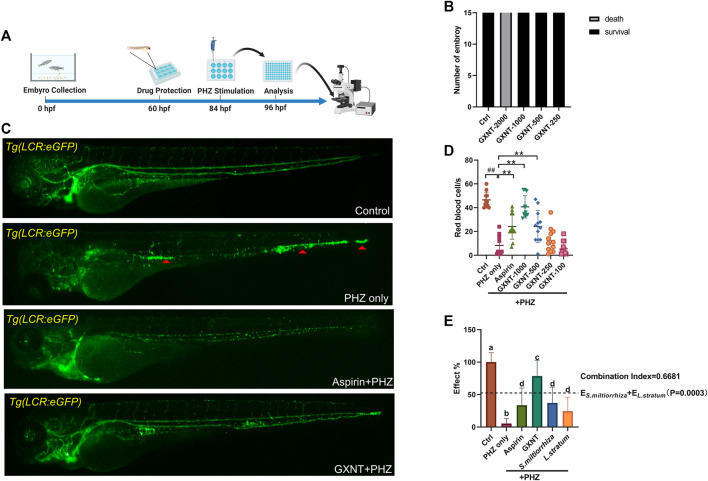
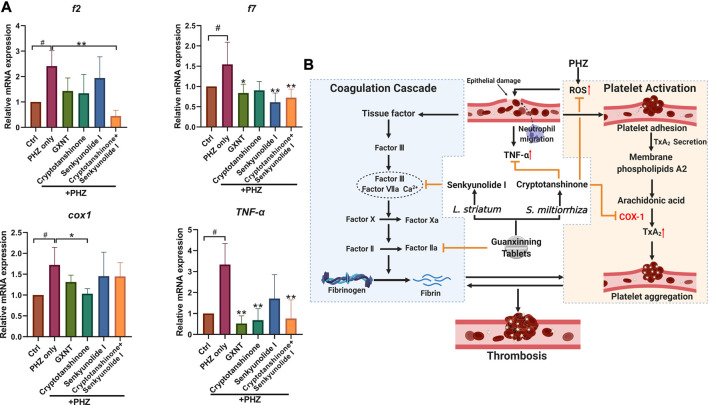
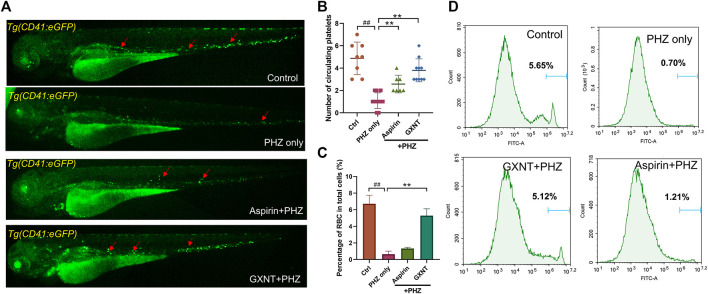
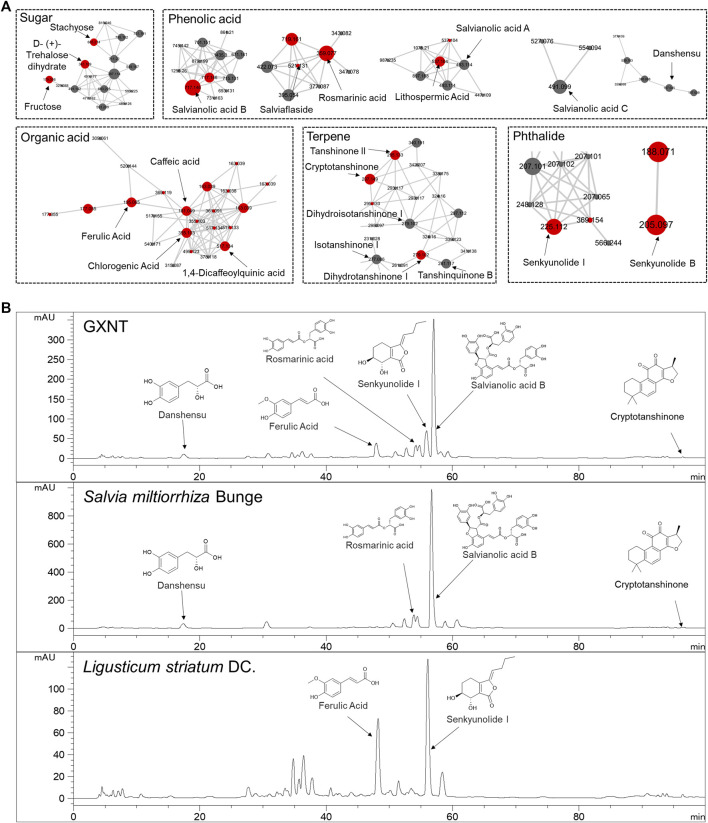
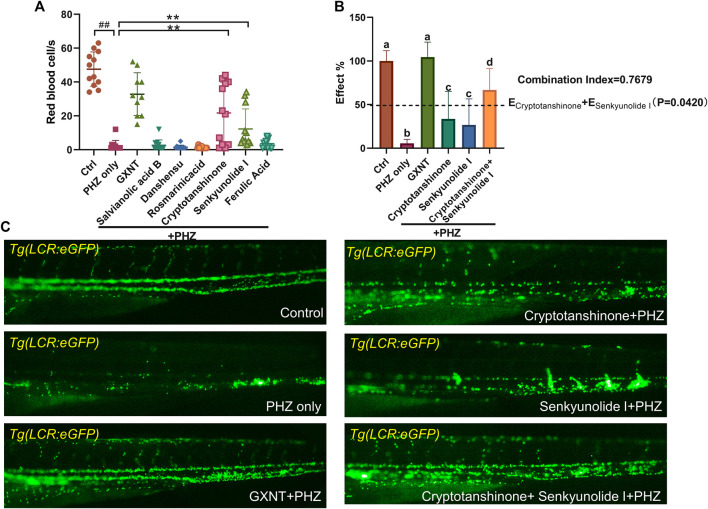
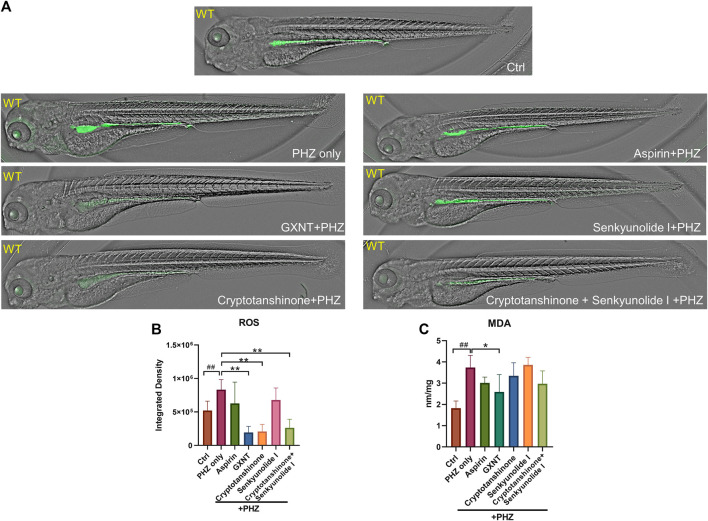
Thrombosis is a key pathological event in cardiovascular diseases, and is also the most important targeting process for their clinical management. New drug development in thrombosis treatment is still in great demand. According to the traditional Chinese medicine (TCM) theory, thrombosis belongs to the syndrome of blood stasis. Bunge and DC are two common TCM herbs with long-term documented function in promoting blood circulation and inhibiting thrombosis, especially when used together. Guanxinning Tablet, a modern Chinese drug which contains extracts of the two herbs, also showed strong therapeutic effects in coronary heart disease. However, the pharmacological mechanism is still lacking for the compatibility of the two herbs. Here, through zebrafish-based fluorescence screening, we demonstrated the synergistic effects between Bunge and DC. in regulating endogenous thrombosis. Moreover, combined with high-resolution mass spectrometry, the main compounds of the botanical drugs were analyzed and screened in our model system. Interestingly, cryptotanshinone and senkyunolide I, two representative compounds, respectively derived from the two herbs, also showed synergistic antithrombotic effects. Further analysis suggested that they may regulate thrombi formation at different levels multiple signaling pathways, including oxidative stress, platelet activation and coagulation cascade. Taken together, our findings provided solid biological supports toward the drug compatibility theory of TCM, and suggested cryptotanshinone and senkyunolide I as promising drug candidates in thrombosis management.
血栓形成是心血管疾病中的关键病理事件,也是其临床治疗的最重要靶向过程。血栓治疗方面的新药研发仍有很大需求。根据中医理论,血栓形成属于血瘀证。川芎和丹参是两种常见的中药,长期以来有促进血液循环和抑制血栓形成的记载,尤其是两者联合使用时。冠心宁片是一种含有这两种草药提取物的现代中药,在冠心病治疗中也显示出强大的治疗效果。然而,这两种草药配伍的药理机制仍不明确。在此,通过基于斑马鱼的荧光筛选,我们证明了川芎和丹参在调节内源性血栓形成方面的协同作用。此外,结合高分辨率质谱,在我们的模型系统中对这两种植物药的主要成分进行了分析和筛选。有趣的是,分别源自这两种草药的两种代表性化合物隐丹参酮和藁本内酯也显示出协同抗血栓作用。进一步分析表明,它们可能在多个信号通路的不同水平上调节血栓形成,包括氧化应激、血小板活化和凝血级联反应。综上所述,我们的研究结果为中医药物配伍理论提供了坚实的生物学支持,并表明隐丹参酮和藁本内酯是血栓治疗中有前景的候选药物。